Select These Bulbs Now for Striking Spring 2025 Displays
Planting bulbs during the serene days of fall carries a profound sense of anticipation. The soil accepts each bulb with quiet readiness, holding the potential for vivid colors that emerge after winter's rest. This practice embodies the essence of gardening, where forward planning yields rewards in the form of renewed landscapes.
The Advantages of Fall Planting
Bulbs require a period of establishment before their spring performance. Fall's moderate temperatures allow roots to develop steadily, free from summer's intensity. As frost sets in, the bulbs enter dormancy, fortified for the warming soil ahead.
This timing aligns with natural garden cycles. Bulbs encourage gardeners to anticipate seasonal shifts, resulting in early flowers such as tulips, daffodils, and crocuses that brighten the post-winter landscape. The process fosters patience, with each planting contributing to a cohesive seasonal rhythm.
Selecting Optimal Bulbs
Choosing bulbs presents a balance of tradition and innovation. Begin with proven varieties to build confidence, then incorporate unique options for added interest. Focus on bulbs that suit your climate and aesthetic preferences.
Consider these reliable choices for effective spring results:
- Tulips: Iconic for their bold hues, tulips create impact when grouped in clusters of at least ten. Plant them in drifts to mimic natural abundance and enhance visual drama.
- Daffodils: These resilient flowers return annually, offering subtle fragrance and natural pest resistance. Position them in sunny spots for consistent performance over multiple seasons.
- Crocuses: As pioneers of spring, these petite blooms awaken lawns and edges. Sow them in grassy areas to naturalize and provide early color.
- Hyacinths: Prized for intense scent, hyacinths suit pathways or patios. Cluster them for maximum olfactory enjoyment during strolls.
- Alliums: With their spherical forms, alliums provide vertical interest and draw beneficial insects. Integrate them into borders for late-season structure.
Examine bulbs for firmness and avoid those showing softness or discoloration. Opt for larger sizes to promote vigorous growth and substantial flowers.
Soil Preparation Essentials
Bulbs thrive in soil that drains efficiently to prevent rot. Amend heavy or clay soils with organic compost or sand to facilitate water movement. Perform a drainage check by excavating a hole, adding water, and observing if it drains within two hours; adjust as necessary if retention occurs.
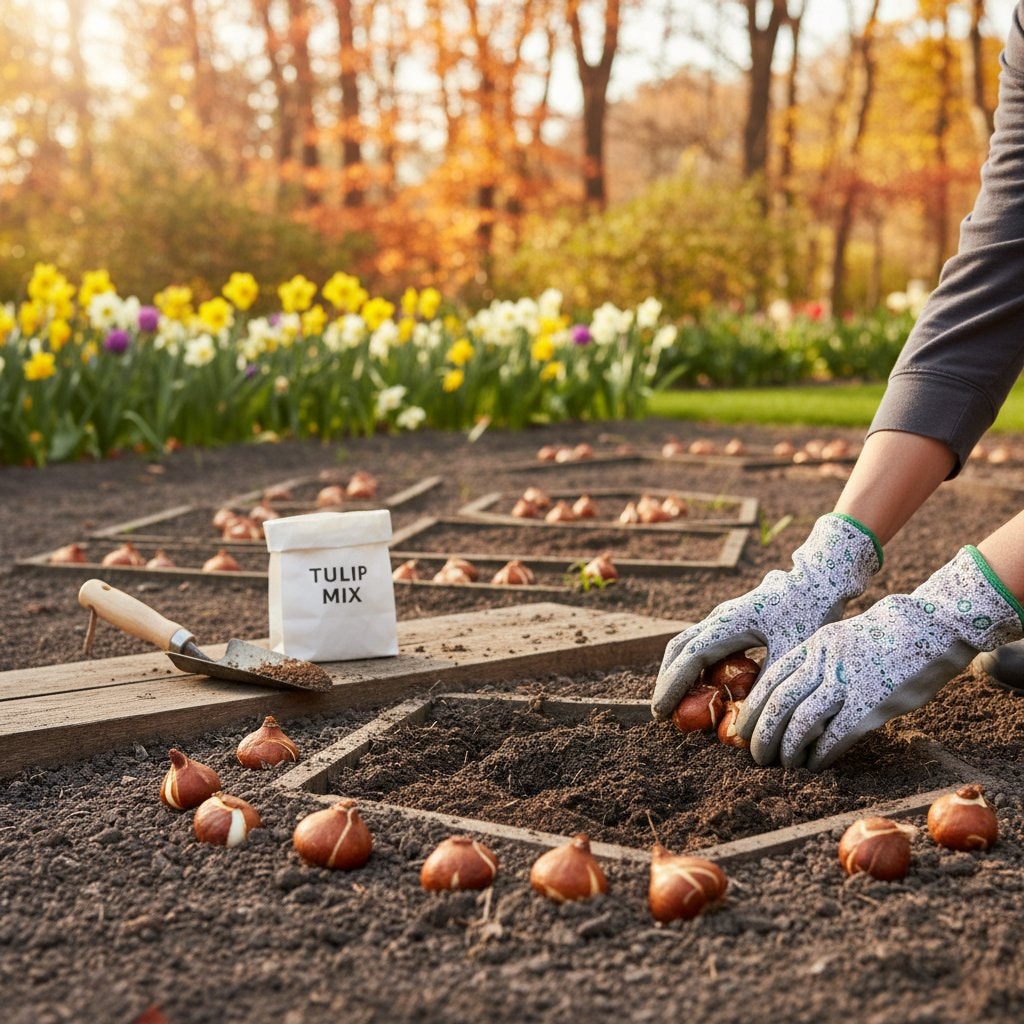
Till the planting area to a depth of two bulb heights. Follow the guideline of burying bulbs at three times their diameter—for instance, position a two-inch bulb six inches below the surface. Orient the pointed tip upward, backfill with soil, and irrigate thoroughly to encourage root contact.
Strategic Bulb Design
Bulbs enable artistic expression through color harmony and spatial arrangement. Combine tulips with grape hyacinths to layer heights and textures, where taller stems contrast with low-growing companions.
Establish cohesion by repeating hues across beds. Disperse crocuses along walkways for intimate viewing, and mass daffodils beneath trees or fences to evoke wild meadows. For structured gardens, arrange in precise lines or shapes; for informal styles, scatter bulbs haphazardly and plant in place to achieve organic charm.
Post-Planting Maintenance
Bulbs demand minimal intervention during winter. Apply a two-inch mulch layer to stabilize temperatures and suppress weeds. In early spring, clear excess covering to allow unobstructed emergence.
Permit foliage to remain after blooms fade, as it replenishes bulb energy for future cycles. Trim only when leaves turn yellow. Intersperse with annuals like pansies to mask declining greenery and sustain visual appeal.
Evolving Your Bulb Garden
Bulb cultivation benefits from iterative refinement. Environmental factors such as weather and light shape outcomes, revealing which types excel in your setting. Track performances to inform future selections.
Novice gardeners should initiate with modest areas, monitoring growth patterns before scaling up. Introduce fresh varieties annually to develop multifaceted displays. This approach transforms seasonal waiting into a rewarding ritual of discovery.
Harvesting the Rewards of Spring
The emergence of the first blooms validates the investment of time and effort. Tulips unfurl in sunlight, and daffodils sway gently, each signaling the garden's vitality.
This ritual instills lessons in foresight and appreciation, enriching the outdoor space with enduring delight. Dedicate an afternoon to bulb planting, and witness the transformation unfold.