Fall Bulbs: The Key to Vibrant Spring Displays
Consider a neighbor's garden filled with tulips, daffodils, and hyacinths in full bloom. Such results may inspire envy, yet the foundation for this success lies in fall preparation. By planting bulbs now, gardeners establish conditions for a striking spring show that requires minimal effort later.
Assessing Your Garden's Ideal Planting Sites
Fall bulb planting offers a rewarding opportunity to plan ahead. These underground structures store essential energy during winter, emerging with color as temperatures rise. A strong start in autumn promotes robust growth and longevity.
Walk through the garden to evaluate conditions. Identify areas with full sun exposure for at least six hours daily, such as along pathways or beneath trees that lose leaves in winter. Ensure the soil drains adequately to prevent waterlogging, which can harm bulbs.
Selecting High-Quality Bulbs
Different bulb types provide unique contributions to the landscape. Tulips deliver vivid hues and upright forms in varieties like 'Apeldoorn' for reds or 'Queen of Night' for deep purples. Daffodils offer dependable yellow and white trumpets, such as 'King Alfred', which naturalize over time. Hyacinths contribute intense scents with compact spikes in blues, pinks, and whites. Crocuses emerge earliest, carpeting the ground in purples and golds.
Choose bulbs that feel solid and substantial, avoiding any with soft spots, mold, or lightweight husks. Opt for a combination of early, midseason, and late-blooming types to extend the flowering period from March through May. Purchase from reputable sources to guarantee disease-free stock.
Enhancing Soil for Optimal Growth
Well-prepared soil supports bulb development from the outset. Aim for a loose, fertile medium with good drainage, ideally with a pH between 6.0 and 7.0. In clay-heavy soils, incorporate aged compost or gypsum at a rate of two inches per square foot to break up compaction. Sandy soils benefit from adding peat moss or well-rotted manure to boost water and nutrient retention.
Perform a drainage test by digging a hole 12 inches deep and wide, filling it with water, and observing the rate of absorption. Ideal drainage clears within one to two hours; slower rates signal the need for amendments. Work additions into the top six inches of soil several weeks before planting.
Step-by-Step Planting Techniques
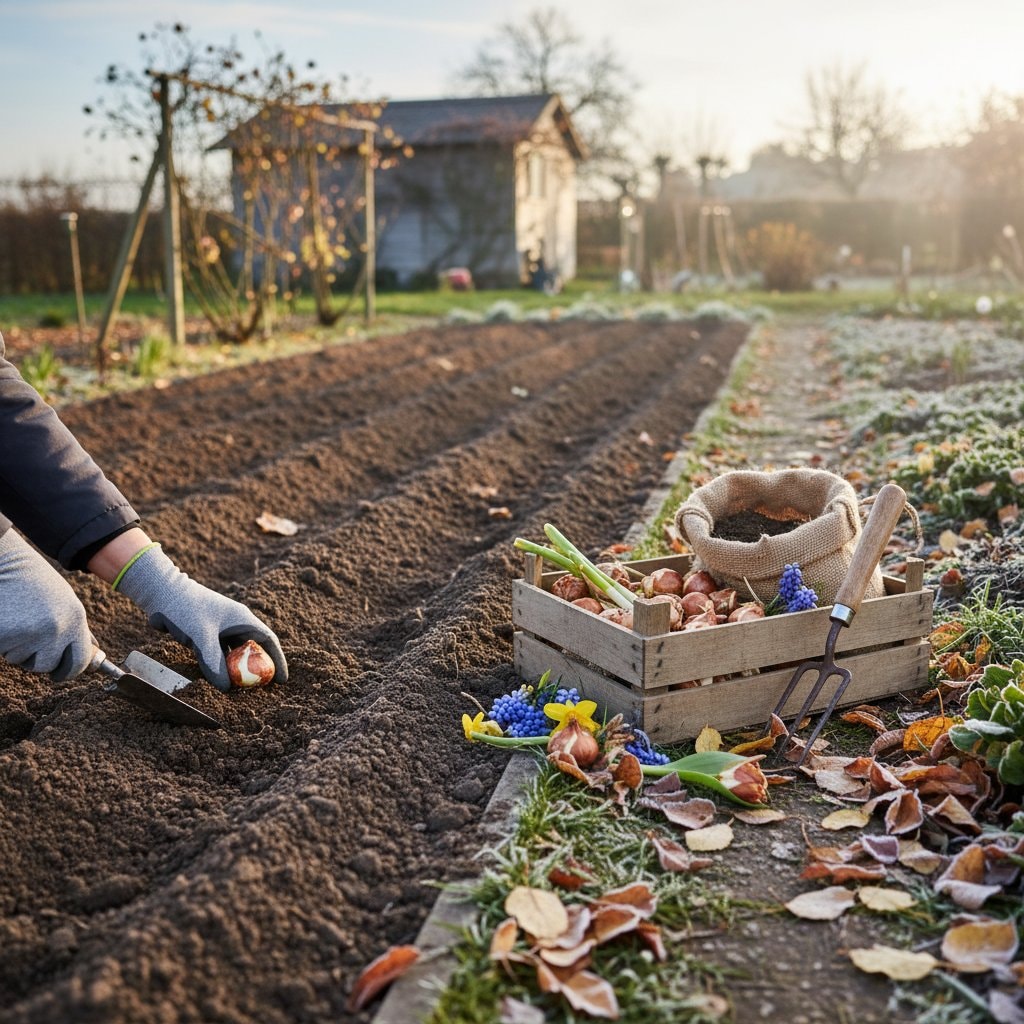
Approach planting as a deliberate process to maximize results. Dig holes to a depth three times the bulb's height: four to six inches for small types like crocuses, and six to eight inches for larger ones like tulips. Orient the pointed end upward and the flat base downward; if uncertain, plant on the side, as shoots will adjust.
Space bulbs based on mature size: three to four inches apart for tulips and daffodils, closer for crocuses at one to two inches. Arrange in irregular clusters of five, seven, or nine for a naturalistic effect, rather than rigid rows. After placing bulbs, firm the soil gently and water thoroughly to eliminate air pockets.
Apply a two-inch layer of organic mulch, such as shredded bark or straw, over the area. This covering moderates temperature fluctuations, suppresses weeds, and conserves moisture without smothering emerging shoots.
Winter Maintenance Strategies
Post-planting care emphasizes protection during dormancy. Bulbs require a period of cold to trigger blooming, so avoid forcing indoor warmth. In regions with temperatures below 20 degrees Fahrenheit, add an extra inch of mulch for insulation against frost heave.
Monitor for pest activity, such as squirrels or voles attracted to the fresh planting. Install hardware cloth buried two inches deep around beds or use repellents like blood meal scattered on the surface. Refrain from fertilizing until spring, as excess nutrients can encourage rot.
Nurturing Blooms and Long-Term Vitality
As winter recedes, green tips signal the approach of flowers. Fertilize emerging foliage with a balanced product, such as 10-10-10, at half strength to support development. Deadhead spent blooms to redirect energy but leave leaves intact until they turn brown, typically six to eight weeks after flowering.
Many bulbs, especially daffodils, will divide naturally, leading to denser patches. Every three to four years, lift clumps after foliage dies back, discard undersized offsets under one inch in diameter, and replant the rest in refreshed soil. This practice maintains vigor and prevents overcrowding.
Sustaining Seasonal Renewal
The practice of fall bulb planting fosters a cycle of growth and anticipation. It connects gardeners to natural rhythms, yielding fragrance, texture, and prolonged color. Invest time this season to cultivate a landscape that delights through successive springs.