Outdoor Lights That Shield Stars and Boost Curb Appeal
A quiet neighborhood walk at night offers cool air and a deeper sky. However, porch lights, pathway fixtures, and street lamps often create a soft glow that obscures stars. Careful outdoor lighting resolves this by illuminating homes attractively while safeguarding the natural night sky.
Understanding Dark Sky Lighting
Dark sky lighting minimizes light pollution, the unintended spread of artificial light upward or outward. This phenomenon brightens the sky, diminishes star visibility, and disrupts wildlife reliant on natural darkness. Fixtures that direct light downward and cut glare provide safer, more appealing outdoor areas without exacerbating the issue.
Effective dark sky fixtures manage light through these methods:
- Shielding the light source to ensure illumination flows only downward.
- Employing warmer color temperatures to lessen blue light, which scatters readily in the atmosphere.
- Delivering precise brightness levels to prevent over-illumination that squanders energy and obscures nighttime nuances.
Such modifications yield quick improvements. Stars reemerge, the atmosphere calms, and properties acquire a polished, purposeful appearance.
Balancing Beauty and Responsibility
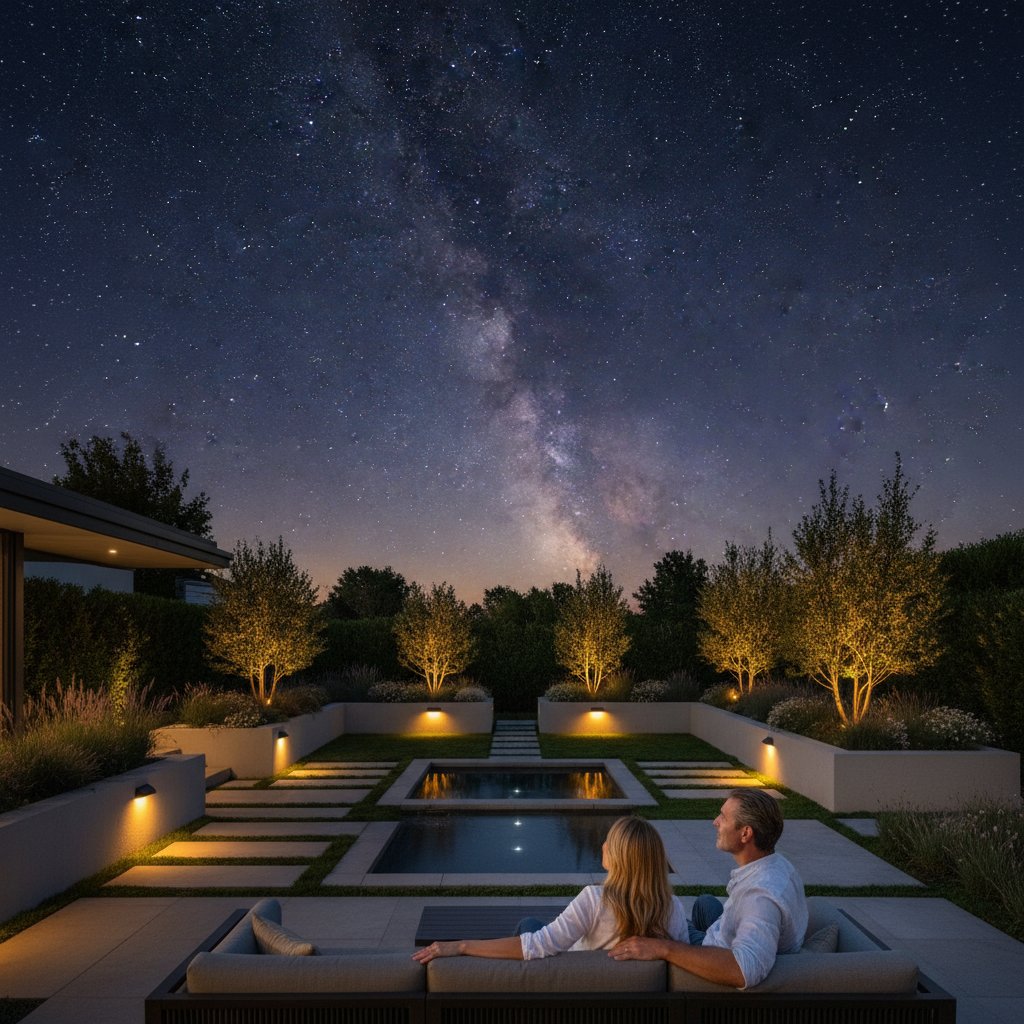
Concerns arise that dark sky lighting renders properties dim or uninviting. In reality, controlled light enhances visibility of architectural elements, clarifies pathways, and fosters a gentle, welcoming ambiance. This equilibrium supports safety alongside serenity.
Consider a bright floodlight versus low, shielded walkway fixtures. The floodlight evens out details, while targeted lights accentuate textures and shapes. Natural shadows add depth to stonework and plants, evoking moonlight rather than stark beams.
Choosing Fixtures That Fit Your Style
Dark sky options span styles from rustic lanterns to modern sconces. Prioritize light management over aesthetics alone. Align selections with your home's exterior character for seamless integration.
- Traditional homes suit downward lanterns with metal caps that conceal bulbs while nodding to heritage designs.
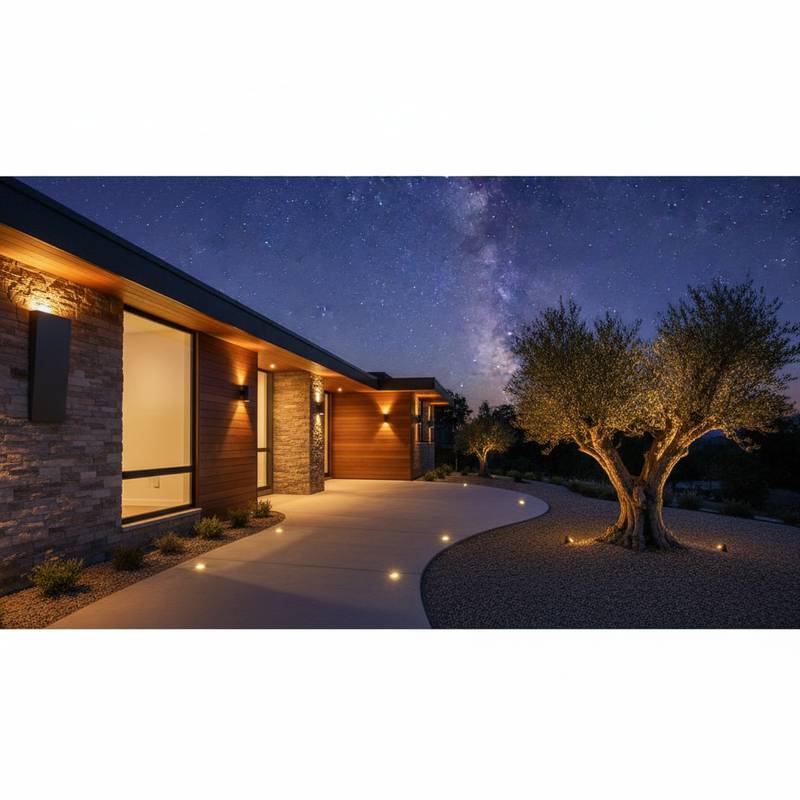
- Modern homes favor sleek fixtures producing subtle pools of light at ground level.
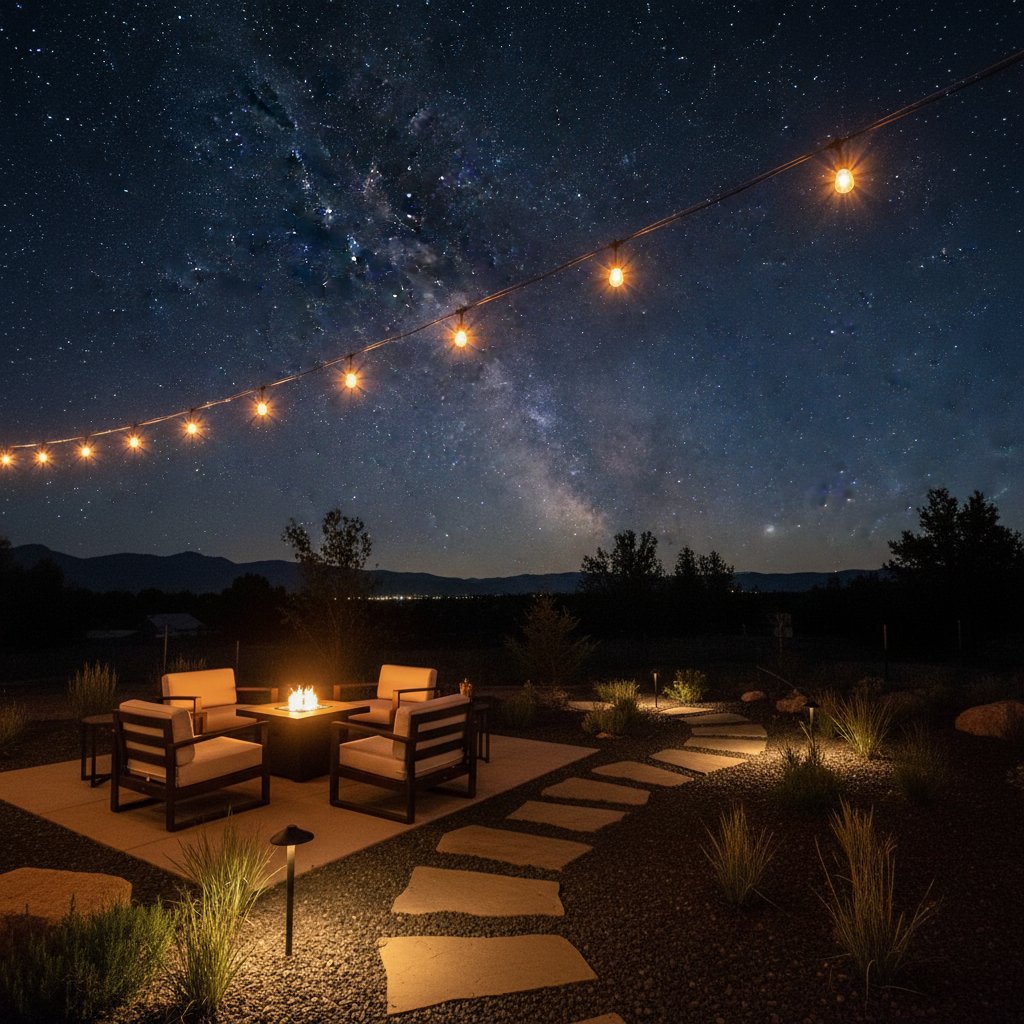
- Cottage or natural settings incorporate low path lights or bollards that merge with foliage for an organic effect.
Seek dark sky certifications verifying proper shielding and direction. Absent certification, inspect for designs hiding bulbs from side or overhead views. Test fixtures in low-light conditions to confirm minimal spill.
Placement and Layering of Light
Layer outdoor lighting like brushstrokes, applying illumination where function and mood demand it. Identify essentials first: entryways, stairs, and walkways require steady guidance. Then, incorporate accents to emphasize features like tree bases, retaining walls, or sculptures.
Introduce brightness variations for visual intrigue. A pathway's soft gleam, a porch column's warm highlight, and a tree's pinpoint beam surpass uniform yard lighting in richness. Position fixtures at 3 to 5 feet heights for paths, angling downward at 10 to 30 degrees to contain light.
Incorporate timers or motion sensors for efficiency. These devices activate lights on demand and deactivate them otherwise, conserving energy and maintaining clear skies.
The Subtle Art of Color and Temperature
Light color influences spatial perception profoundly. Warm whites or ambers harmonize with wood, brick, and stone, evoking firelight's comfort. Cooler tones render surfaces stark and scatter more, impairing star observation.
A warm, shielded fixture often suffices for navigation or entry enhancement. Restrain intensity to let architecture integrate with surroundings, avoiding dominance.
Living with Your Design
After installation, evaluate lighting across multiple evenings. Observe shadow patterns, plant interactions, and brightness balance. Fine-tune angles or wattage for optimal results; even minor shifts enhance harmony.
As landscapes evolve with growing shrubs and maturing trees, revisit arrangements. Periodic adjustments sustain the interplay between structure and nature. Effective lighting recedes subtly, spotlighting stars and home equally.
Integrating Stars into Your Landscape
Opting for dark sky lighting merges design savvy with environmental stewardship. It celebrates outdoor tranquility while elevating home comfort and character. Stars reclaim their place in your view, complementing rather than competing with earthly beauty.