Illuminating Outdoors While Preserving the Night Sky
Enjoy Outdoor Illumination Without Contributing to Light Pollution
Outdoor lighting enhances safety, comfort, and aesthetic appeal around the home after sunset. A thoughtfully lit yard accentuates trees, directs visitors, and fosters a serene environment for evening relaxation. However, excessive or misdirected light can degrade the natural night sky and squander energy. Light pollution emerges as a significant issue for homeowners seeking vibrant, hospitable spaces that do not disrupt wildlife or obscure celestial views. Fortunately, effective solutions exist. Through deliberate design and appropriate fixtures, outdoor lighting achieves functionality, visual charm, and environmental consideration.
Understanding Light Pollution
Light pollution encompasses any superfluous or excessive artificial illumination that extends beyond its designated purpose. This phenomenon illuminates the sky, disrupts wildlife, and impairs stargazing. Typical sources include upward-directed floodlights, unshielded fixtures, and overly intense bulbs. Even seemingly innocuous lighting impacts birds, insects, and nocturnal creatures dependent on darkness for foraging and safe navigation.
For residents, light pollution diminishes nighttime visibility and generates glare or stark contrasts. Rather than bolstering yard security, excessively bright lights hinder eye adaptation, particularly during transitions from indoor to outdoor settings. Mastering control over light direction and intensity forms the foundation of superior outdoor illumination.
The Importance for Homeowners
Targeted, subdued lighting cultivates a more agreeable outdoor atmosphere. It also curtails energy consumption. By directing light precisely to required areas, fewer fixtures and lower-wattage bulbs suffice, leading to diminished utility costs and extended equipment durability. This approach maintains the yard's tranquil aesthetic and prevents disputes with neighbors bothered by intrusive spillover into their properties.
Wildlife reaps advantages as well. Numerous insects gravitate toward intense, unshielded sources, altering patterns that birds depend upon for sustenance. Species such as turtles, bats, and other night-dwellers require dark skies for orientation. Minimizing light pollution supports a harmonious local ecosystem.
Fundamentals of Dark Sky Compliant Lighting
Dark sky lighting involves fixtures and strategies that curtail upward light emission. The objective centers on confining illumination to ground-level applications where utility prevails. The Dark Sky initiative promotes selections that mitigate glare, constrain intensity, and avert skyward spillage among communities and individuals.
Compliant fixtures incorporate three essential attributes:
- Full cutoff construction: The light source remains fully enclosed or shielded, ensuring downward projection exclusively.
- Warm color spectrum: Emitters produce gentle amber or warm white hues, eschewing stark blue-white alternatives.
- Regulated intensity: Deliver sufficient luminosity for the function without excess.
These elements yield a soothing radiance that illuminates pathways and landscape elements without inundating the yard or atmosphere.
Selecting Appropriate Fixtures
Seek fixtures designated as dark sky compliant or full cutoff when making selections. Options span diverse aesthetics, from classic lanterns to contemporary sconces. The critical factor lies in light direction: shielding must obscure the bulb from view while channeling output downward.
Effective fixture categories for outdoor use include:
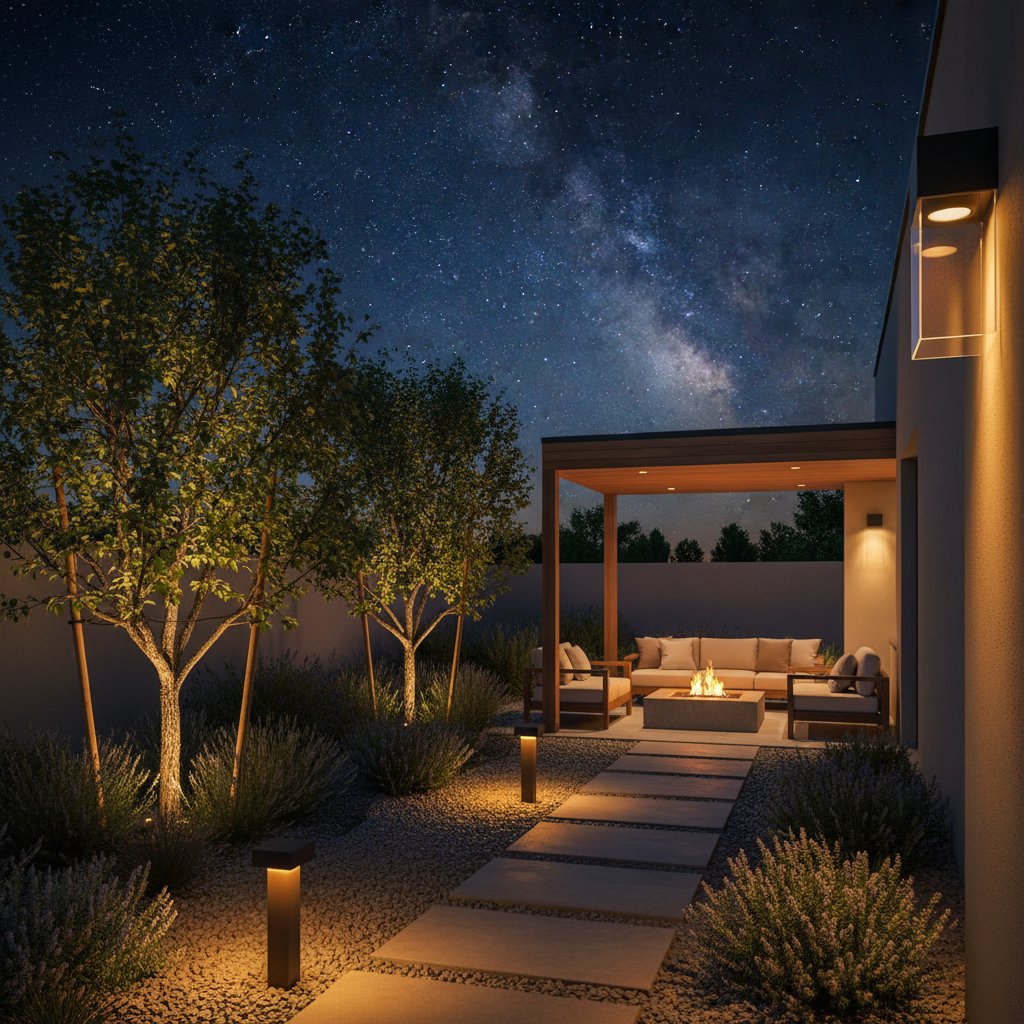
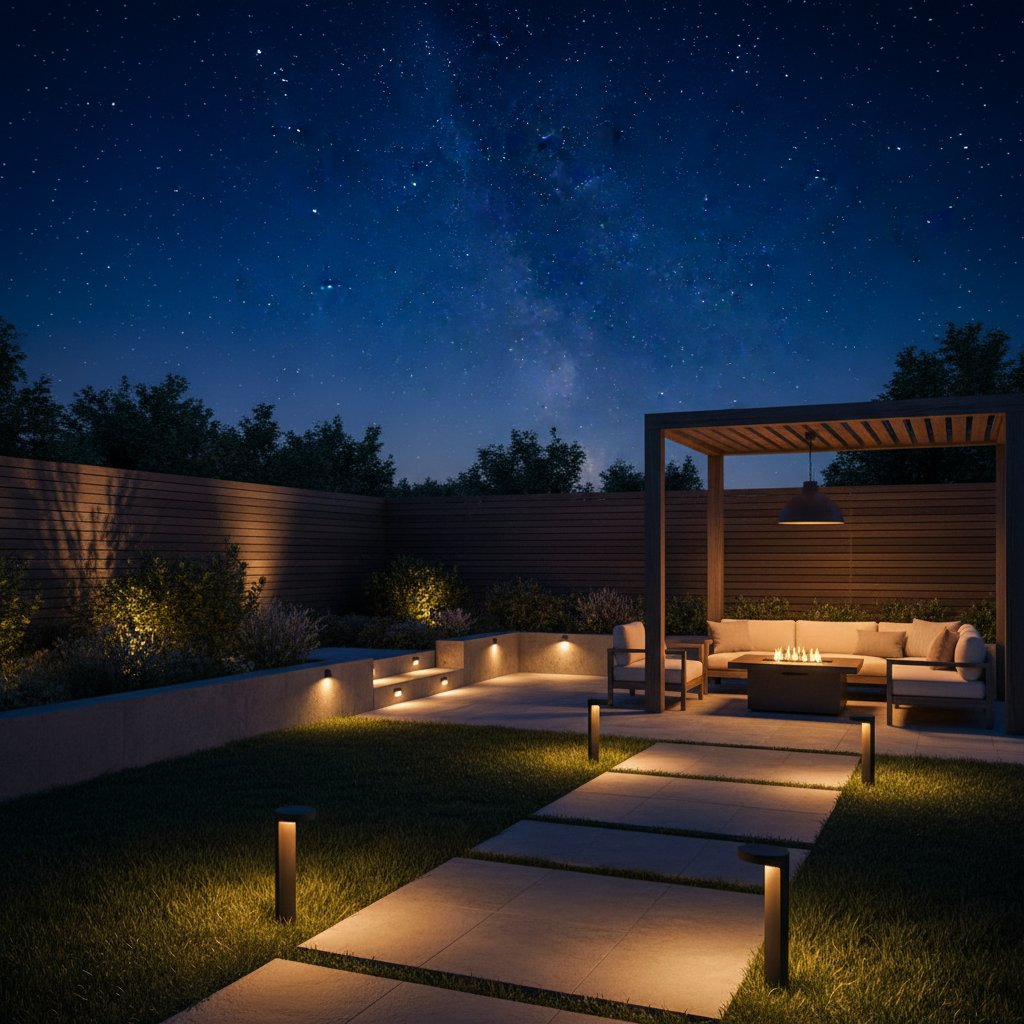
- Downlights: Installed beneath eaves or pergolas to concentrate beams on patios or entryways.
- Pathway illuminators: Featuring low-profile, shielded tops to delineate routes sans glare.
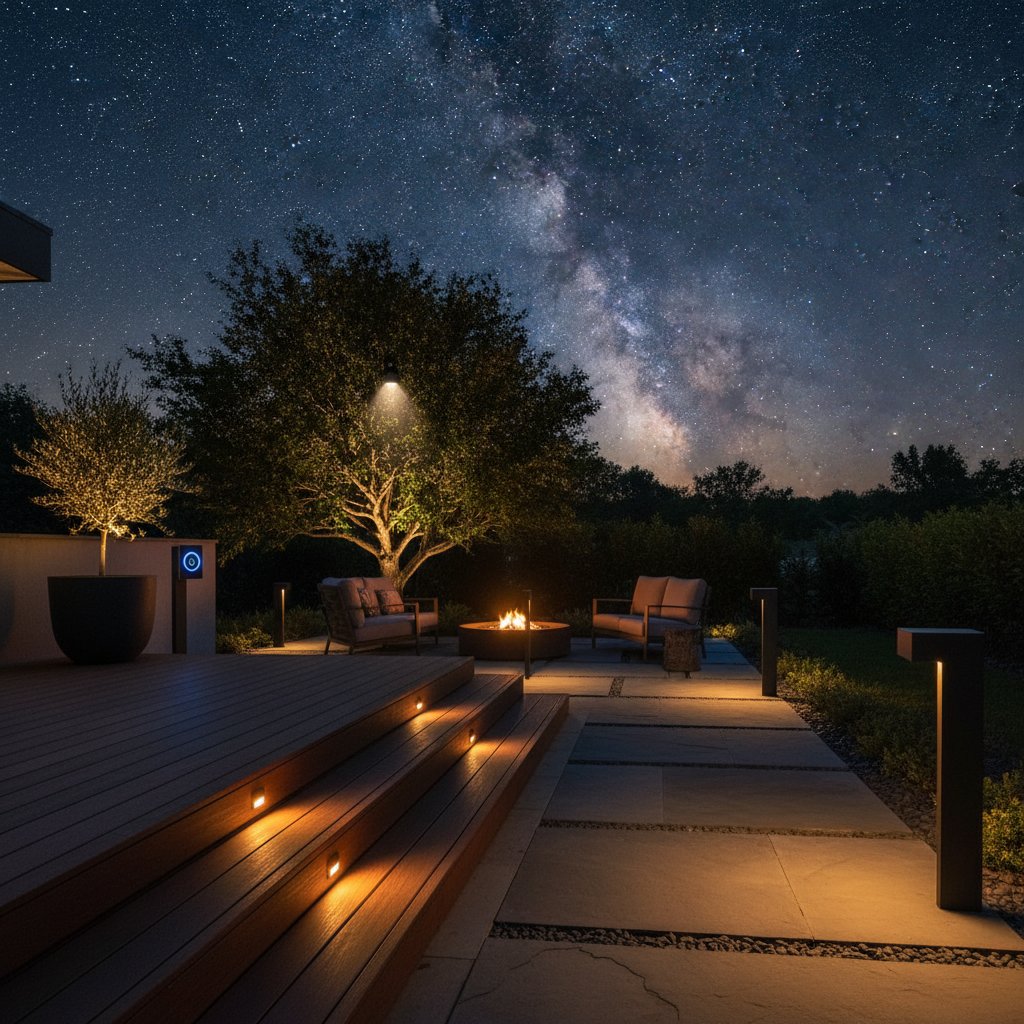
- Step illuminators: Integrated into stairs or walls for unobtrusive hazard prevention.
- Wall-mounted units: Offering diffused, managed light at portals or garages.
Steer clear of floodlights except in motion-triggered variants aimed correctly. For broader coverage, opt for reduced wattage and a slight downward tilt. Such positioning retains light on the premises and excludes the sky.
Choosing Suitable Bulbs
Bulb selection influences both output intensity and tonal quality in outdoor setups. Optimal choices for efficiency and dark sky adherence are LED variants with warm undertones. Target color temperatures at 3000K or below to achieve a mellow, amber-white illumination that evokes natural warmth.
Measure brightness via lumens rather than watts. Outdoor applications seldom demand over 800 lumens per unit. Pathway needs often range from 100 to 300 lumens. Emphasize contrast creation over simulating daylight. Modest levels further alleviate glare and safeguard night vision.
Implementing Smart Controls for Optimization
Smart controls simplify oversight of outdoor illumination, minimizing inefficiency. Timers, dimmers, or motion detectors restrict operational duration. Timers deactivate lights post-bedtime, while sensors activate on demand. Dimmers adjust levels to suit varying scenarios.
Integration of such systems prolongs bulb and fixture longevity. Continuous overnight use accelerates degradation and elevates consumption. Automation delivers dependable protection without protracted runtime.
Designing the Layout
Prior to installation, assess the yard layout meticulously. Traverse the space at dusk to identify illumination priorities: entrances, stairs, trails, and social zones. Determine precise requirements for each.
Key planning strategies include:
- Illuminate functional zones exclusively: Omit vacant edges or expansive turf areas.
- Employ layered illumination: Merge low-level paths, sconces, and accents for dimension and equilibrium.
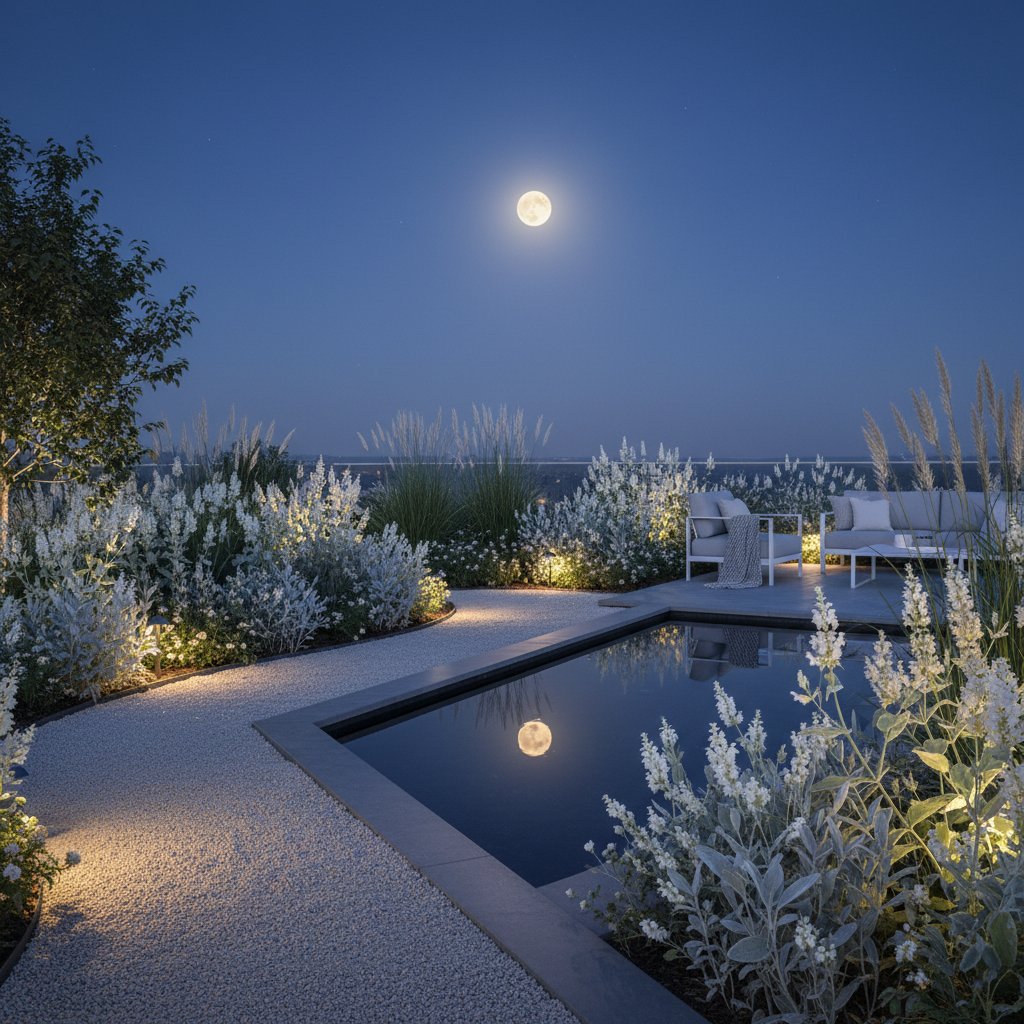
- Account for reflections: Adjust for bounces from pale surfaces or water to curb unwanted brightness.
- Prototype placements: Install temporarily and evaluate from multiple vantage points, including interior views.
Strategic planning guarantees purposeful fixtures and a unified, inviting outdoor domain.
Pitfalls to Sidestep
Well-meaning designs can falter, resulting in inefficiency and excess brightness. Vigilance against these errors proves essential:
- Excessive fixtures: Additional lights do not enhance perception; surplus creates washout and dazzle.
- Exposed sources: Unguarded bulbs strain vision and disperse light indiscriminately.
- Cool-toned emitters: Bluish casts impair adaptation and atmospheric transparency.
- Misaligned directions: Upward or lateral beams dissipate resources and amplify glow.
- Neglected upkeep: Accumulated grime or impairments cause irregular dispersion.
Routine maintenance, accurate orientation, and calibrated intensity profoundly elevate comfort and aesthetics.
Harmonizing Security and Atmosphere
Outdoor lighting must instill security without dominating inherent darkness. Prioritize task-specific beams over broad flooding. Illuminate routes to entrances while permitting lawns and foliage to recede into shadow, fostering depth and hospitality.
Softer emissions near lounging spots preserve serenity. For gatherings, incorporate string lights or lanterns with subdued output. Select shielded, warm variants to concentrate on the immediate area, sparing the overhead expanse.
Advantages of Diminished Light Pollution
Curtailing light pollution yields savings beyond fiscal and stylistic realms. It restores the night sky's visibility. Observing constellations from the backyard instills a profound link to the environment, rendering evenings more tranquil and restorative. Families and visitors appreciate the glare-free nocturnal setting.
Adopting dark sky practices in neighborhoods enhances communal areas' appeal and safety. Residents report superior rest, reduced insect congregations, and refined outdoor discernment. Responsible illumination enriches the shared nocturnal experience.
Steps to Implement Dark Sky Principles
Establishing a compliant outdoor haven demands deliberation rather than complexity. Initiate with substitutions: swap intense fixtures for shielded counterparts. Install warm, low-lumen bulbs and incorporate timers or sensors to curb idle use. Gradually extend these upgrades across the property for consistency.