Night-Blooming Plants: Enchant Evenings in Moon Gardens
A moon garden comes alive after sunset. It captures soft moonlight on pale petals, releases waves of fragrance into the evening air, and reveals subtle textures overlooked during the day. Night-blooming plants enable this transformation. Their light-colored flowers reflect ambient light effectively, while their scents draw nocturnal pollinators and foster a sense of tranquility in outdoor spaces. Select these plants thoughtfully to craft a serene evening haven or an enchanting after-dark landscape.
What Makes a Moon Garden Special
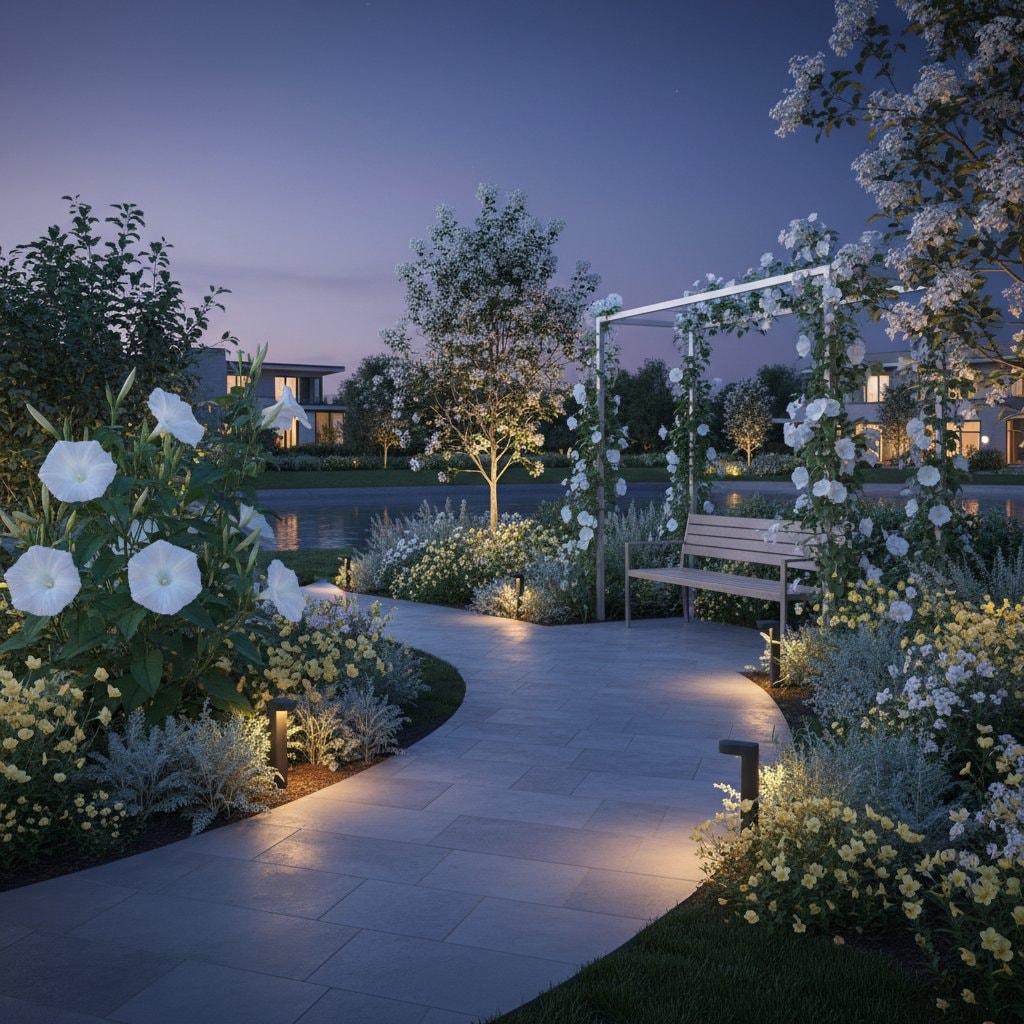
Moon gardens emphasize color, scent, and texture to build an immersive nighttime atmosphere. White or pale flowers provide high contrast against the dark, ensuring visibility under low light. Silvery or gray foliage contributes a subtle shimmer, and fragrant blooms engage the senses fully. Such gardens require minimal space; a modest patio border or container grouping suffices to achieve striking results.
Plan the layout with viewing angles in mind, such as from a porch or indoor window. Position plants to unfurl or illuminate precisely as twilight deepens. Cluster them along walkways or beside benches to maximize appreciation without relying on artificial illumination.
Top Night-Blooming Plants to Try
Certain plants evolved to bloom or intensify their aroma in the evening hours. The selections below suit diverse climates, provided basic growing conditions align. Each offers unique visual and olfactory appeal for moon garden designs.
1. Moonflower (Ipomoea alba)
This vigorous vine unfurls trumpet-shaped white flowers at dusk, each spanning up to six inches across. Blooms persist through the night before wilting at dawn, with successive buds ensuring continuous display. Train moonflowers on arbors or fences in full sun, supplementing with consistent moisture to support growth up to fifteen feet in one season. Hardy in zones 10 to 12, start from seeds indoors for earlier establishment.
2. Evening Primrose (Oenothera biennis)
Delicate yellow blossoms emerge in late afternoon, remaining open until sunrise to lure moths. The plant forms rosettes in its first year and tall spikes in the second, thriving in poor to average soils with minimal intervention. Sow seeds directly in sunny locations; established patches self-seed reliably. Suitable for zones 4 to 9, it adds a wildflower charm to informal moon gardens.
3. Night Phlox (Zaluzianskya capensis)
Releasing a candy-like perfume after dark, this annual produces starry white flowers with purple centers. It forms low mounds ideal for edging beds or filling pots, preferring sandy, well-drained soil and partial shade. Water sparingly to avoid root rot; pinch tips for bushier growth. Best in zones 9 to 11, it delivers outsized fragrance from compact plants.
4. Four O’Clocks (Mirabilis jalapa)
These tubular flowers, in white, pink, or yellow hues, open reliably around 4 p.m. and close by noon the next day. The bushy perennials handle heat and dry spells with ease, blooming profusely in full sun. Plant tubers in spring after frost danger passes, spacing eighteen inches apart for air circulation. Adaptable to zones 7 to 10, they introduce vibrant color variety to nocturnal displays.
5. Tuberose (Polianthes tuberosa)
Tall stems bear clusters of waxy white blooms, exuding a rich, lily-like scent prized in perfumery. Plant bulbs in fertile, loamy soil with full sun exposure, ensuring consistent warmth above 60 degrees Fahrenheit. Lift tubers in cooler climates for winter storage. Thriving in zones 8 to 10, tuberoses elevate moon gardens with elegant vertical accents.
6. Night-Blooming Jasmine (Cestrum nocturnum)
This evergreen shrub emits an intense, jasmine-like fragrance from tiny yellow-green flowers that open post-sunset. It reaches ten feet if unpruned, so trim annually to maintain shape and promote flowering. Site in protected sunny spots with moderate watering; avoid over-fertilizing to prevent leggy growth. Hardy in zones 8 to 11, it anchors larger moon garden compositions.
Choosing the Right Location
Most night-blooming plants demand six or more hours of daily sun to fuel their evening performances, yet they shine brightest in moonlit exposures. Select sites visible from evening gathering areas, like decks or gazebos, to integrate the garden into daily routines. Incorporate subtle path lighting with cool-toned LEDs if natural moonlight proves insufficient.
Prepare soil by incorporating organic matter for drainage and nutrient retention. Test pH levels, aiming for 6.0 to 7.0, and amend clay-heavy ground with sand or perlite. Mulch with light-colored bark to conserve water and suppress weeds while reflecting light onto lower plants.
Complementing with Foliage and Accessories
Reflective foliage amplifies the moon garden's luminosity. Opt for lamb's ear with its fuzzy silver leaves, dusty miller for feathery gray accents, or artemisia for aromatic, finely cut foliage. Intersperse these among bloomers to create layered textures that catch and scatter light.
Incorporate hardscape elements like pale stone paths or whitewashed benches to extend the reflective theme. Position containerized night-bloomers on light surfaces for amplified glow. For illumination, deploy low-voltage path lights or hanging lanterns that cast gentle pools of light, preserving the natural mystique.
Enjoying Your Garden After Dark
Moon gardens invite mindful evenings, where the unfolding of petals and diffusion of scents mark the passage of twilight. Stroll paths at dusk to observe sequential blooming, or linger on a bench to savor evolving fragrances. Such spaces encourage disconnection from daily haste, fostering renewal through quiet observation.
Maintain vitality by deadheading spent flowers to redirect energy, and apply balanced fertilizer monthly during peak growth. Monitor for pests like aphids, treating with insecticidal soap if needed. Adjust groupings seasonally to highlight peak performers.
Cultivating Lasting Evening Serenity
Integrate night-blooming plants and luminous companions to redefine outdoor evenings. This design yields a sanctuary of subtle beauty, where fragrance and light conspire for profound relaxation. Experiment with additions over time to personalize the space, ensuring enduring delight after dark.