- Inherent resistance to pests and diseases: Moss exhibits natural defenses against the insects and fungi that afflict grass varieties.
- Independence from fertilizers: Nutrients derive from ambient air and nearby organic matter.
- Perennial coloration: Moss preserves its hue in cooler or obscured locations, unlike grass that fades or sparsens seasonally.
Such attributes appeal strongly to environmentally aware individuals. Moss lawns diminish fuel consumption, auditory disturbance, and chemical leaching, all while preserving aesthetic appeal.
Optimal Conditions for Moss Growth
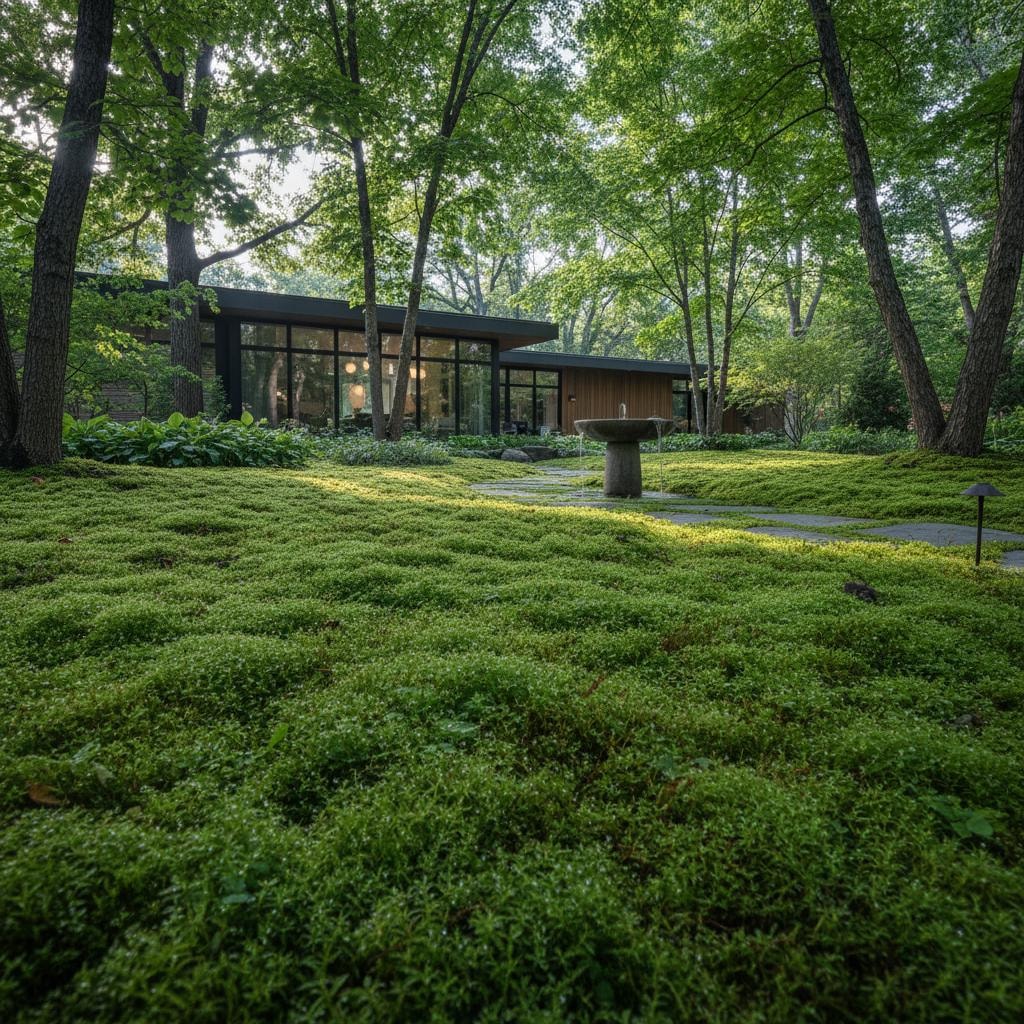
Moss excels in settings unfavorable to many grasses. It thrives in shaded or semi-shaded locales, such as those sheltered by foliage or structures that limit direct solar exposure. Compacted, acidic soil with effective moisture holding capacity supports its development. Existing moss growth in a yard signals compatible conditions.
Preferred environmental factors include:
- Soil pH ranging from 5.0 to 6.0
- Zones receiving dappled or indirect light
- Consistently damp, yet well-drained earth
- Limited pedestrian or animal passage
Should the soil lean alkaline, incorporate elemental sulfur or pine needle mulch to acidify it gradually. Employ a home soil testing kit to assess pH accurately, enabling precise modifications prior to introduction.
Establishing a Moss Lawn: Step-by-Step Guidance
Initiating a moss lawn involves a methodical approach, where initial preparation determines long-term success. Moss propagates deliberately, potentially requiring months for full coverage. Focus on site readiness and consistent moisture during the rooting phase.
Detailed establishment process:
- Prepare the site thoroughly. Eliminate existing grass, weeds, and litter to ensure direct soil contact for the moss.
- Texturize the ground. Employ a rake or stiff brush to scarify the surface lightly, providing purchase points for moss attachment.
- Correct soil acidity. Conduct a pH evaluation and apply amendments as necessary to achieve the target range.
- Select appropriate moss varieties. Opt for species like Hypnum (sheet moss) for broad coverage, Leucobryum (cushion moss) for textured mounds, or Dicranum (rock cap moss) for sturdier options, considering local climate and aesthetic preferences.
- Install the moss securely. Position fragments or plugs onto the soil and tamp them firmly using hands, a wooden board, or a lawn roller to promote adhesion.
- Sustain moisture levels. Apply a fine mist daily via hose or sprinkler for the initial two to four weeks, fostering spore germination and holdfast development.
To accelerate spread, prepare a slurry by pulverizing moss samples with buttermilk or yogurt in a blender, then broadcast it over prepared areas. Reapply as needed until density increases.
Financial and Upkeep Aspects
Initial investment in a moss lawn varies with project scale and moss sourcing. Commercial moss costs approximately $10 to $20 per square foot, exceeding grass seed prices, yet offsets through eliminated upkeep expenses like equipment, utilities, and supplies. For a modest 200-square-foot area, budget $500 to $1,500; expansive installations may warrant professional assistance, elevating costs to $5,000 or more.
Ongoing care remains straightforward. Rake away accumulated leaves or branches periodically to avoid compaction. In arid intervals exceeding two weeks, provide targeted watering to revive any dormant sections. Moss rebounds resiliently from brief stresses, maintaining vitality with these modest attentions.
Prime Locations for Moss Lawns
Moss lawns suit niches where grass falters, including under-canopy zones, forested edges, and inclined northern exposures. Integrate them as borders along pathways, encircling ponds, or framing arboreal bases. In arid or sunlit climates, pair moss with drought-tolerant companions such as Ajuga reptans or Veronica prostrata to achieve hybrid, resilient designs.
Potential Drawbacks and Mitigation Strategies
Moss lawns, while undemanding, invite certain constraints. They withstand light use but succumb to abrasion from frequent traversal or vigorous pet activity; designate them for visual enjoyment rather than recreation. Slow initial growth demands foresight—consider transplanting from thriving yard patches to seed new areas economically.
In regions with intense summer heat, supplemental shading via temporary cloths can protect young installations. Monitor for invasive competitors like liverwort, removing them promptly to safeguard moss dominance.
Advancing Your Landscape with Moss
Transitioning to a moss lawn reshapes outdoor areas into tranquil, enduring havens. Dedicate time to site assessment and preparation for optimal results. Identify promising shaded enclaves, initiate with a test plot of 50 square feet, and observe growth patterns over a season. This measured expansion yields a customized, sustainable yard that harmonizes with nature, alleviating labor while amplifying serenity.