The Appeal of Moss and Fern Walls in Indoor and Outdoor Settings
Imagine entering a space where the air feels fresher and tension eases immediately, as if surrounded by a quiet forest. Many individuals seek this natural harmony but hesitate to integrate greenery into urban homes or patios. Moss and fern walls provide an elegant solution, transforming plain surfaces into vibrant, calming features that enhance both interior and exterior areas.
These installations function as more than decorative elements; they create self-sustaining ecosystems that soften harsh lines, purify the atmosphere, and foster a deeper connection to the outdoors. Suitable for apartments, offices, or expansive terraces, they adapt to diverse environments while demanding little upkeep. This guide details their mechanics, planning process, maintenance routines, and versatile applications to help you incorporate them effectively.
Mechanics of Moss and Fern Walls
A moss and fern wall operates as a vertical garden system mounted on frames or existing surfaces. Indoor versions frequently feature preserved moss for simplicity, while outdoor setups support live plants that flourish in humid, shaded conditions. The design replicates natural habitats, such as woodland floors or stream banks, to ensure plant vitality.
Key components include:
- Structural support: A sturdy frame or panel secures the assembly to walls or freestanding bases.
- Hydration layer: Materials like felt or coir retain moisture for root health without waterlogging.
- Nutrient base: A soil-less medium supplies essentials and stabilizes moss and fern attachments.
- Water delivery: Automated drippers or manual misters provide consistent hydration for live installations.
Together, these parts form a cohesive unit that promotes growth and longevity, turning vertical space into a thriving green canvas.
Planning a Moss and Fern Wall
Effective planning ensures your moss and fern wall integrates seamlessly and performs optimally. Begin by defining its purpose: will it serve as a visual centerpiece, temperature regulator, or privacy enhancer? Consider scale and location to align with your goals.
Evaluate Site Conditions
- Illumination: Select spots with diffused light; direct sun scorches delicate foliage, and total shade limits photosynthesis.
- Humidity levels: Opt for naturally moist areas like kitchens or covered patios; supplement dry zones with humidifiers set to 50-70 percent relative humidity.
- Climate factors: Position away from radiators, vents, or freezing winds to maintain stable conditions between 60 and 75 degrees Fahrenheit.
Design and Scale
Measure the target area precisely, aiming for dimensions that complement the room or yard. For framed units, standard sizes range from 2 by 3 feet for accents to 8 by 10 feet for immersive effects. Use design software or sketches to preview layouts, ensuring the wall enhances rather than overwhelms the space.
Select Varieties
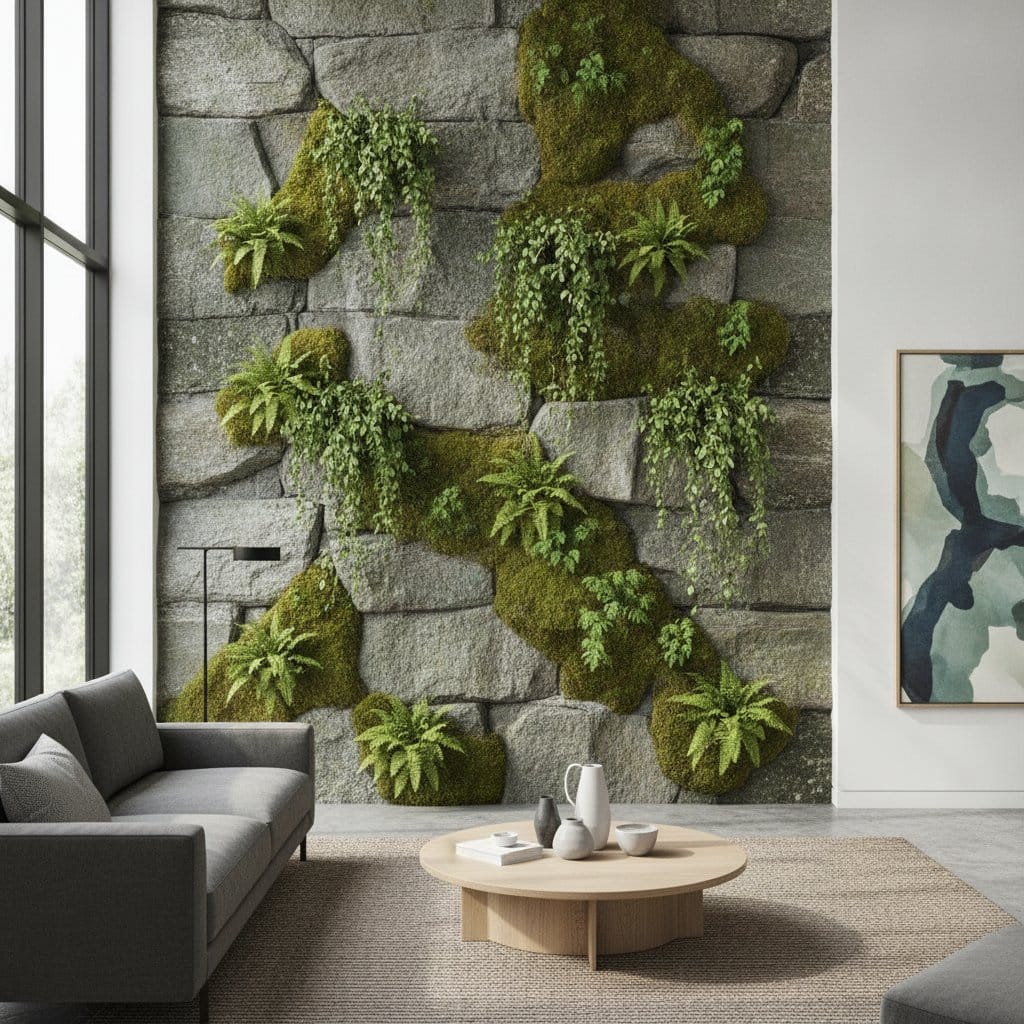
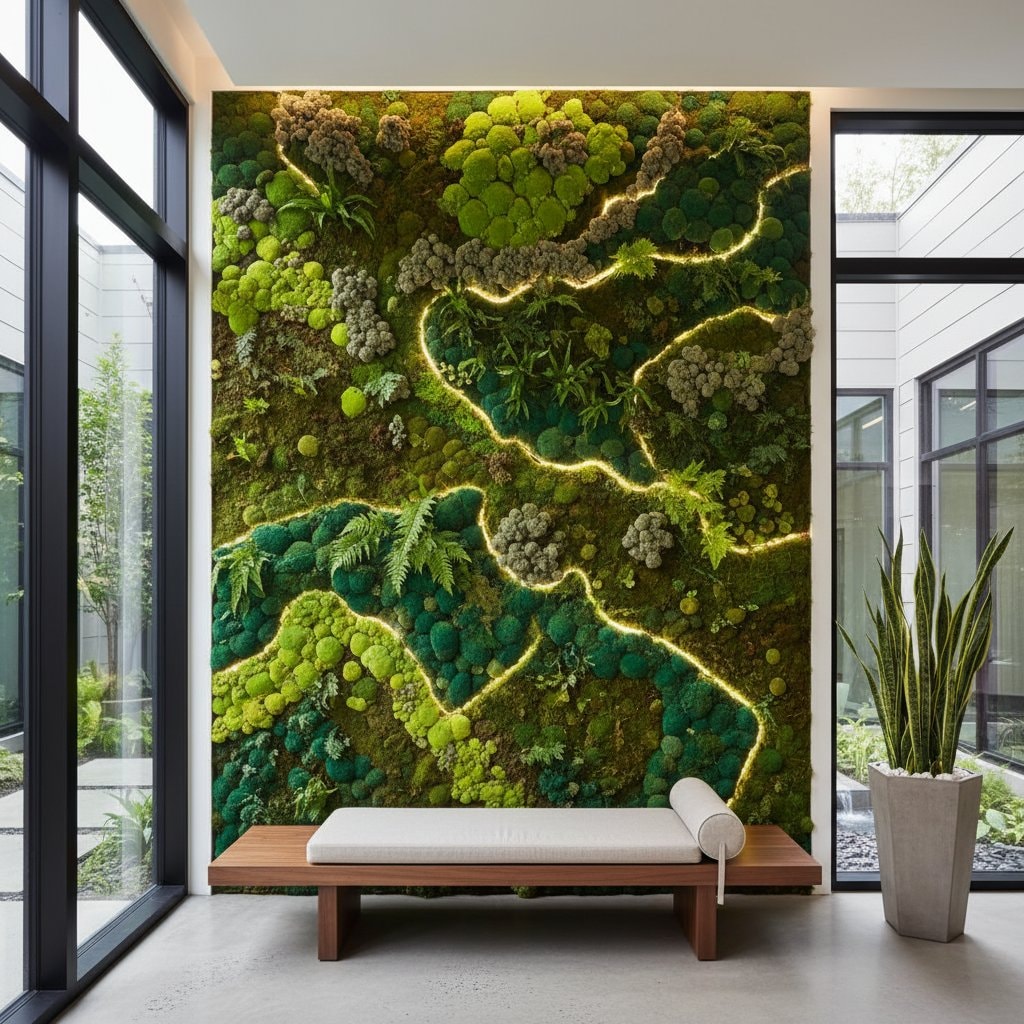
Choose moss types like reindeer moss for cushion-like texture or mood moss for undulating forms. Pair with ferns such as Boston varieties for lush fullness or bird's-nest types for compact elegance. Combine species for layered interest: low-growing moss at the base with arching ferns above, creating dynamic patterns that evolve with light.
Maintenance for Moss and Fern Walls
Proper care sustains the vibrancy of moss and fern walls, with routines varying by installation type. Regular attention prevents common issues and extends lifespan.
Live Installations
- Hydration schedule: Apply a fine mist every 2-3 days, or install timers on drip lines to deliver 1-2 ounces per square foot weekly, adjusting for seasonal dryness.
- Lighting management: Provide 4-6 hours of indirect sunlight daily; employ full-spectrum LED grow lights on a 12-hour cycle for indoor low-light areas.
- Debris removal: Brush away fallen leaves weekly with a soft nylon tool, followed by a distilled water rinse to avoid mineral buildup.
- Pruning techniques: Snip overgrown fronds at the base using sterilized shears every 4-6 weeks to promote even density and prevent disease.
Preserved Versions
- Environmental control: Shield from excess moisture and UV exposure to preserve color; ideal for dry, climate-controlled rooms.
- Surface upkeep: Wipe with a microfiber cloth monthly, or use compressed air to dislodge particles without disturbing the structure.
Monitor monthly for indicators like browning edges or wilting, tweaking conditions promptly to restore balance.
Versatile Applications for Moss and Fern Walls
Moss and fern walls adapt to numerous scenarios, enhancing functionality and aesthetics.
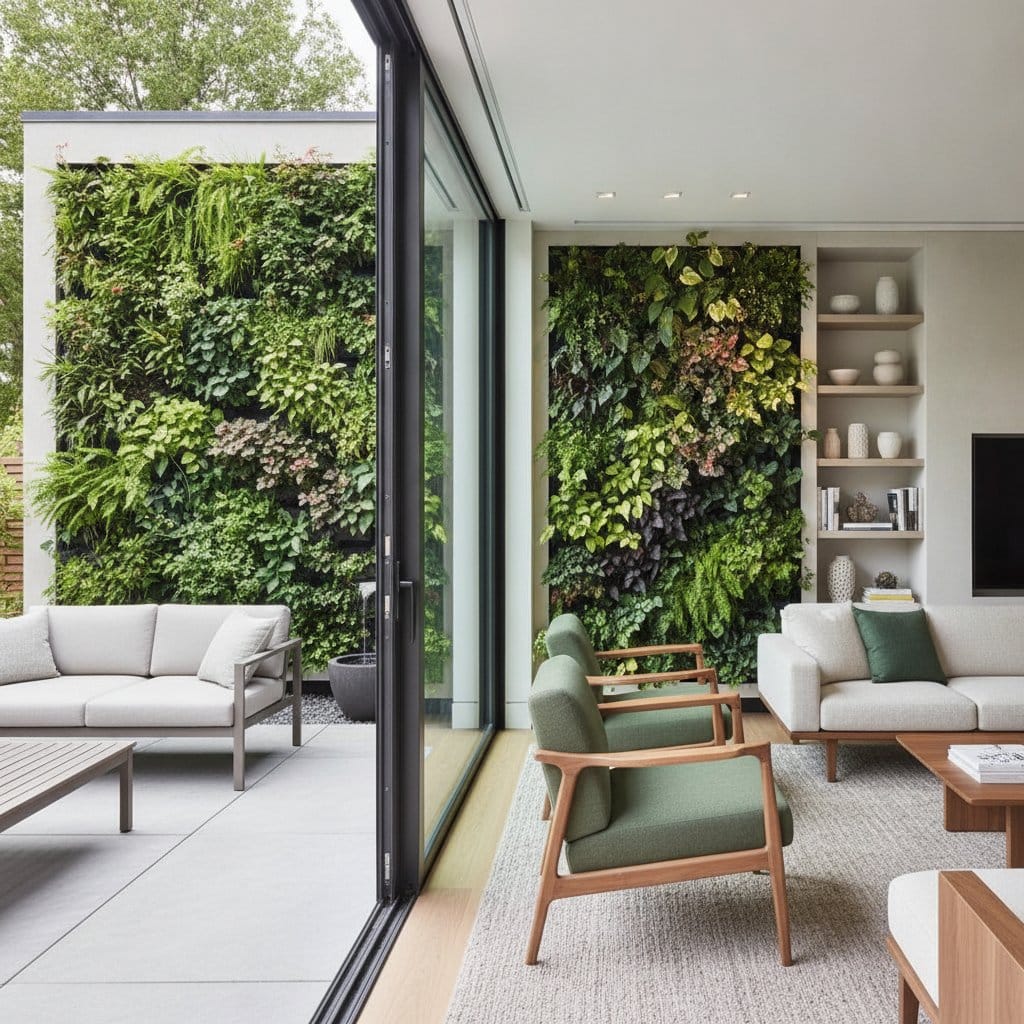
- Living room focal points: Mount behind seating areas to absorb sound and introduce organic texture against modern furnishings.
- Humid sanctuaries: Install in showers or steam rooms, where ferns like nephrolepis exaltata thrive and amplify relaxation.
- Patio dividers: Arrange interlocking panels to screen views while allowing airflow, softening urban edges with natural softness.
- Workspace enhancers: Position near workstations to boost productivity; studies show greenery reduces cognitive fatigue by 15 percent.
- Welcoming thresholds: Frame doorways with slim vertical strips to infuse entry spaces with immediate freshness and invitation.
These uses highlight how such walls personalize environments, blending utility with artistic expression.
Ecological Advantages
Moss and fern walls contribute meaningfully to healthier surroundings. Live versions filter airborne pollutants, converting CO2 into oxygen at rates up to 10 times higher than potted plants per square foot. They also moderate temperatures, insulating interiors against heat loss and cooling exteriors by evaporative action.
Outdoors, these walls mitigate urban heat islands and attract pollinators, fostering mini-habitats for beneficial wildlife. Preserved options minimize resource use by avoiding live plant replacements, and selecting FSC-certified materials ensures ethical sourcing. Overall, they promote sustainability without compromising design integrity.
Sustaining Long-Term Vitality
A moss and fern wall matures gracefully, with hues intensifying and forms expanding over months. Seasonal shifts influence appearance: brighter greens in spring, deeper tones in fall. Engage actively by tracking growth patterns and refining care to nurture this evolution.
Embrace the gradual pace; moss spreads incrementally, ferns emerge frond by frond, mirroring nature's deliberate rhythm. This process encourages mindfulness, turning routine maintenance into moments of appreciation for resilient, living design.