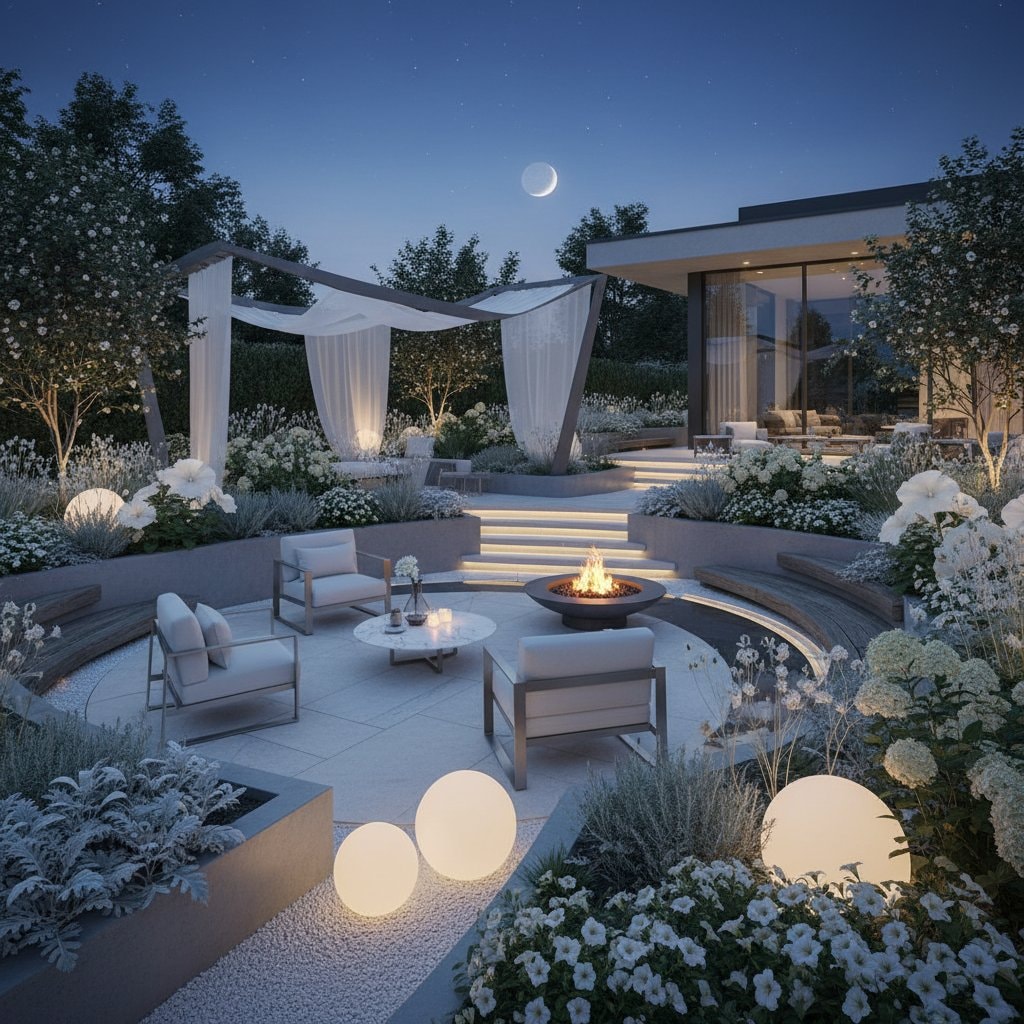
Moon Gardens: Crafting Ethereal Nighttime Landscapes
Many homeowners experience their gardens fading into obscurity after sunset, losing the vibrancy of daylight hours. This transformation prompts a desire for outdoor areas that remain inviting and alive under moonlight. A moon garden addresses this need by emphasizing elements that reflect pale light, release evening fragrances, and create a serene atmosphere.
These gardens focus on plants and features that enhance visibility and tranquility at night. Pale flowers, silver-toned foliage, and soft lighting combine to produce a subtle glow. The result invites evening contemplation, turning ordinary yards into spaces of quiet beauty without requiring extensive resources.
Step One: Assess Your Nighttime Environment
Start by evaluating your yard after dark to understand natural light patterns. Walk through the space on a clear evening and observe how moonlight illuminates certain areas while leaving others in shadow. Identify existing features, such as light-colored paths or reflective surfaces, that could integrate into the design.
Consider these key questions to guide your assessment:
- Which locations draw you for evening relaxation, like a patio or secluded corner?
- Where does moonlight naturally pool, and where do dense shadows dominate?
- Do you envision a compact focal point or an expansive nighttime landscape?
This initial survey aligns your vision with the site's inherent characteristics, allowing the garden to harmonize with the evening ambiance rather than resist it.
Step Two: Plan the Layout and Features
With observations in hand, sketch a basic layout that maximizes moonlight exposure. Position key elements in open areas to capture light effectively, and incorporate pathways or seating to encourage nighttime exploration. Integrate hardscape features like pale gravel walks or white stone borders to amplify reflections.
Select a central theme, such as a circular bed around a bench or a linear border along a fence, to define the space. Ensure accessibility by planning gentle slopes and wide paths for comfortable evening strolls. Budget for materials by prioritizing durable, low-maintenance options that enhance the luminous effect without overwhelming the natural setting.
Step Three: Select Plants for Nighttime Appeal
Plants form the foundation of a moon garden, chosen for their ability to stand out in low light and engage the senses after dusk. Prioritize species with white, pale yellow, or silver hues that reflect moonlight, along with those that bloom or intensify fragrance in the evening.
Night-Blooming Flowers
Certain blooms unfurl specifically at twilight, drawing in night pollinators and adding dynamic interest. Incorporate these reliable options:
- Moonflower (Ipomoea alba): Produces expansive white trumpet flowers that open fully at night, offering a dramatic, luminous display on vines or trellises.
- Evening Primrose (Oenothera biennis): Features soft yellow petals that emerge as daylight wanes, providing delicate contrast and a subtle honeyed scent.
- Four O'Clocks (Mirabilis jalapa): Yields fragrant, tubular blooms in pale shades that persist into the night, ideal for borders or containers.
Silvery and Reflective Foliage
Evergreen or perennial leaves in metallic tones provide year-round structure and shimmer. These selections ensure consistent visual appeal:
- Lamb's Ear (Stachys byzantina): Delivers velvety, silver-gray leaves that catch light softly, perfect for edging or ground cover.
- Dusty Miller (Senecio cineraria): Offers finely textured, pale foliage that brightens dark corners, thriving in well-drained soil.
- Variegated Hosta (Hosta spp.): Certain cultivars with white-margined leaves glow subtly, adding texture in shaded beds.
Evening-Fragrant Additions
Aroma enhances the immersive experience, with scents becoming more pronounced in cooler night air. Layer these companions thoughtfully:
- Night-Blooming Jasmine (Cestrum nocturnum): Emits a potent, tropical perfume from white flowers, best placed near seating areas.
- Garden Phlox (Phlox paniculata): Releases a light, spicy fragrance from pale clusters, attracting butterflies by day and humans at night.
- Lavender (Lavandula angustifolia) or Sweet Alyssum (Lobularia maritima): Provide calming, herbaceous notes that blend seamlessly with bolder scents.
Balance plant heights and densities to avoid overcrowding, ensuring each element contributes to the overall harmony.
Step Four: Integrate Lighting for Enhanced Glow
Strategic illumination complements natural moonlight, extending the garden's usability without overpowering its subtlety. Opt for low-voltage LED fixtures in cool white tones to mimic lunar light, positioning them to highlight plants and paths.
Install solar-powered stake lights along borders or uplights beneath taller specimens to create focal points. Use reflective mulch or white pebbles around bases to bounce light upward. For safety and efficiency, bury cables properly and select weather-resistant models rated for outdoor use.
Test arrangements during twilight to adjust for even distribution, avoiding harsh spots that disrupt the serene mood. This layer of artificial light ensures the garden remains enchanting even on overcast nights.
Step Five: Maintain the Luminous Design
Sustained care preserves the moon garden's vibrancy, integrating routine tasks with the evening routine. Water deeply in the morning to minimize evaporation, and apply mulch to retain moisture while keeping soil cool for root health.
Address these specific upkeep needs:
- Clean lighting fixtures regularly to prevent buildup that diminishes output, and inspect connections for wear.
- Replenish pale ground covers annually to maintain reflectivity, raking away debris that absorbs light.
- Prune overgrown branches selectively to permit moonlight penetration, shaping plants for optimal form.
These practices not only sustain aesthetics but also deepen your engagement with the space, turning maintenance into mindful moments.
Embrace the Evening Transformation
As your moon garden matures, it evolves into a vital extension of your home, encouraging frequent nighttime visits. The interplay of light on foliage and blooms fosters relaxation, while fragrances soothe the senses amid the quiet.
Observe subtle changes, from the opening of flowers to the calls of nocturnal wildlife, which enrich the experience. Introduce refinements gradually, such as additional reflective ornaments or seasonal plantings, to keep the design fresh. Ultimately, this garden cultivates a profound sense of tranquility, proving that nighttime holds its own profound allure.