Gravel Gardens in the Mediterranean Style
A garden built with stone and resilient plants brings a quiet sense of order. Gravel gardens deliver texture and permanence while requiring little water or routine care. When planned with Mediterranean principles, these spaces recall dry hillsides and aromatic herbs. Homeowners appreciate the balance of visual appeal and reduced upkeep across every season.
Core Principles Behind Mediterranean Designs
Mediterranean landscapes developed around limited rainfall and rocky ground. Plants that succeed there tolerate drought and poor soil. The same approach works at home by replacing thirsty lawns with gravel and compact, hardy species. This shift reduces irrigation needs and creates a landscape that feels settled rather than imposed.
Selecting Gravel for Surface and Function
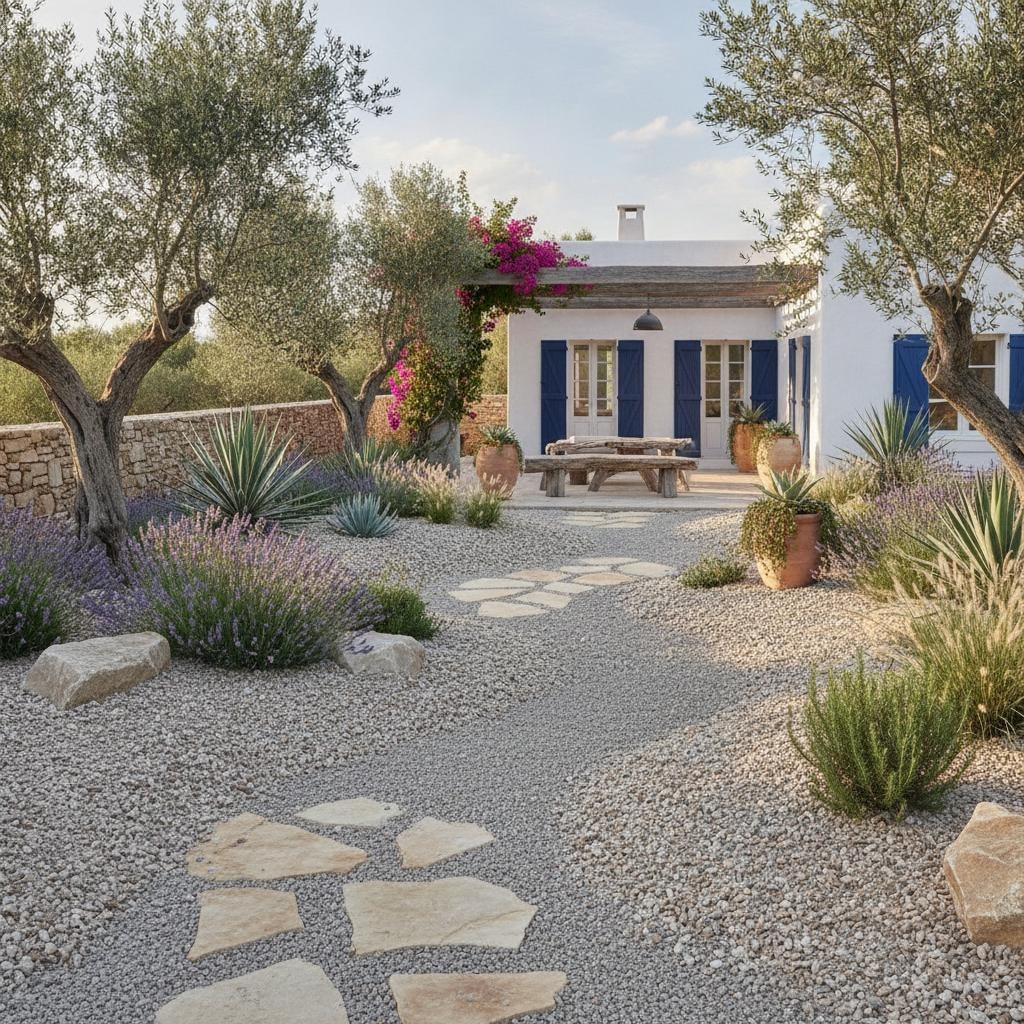
Choose gravel according to the desired mood and practical needs. Rounded river stone produces a softer appearance, while crushed angular gravel forms a firmer, more structured surface. Pale shades reflect sunlight and brighten the space, whereas warm beige tones complement terracotta and masonry. A depth of two to three inches suppresses weeds and permits drainage when laid over landscape fabric.
Recommended Plants for Gravel Conditions
Plants must endure full sun and minimal moisture once established. The following selections perform reliably:
- Lavender supplies fragrance and upright form.
- Rosemary serves as a low hedge or spreading cover.
- Thyme fills gaps between stones and releases scent underfoot.
- Sage contributes soft foliage and muted color.
- Santolina creates rounded mounds topped with yellow flowers.
- Sedum and sempervivum store water and tolerate neglect.
Ornamental grasses such as blue fescue add motion. In suitable climates, a dwarf olive or citrus provides a focal point.
Arranging Paths and Repetition
Repeat plant groupings and gravel tones to unify the layout. Curved gravel paths guide movement without sharp angles. Low stone edging contains the surface and adds definition. In smaller yards, one prominent tree or shrub often creates stronger impact than scattered specimens. Larger sites benefit from distinct zones, such as an herb section and a grass section, all linked by the same gravel.
Establishment and Ongoing Care
Water new plants regularly during the first season. After roots develop, irrigation can drop sharply. Gravel mulch slows surface evaporation and gradually accumulates fine soil that supports occasional self-sown seedlings. Hand-weeding every few weeks maintains order. Light pruning after bloom encourages compact growth in most Mediterranean herbs.
Pairing Stone Elements with Planting
Select hardscape materials that share the gravel palette. Terracotta containers, limestone borders, and weathered wood benches reinforce the material language. A small recirculating basin introduces sound without dominating the scene. Low lighting positioned to graze across gravel or accent a specimen plant extends usability into evening hours.
Adapting to Local Soil and Weather
Improve drainage in heavy clay by mixing coarse sand or grit into the top layer. In sandy ground, the gravel layer itself helps retain moisture near roots. Select cold-hardy varieties where winter frost occurs. Silver-leaved herbs and many grasses meet both drought and freeze requirements.
Daily Experience of the Finished Garden
Once settled, the garden rewards observation rather than labor. The scent of warmed herbs and shifting light on stone become daily pleasures. Plants spread slowly, gravel settles, and the space acquires the subtle changes that come with time. Begin with one bed to test plant response and gravel behavior before expanding.