Designing Dark Sky Gardens with Low-Glow Lighting
Many homeowners experience a sense of disconnection when stepping into their yard at night. The stars appear dimmed by excessive artificial light, and the atmosphere lacks serenity. Low-glow lighting offers a solution, allowing you to illuminate pathways and features while preserving the natural beauty of the night sky.
A dark sky garden emphasizes harmony between human design and the environment. This approach reduces light pollution, supports local wildlife, and creates inviting spaces for relaxation. By selecting appropriate fixtures and strategies, you achieve subtle illumination that enhances rather than overwhelms your landscape.
Step 1: Assess Your Current Lighting
Start by evaluating your garden after dusk. Walk through the space and identify areas where light spills unnecessarily, such as onto fences or into adjacent properties. Observe shadows that create hazards and bright spots that disrupt the overall ambiance.
Consider these questions during your assessment:
- Does this lighting serve a practical purpose, or does it stem from routine?
- Can existing fixtures be replaced with lower-output alternatives?
- Are there opportunities to rely on natural moonlight for ambient glow?
Document your findings in a notebook or sketch a simple map. This evaluation reveals opportunities to minimize light while maximizing functionality, setting the foundation for a balanced design.
Step 2: Plan Fixture Placement Thoughtfully
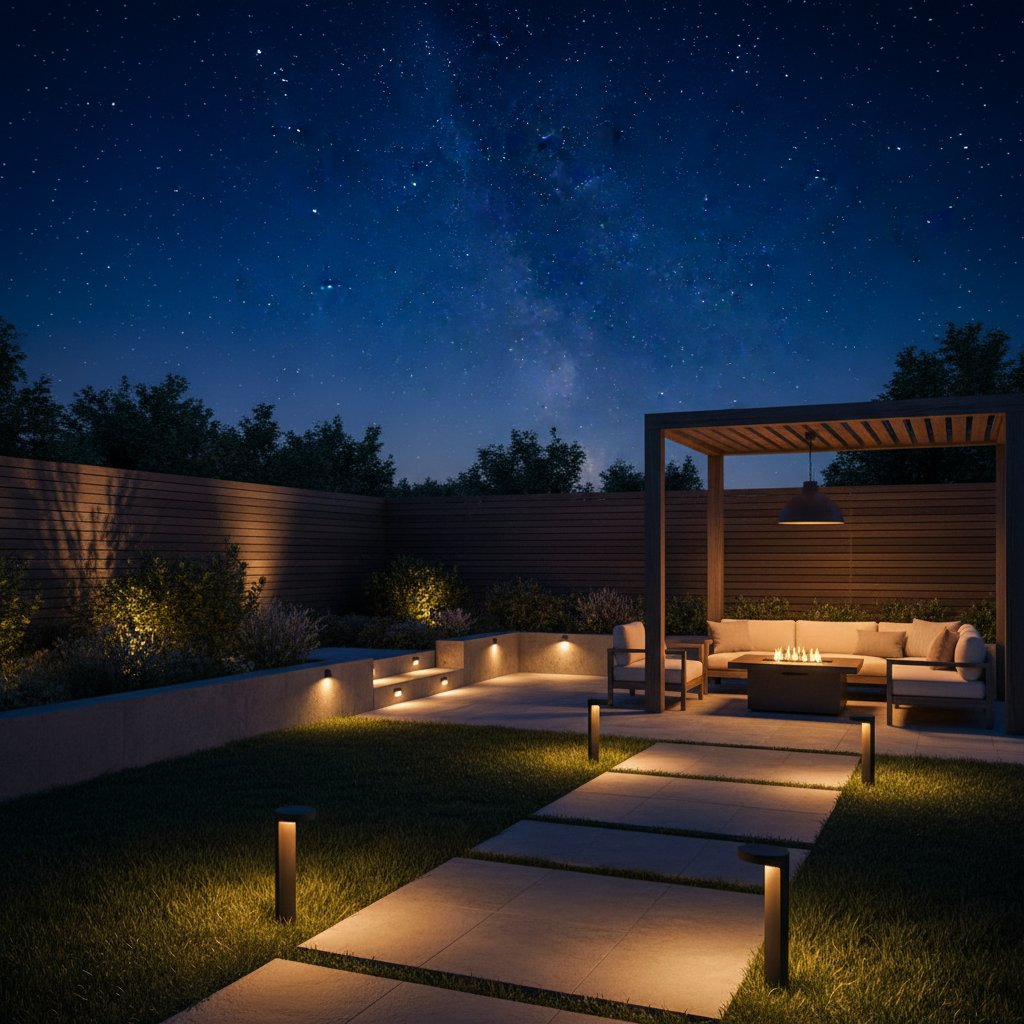
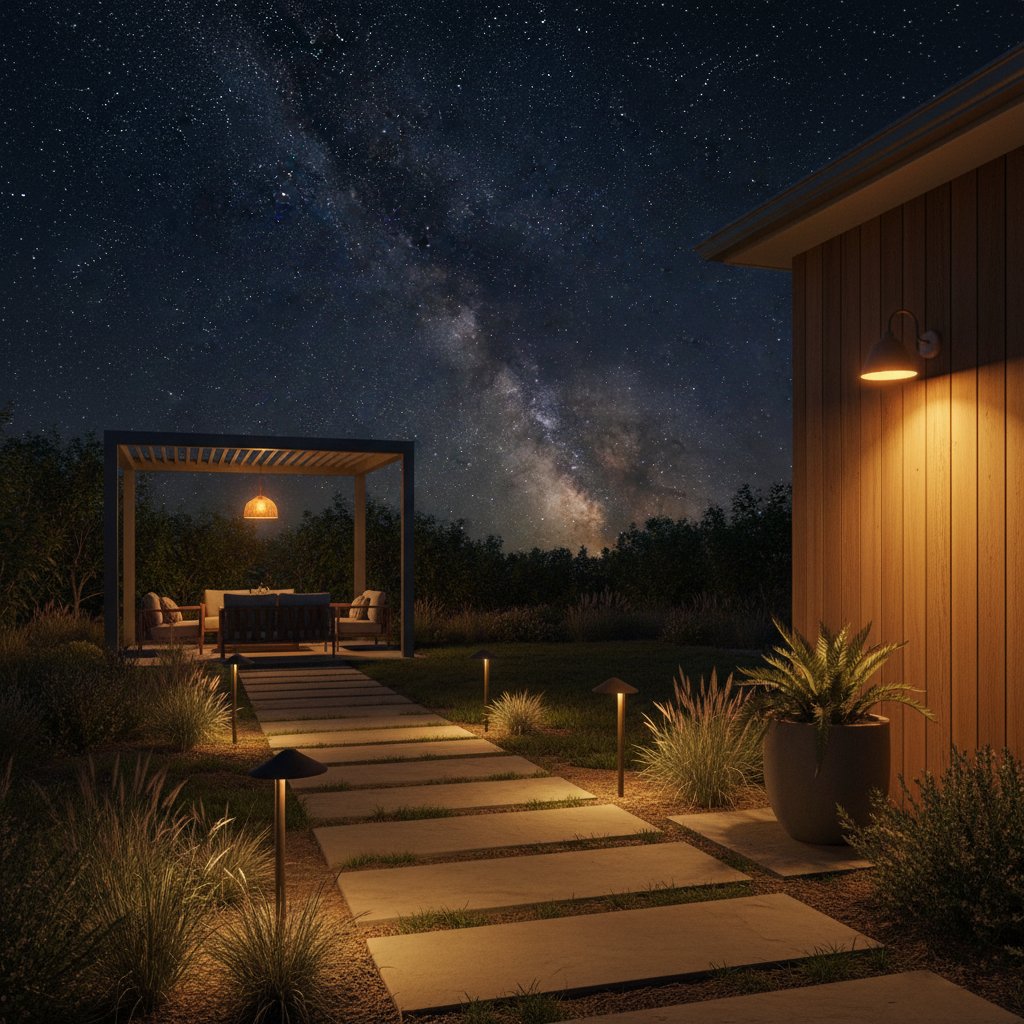
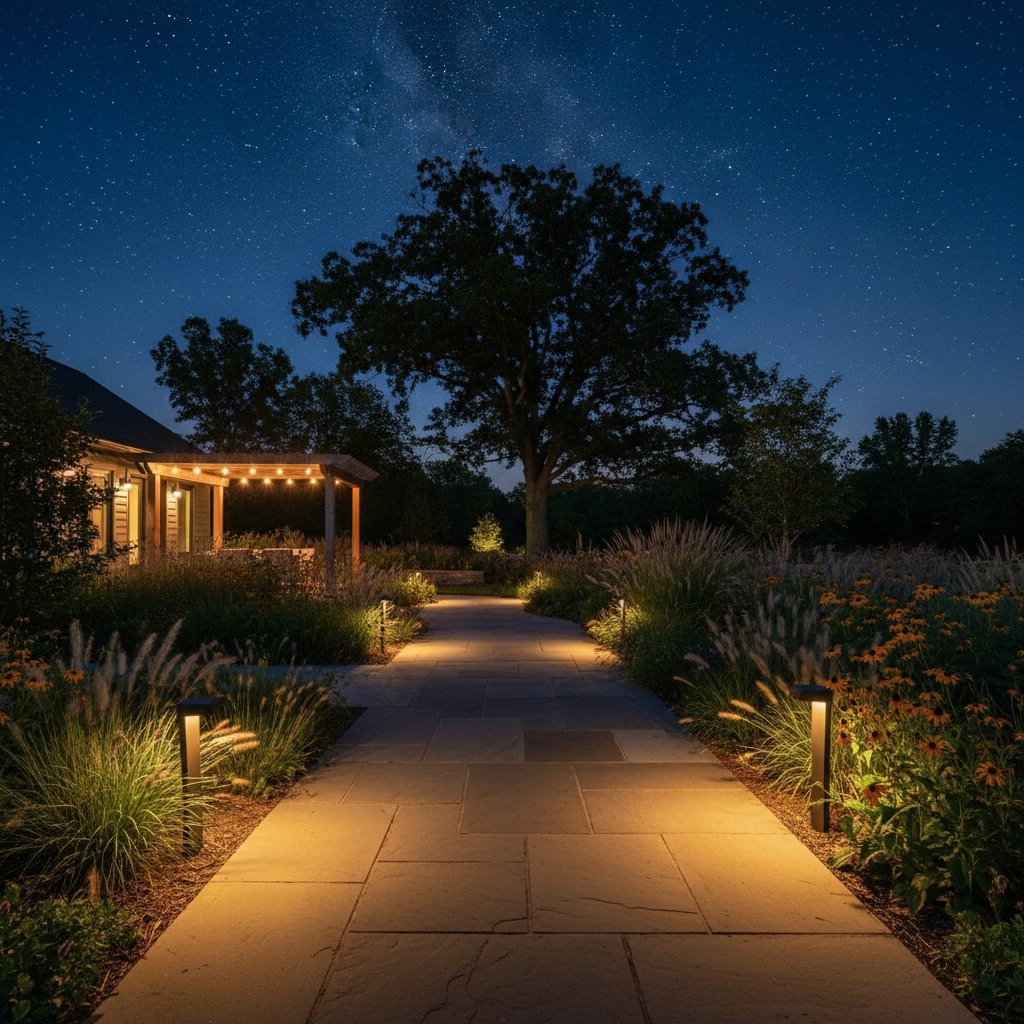
Strategic positioning prevents light from escaping upward or sideways, directing it where needed most. Install fixtures at ground level or along paths to guide movement without broad illumination. Use shielded designs that focus beams downward, avoiding skyward glare.
Prioritize key areas like entryways, seating zones, and plant borders. Space fixtures 6 to 10 feet apart for even coverage without overlap. Test placements during twilight to ensure no dark pockets compromise safety while keeping the sky clear.
This step ensures your lighting integrates seamlessly with the garden's contours, promoting both aesthetics and ecological sensitivity.
Step 3: Choose Appropriate Bulbs
Bulb selection influences the garden's warmth and intensity. Opt for warm white LEDs with a color temperature of 2700K to 3000K, which mimic the soft hues of firelight or dusk. These tones create a cozy atmosphere without the harshness of cooler blues.
Limit lumens to 200-400 per fixture to maintain subtlety. For larger areas, combine multiple low-output bulbs rather than a single high-powered one. Always verify energy efficiency ratings to support sustainable practices.
Proper bulbs enhance visual comfort and reduce eye strain, allowing the garden to feel nurturing rather than stark.
Step 4: Integrate Smart Controls
Automated systems refine your lighting's efficiency and responsiveness. Install timers to deactivate lights shortly after sunset or upon your return indoors. Motion sensors trigger illumination only in active zones, conserving energy during quiet hours.
Dimmers provide flexibility, enabling adjustments from 10% to full brightness based on the evening's needs. Pair these with weather-resistant housings to withstand outdoor conditions. Program settings to align with seasonal changes, such as earlier shutoffs in summer.
These tools minimize waste and adapt to your lifestyle, ensuring the garden remains dark when unoccupied.
Step 5: Perform Regular Maintenance
Sustained performance demands routine attention. Inspect fixtures monthly for dust accumulation or water damage, which can diffuse light unpredictably. Wipe lenses with a soft cloth and mild soap to restore clarity.
Trim encroaching foliage that might alter beam patterns. Annually review and replace bulbs to uphold consistent warmth and output. Address any loose wiring promptly to prevent safety issues.
Consistent care preserves the design's intent, keeping your garden's glow gentle and purposeful over time.
Supporting Wildlife in Your Garden
Artificial light disrupts nocturnal behaviors, disorienting insects, birds, and mammals essential to biodiversity. Low-glow strategies mitigate these effects, allowing fireflies to signal mates and owls to hunt effectively.
Incorporate native flora like evening primrose or milkweed to draw twilight pollinators. Position water features away from direct lighting to provide safe havens. Over time, observe increased activity, signaling a thriving ecosystem.
This integration fosters a resilient garden that benefits both you and the surrounding environment.
Engaging Your Community
A well-lit dark sky garden often sparks curiosity among visitors. Host evening gatherings to showcase how subtle lighting enhances stargazing and conversation. Explain your choices, from shielded fixtures to automated timers, to demystify the process.
Encourage neighbors to adopt similar practices, perhaps through a shared newsletter or local event. Collective efforts amplify impact, reducing community-wide light pollution and revealing more of the cosmos.
Such interactions build connections and inspire broader environmental stewardship.
Observing Seasonal Evolution
Monitor how your lighting interacts with nature's cycles. In autumn, falling leaves may require repositioning; in winter, shorter days call for timer adjustments. Note returning species, like crickets in spring, as indicators of success.
Refine elements gradually, experimenting with slight dimming or added shielding. These observations deepen your appreciation for the garden's dynamic balance.
Ultimately, a dark sky garden reconnects you to celestial wonders, transforming nightly routines into moments of wonder and calm.