Dark Sky Lighting: Low-Glare Outdoor Designs for 2026
Outdoor lighting influences the appearance of a home and the comfort of outdoor spaces during nighttime hours. It also impacts neighbors, local wildlife, and the visibility of stars overhead. For these reasons, an increasing number of homeowners adopt dark sky lighting. This method minimizes glare, curbs light pollution, and delivers the illumination required for safety and functionality.
Homeowners planning new installations or replacements find that dark sky designs foster a serene, natural ambiance at night. This guide defines dark sky lighting, describes its mechanisms, identifies qualifying products, and outlines installation expectations for residential properties.
The Impact of Light Pollution
Light pollution occurs when artificial sources illuminate the night sky and obscure celestial views. It disrupts wildlife behaviors and affects sleep patterns for humans and animals alike. Although lighting from a single residence appears minor, cumulative effects from surrounding properties amplify the issue.
The primary forms of light pollution include:
- Skyglow: A luminous haze that conceals stars in urban or suburban settings.
- Glare: Harsh illumination that causes visual discomfort or impairs sight.
- Light trespass: Unintended spillover into unwanted areas, such as neighboring interiors.
- Clutter: Confusing arrays of overlapping light sources.
Dark sky lighting addresses each form. By directing and moderating light from outdoor fixtures, individuals maintain clear pathways, driveways, and patios while preserving unobstructed night skies.
Categories of Dark Sky Compliant Outdoor Fixtures
Shopping for dark sky options reveals diverse fixture categories suited to specific applications. Selection depends on the space requiring illumination.
Wall-Mounted Fixtures
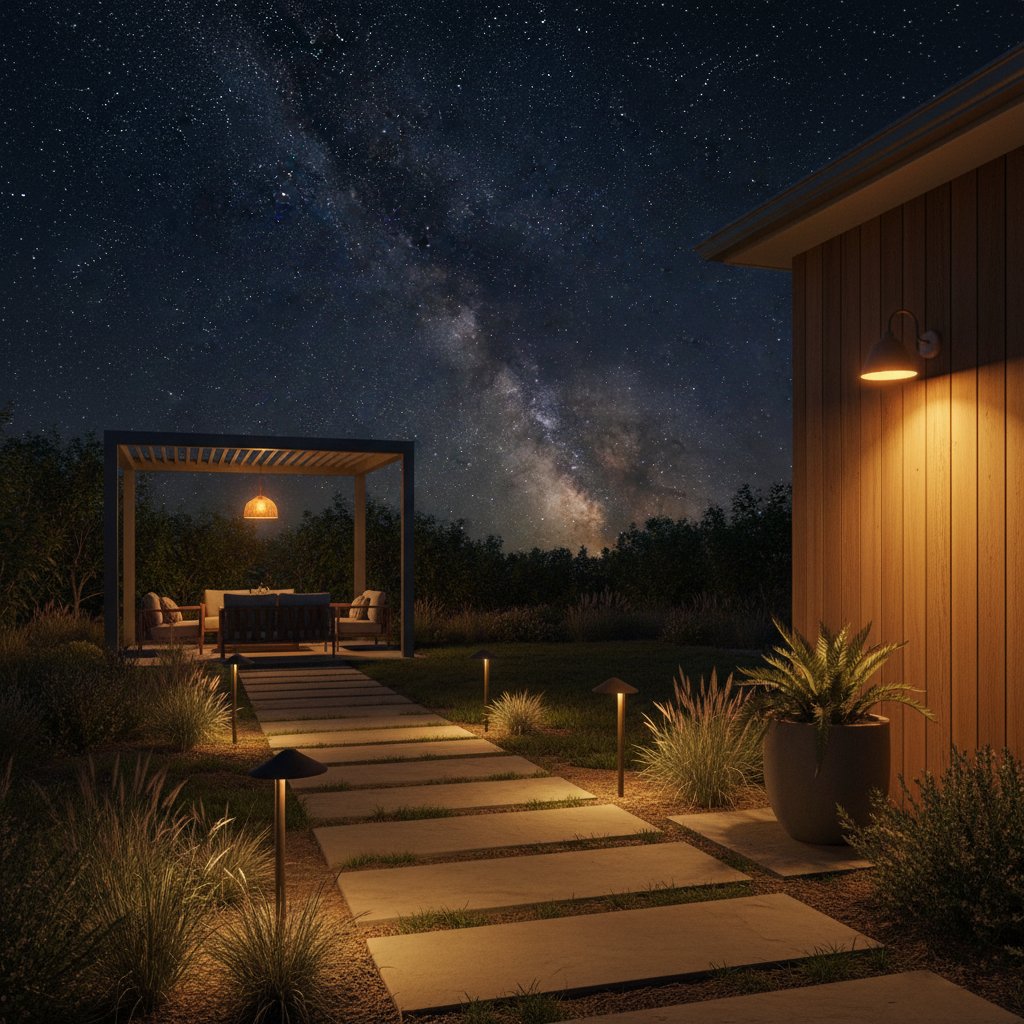
Wall packs or sconces suit entryways, garages, and patios. Opt for models featuring a solid top and complete shielding around the bulb. Such designs direct light downward in a controlled pattern, preventing upward scatter.
Post-Mounted Lanterns
These fixtures enhance walkways and driveways with security and elegance. Select versions with opaque tops and lateral shields that confine light to ground level. Steer clear of transparent or diffused globes, which disperse light indiscriminately.
Pathway Illuminators
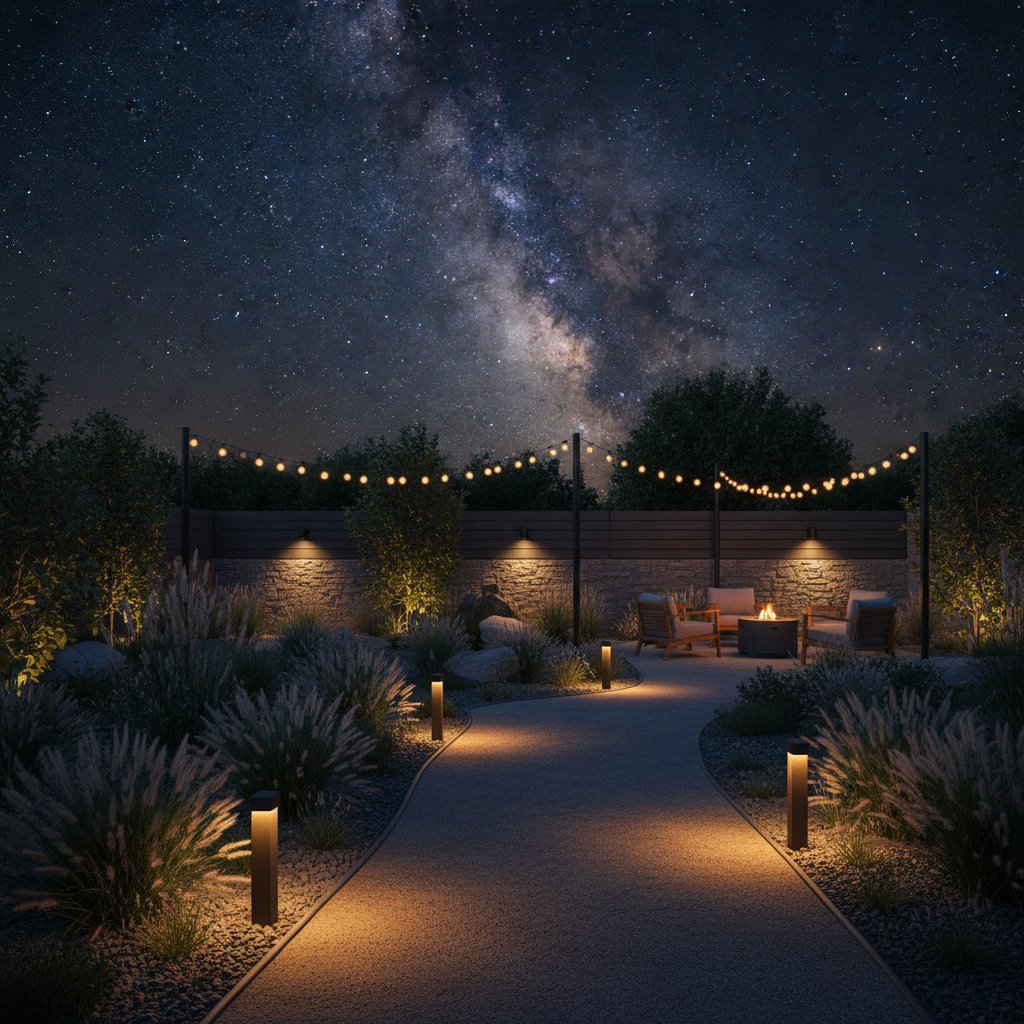
Low-height pathway lights guide along garden borders and staircases. Dark sky variants incorporate compact shades that concentrate the beam for uniform coverage. LED configurations typically consume minimal power, often under 5 watts per unit.
Area Floodlights
Floodlights serve expansive driveways or lawns, yet improper angling generates glare. Compliant models include hoods or visors to target light precisely. Integrating motion-activated sensors limits operation duration and conserves energy.
Recessed Ceiling Fixtures
Under roof eaves or on covered porches, recessed soffit lights offer discreet downward glow. The enclosing architecture provides inherent shielding, aligning seamlessly with dark sky criteria.
Selecting Bulbs and Lumens
Effective dark sky implementation hinges on appropriate bulb selection. The objective involves employing the minimal output necessary for adequate visibility and security. Common choices encompass:
- LED Bulbs: Renowned for efficiency and durability, these frequently appear in warm hues compliant with dark sky guidelines.
- Compact Fluorescent Lamps: Though less prevalent, warm white variants remain viable in certain setups.
- Low-Pressure Sodium Lamps: Uncommon in homes yet valued for subdued glare and reduced blue light emission.
Pathways and entrances generally require bulbs yielding 450 to 800 lumens. Driveways or broader areas might demand 1000 to 1600 lumens, though exceeding this proves unnecessary in most cases.
Designing an Effective Layout
Optimal lighting prioritizes strategic positioning over sheer intensity. Prior to purchasing, survey the property after dusk using a handheld light source. Identify essential zones like stairs, gates, and doors, while refraining from illuminating every yard section.
Key layout strategies include:
-
Position lights at appropriate heights. Elevate fixtures sufficiently to illuminate intended surfaces without excess spread.
-
Manage beam intersections. Excessive overlap produces glare and inefficiency.
-
Incorporate automation. Motion detectors, timers, or intelligent switches curtail unnecessary operation.
-
Respect adjacent properties. Direct beams away from windows and boundaries.
-
Safeguard natural elements. Prevent direct illumination of foliage where nocturnal species seek refuge.
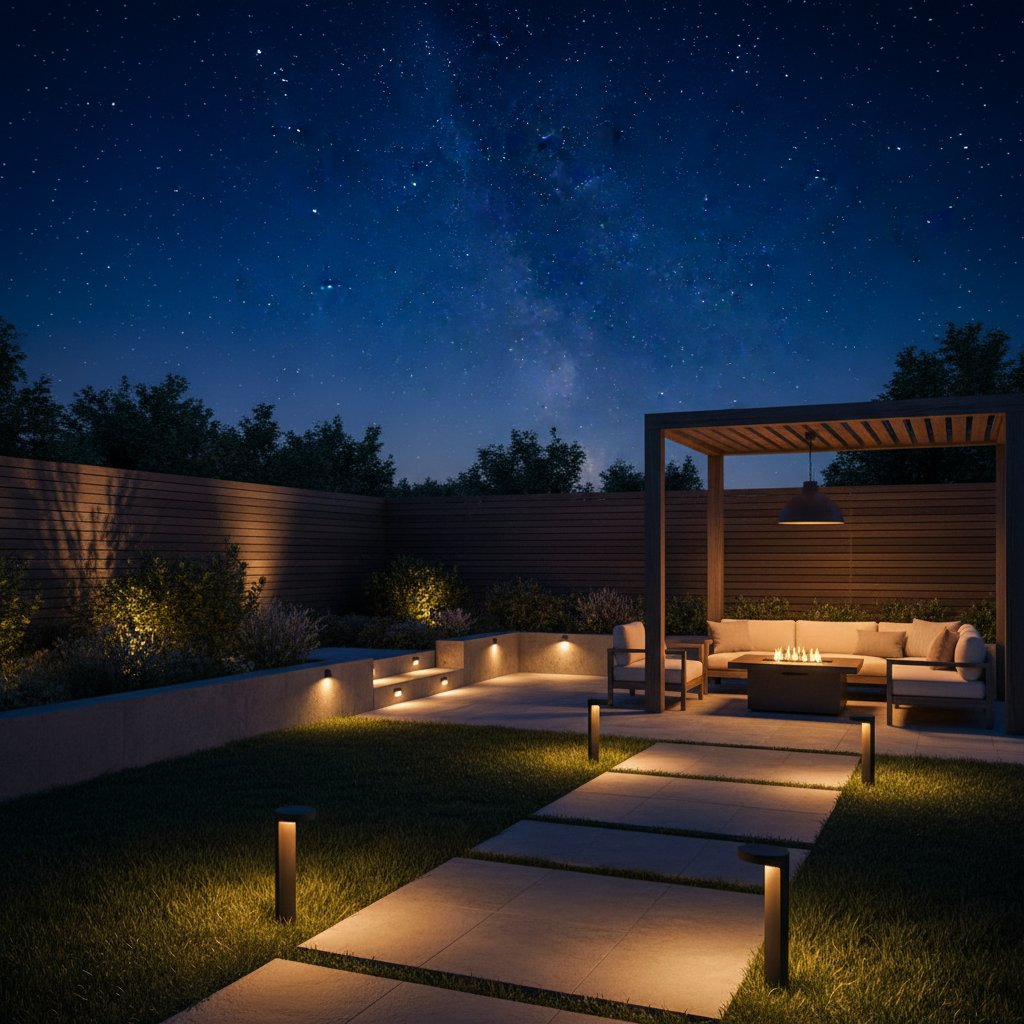
A thoughtfully arranged dark sky system renders the yard inviting and tranquil, ensuring visibility with subdued glare.
Tangible Advantages of Dark Sky Adoption
Transitioning to dark sky lighting alters yard dynamics beyond aesthetics. It elevates comfort, security, and environmental responsibility through observable enhancements.
-
Minimized Glare: Eyes adapt swiftly, facilitating safer navigation in low light.
-
Energy Efficiency: Targeted illumination achieves visibility with reduced power consumption.
-
Enhanced Rest: Diminished intrusion supports circadian rhythms indoors.
-
Ecological Support: Darkness preserves habitats for night-active creatures.
-
Refined Appearance: Exteriors gain sophistication without stark contrasts.
Clear evenings may reveal more stars, amplifying the appeal of dark sky practices.
Identifying Certified Products
Various entities certify dark sky adherence, verifying full cutoff or shielded attributes. Seek these designations on packaging or product specifications during purchases.
In the absence of local certified options, apply core principles: conceal bulbs, select warm tones, and emphasize downward direction. These measures substantially mitigate glare and pollution independently.
Expert Recommendations for Implementation
-
Prototype arrangements. Employ provisional or adjustable lights to refine positioning.
-
Employ layered illumination. Blend pathway guides, wall units, and accent spots for dimension without saturation.
-
Favor warm bulbs. Steer from cool whites, which amplify scatter and discomfort.
-
Retrofit existing setups. Shields or visors convert conventional fixtures to compliant forms.
-
Maintain uniformity. Consistent temperatures and outputs across installations prevent discord.
Such refinements substantially elevate outdoor experiences while upholding dark sky standards.
Achieving Lasting Outdoor Harmony
Implementing dark sky lighting demands initial assessment but yields enduring rewards. Homeowners gain not only preserved night skies but also practical, energy-conscious illumination. Consult local guidelines and professionals to tailor solutions, ensuring compliance and optimal performance for years ahead.