Creating Low-Cost Gravel Gardens with Mediterranean Charm
Many homeowners face challenges with high-maintenance lawns or fading flowerbeds. A gravel garden inspired by Mediterranean landscapes provides a solution that emphasizes simplicity, durability, and visual appeal. This approach uses inexpensive materials and resilient plants to craft an inviting outdoor space that requires minimal effort and expense.
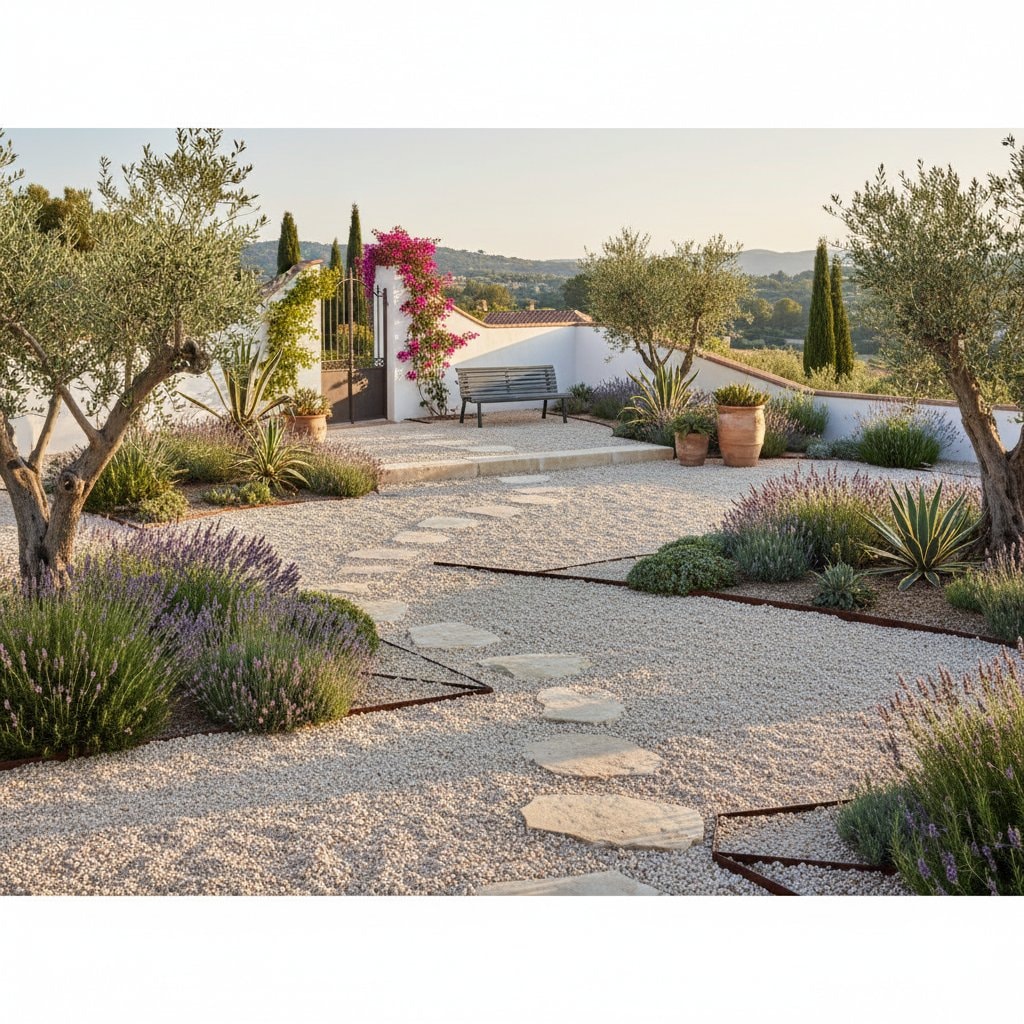
Gravel gardens deliver layered textures, vibrant colors, and structured forms that align with everyday living. They suit various yard sizes, from expansive areas to compact borders, by leveraging local resources and climate-adapted elements. The result is a refined yet casual retreat that enhances your home without ongoing demands.
Assessing Your Space and Soil
Begin by evaluating the site conditions to ensure success. Observe sunlight patterns throughout the day, as Mediterranean plants require at least six hours of direct light. Select sunny locations for primary plantings; reserve shaded areas for gravel paths or accents like potted herbs.
Drainage plays a critical role in gravel garden performance. Inspect for water accumulation after rainfall; elevated beds or amendments prevent root rot in water-retentive soils. Incorporate coarse sand or pea gravel into the top six inches of soil to promote quick percolation while retaining necessary moisture for establishment.
Conduct a basic soil test by moistening a sample and forming it into a ball. A cohesive shape indicates clay-heavy soil, which benefits from added grit to improve aeration. Sandy or loamy soils that crumble easily require minimal preparation, providing an ideal foundation for gravel mulching and plant roots.
Choosing Low-Cost Materials
Gravel gardens excel in affordability through everyday resources. Select gravel in hues like golden pea gravel for warmth or crushed limestone for neutrality, matching your home's exterior and local stone. Purchase in bulk from nearby quarries to reduce costs by up to 50 percent compared to retail bags.
Install a permeable weed barrier to maintain tidiness. Landscape fabric permits water passage while suppressing weeds; alternatively, layer overlapping cardboard sheets for a free, biodegradable option that decomposes over one to two seasons. Secure the barrier with landscape pins spaced every two feet.
Apply gravel to a depth of two to four inches for effective coverage and weed control. Define borders with inexpensive materials such as salvaged bricks laid flat or pressure-treated lumber cut to size. These edges contain the gravel and create crisp lines that enhance the garden's polished appearance.
Preparing and Planting the Garden
Clear the designated area thoroughly, removing grass, weeds, and roots to a depth of four inches. Position edging materials first, then lay the weed barrier, overlapping seams by six inches to prevent gaps. Distribute gravel uniformly, raking it level for a smooth surface.
Form planting pockets by cutting X-shaped slits in the fabric, sized to accommodate root balls. Excavate holes twice as wide as the roots but no deeper than the plant's original depth. Backfill with a 50-50 blend of compost and sand, then water deeply to eliminate air pockets and encourage root contact.
Arrange plants in clusters for natural density: place taller specimens like lavender at the back, medium shrubs in the middle, and groundcovers at the front. Maintain spacings of 12 to 24 inches based on mature sizes to allow airflow and prevent overcrowding. Mulch exposed gravel areas to suppress emerging weeds during the first year.
Incorporating Personal Touches Affordably
Enhance the garden's character without significant investment. Cluster three to five terracotta pots filled with drought-tolerant succulents or herbs near pathways to add vertical interest. Integrate reclaimed materials, such as old railroad ties for low walls or flat stones for irregular stepping paths.
Introduce focal elements like a weathered urn planted with trailing rosemary or a metal lantern on a stake. These accents guide the viewer's eye and infuse personality. For subtle texture, intersperse larger boulders or river rocks among the gravel to mimic natural Mediterranean terrains.
Incorporate low-voltage solar-powered path lights, positioning them at one-foot intervals to illuminate evening strolls. Scatter polished glass pebbles in neutral tones around key plants to reflect sunlight and introduce faint shimmer during the day.
Ensuring Long-Term Vitality
Gravel gardens mature gracefully, with plants filling in over two to three seasons to soften stone edges. Monitor for weeds in the first year by hand-pulling any breakthroughs and refreshing the gravel layer annually with a thin top-dressing. Prune woody perennials in early spring to maintain shape and encourage bushy growth.
Water new plantings weekly until established, then rely on rainfall for drought-adapted species. Apply a slow-release, low-nitrogen fertilizer in spring to support foliage without promoting excessive growth. This minimal routine preserves the garden's low-maintenance essence while fostering resilience against heat and dry spells.
Over time, the interplay of gravel, foliage, and accents creates a cohesive, evolving landscape. Homeowners enjoy reduced watering bills, fewer chores, and a space that evokes the relaxed elegance of coastal regions. This investment in simplicity yields enduring satisfaction and aesthetic reward.