Front Yard Farms: Edible Landscaping Replaces Lawns
Homeowners experience profound satisfaction when they step outside and harvest fresh herbs or ripe tomatoes directly from their front yard. This practice redefines success in landscaping by prioritizing nourishment alongside visual appeal. The conventional lawn, historically valued for its uniformity, now yields to edible landscaping, also known as foodscaping, which integrates ornamental beauty with the utility of food production in everyday living spaces.
The Changing Face of the Front Yard
Suburban landscapes traditionally feature expansive lawns that demand regular mowing, irrigation, and upkeep with minimal functional return beyond visual uniformity. As sustainability gains prominence, individuals seek to infuse their outdoor areas with purpose and productivity. The front yard evolves into a hub of abundance, where edible landscaping employs classic garden principles to cultivate plants that delight the senses and supply the kitchen.
Consider substituting formal hedges with fruit-bearing shrubs such as serviceberry or elderberry, or edging pathways with vibrant lettuces and mustards in place of petunias. Such adaptations maintain elegance while introducing tangible rewards, like harvesting berries during summer strolls or snipping greens for salads.
Blending Beauty and Function
Many homeowners express concern that food gardens may appear disorganized or unkempt. In reality, intentional design renders an edible landscape as refined as any ornamental display. Fundamental elements like balance, repetition, and harmony guide the process, ensuring the yard remains inviting and cohesive.
- Form and texture: Incorporate diverse foliage, such as the broad leaves of squash alongside the fine fronds of fennel, to create dynamic layers that evolve with the seasons.
- Color and rhythm: Select edibles with vivid hues, including red-veined sorrel or golden oregano, and repeat them strategically to establish visual unity across the design.
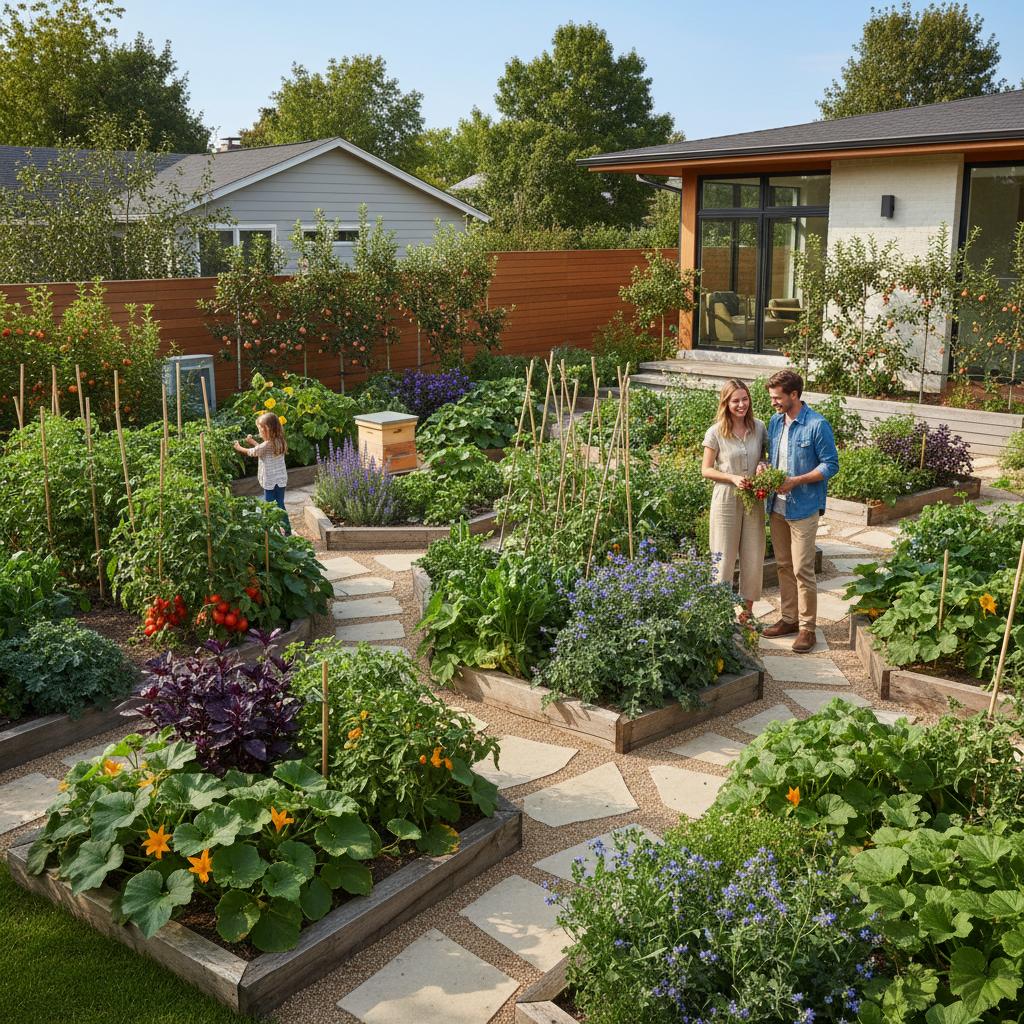
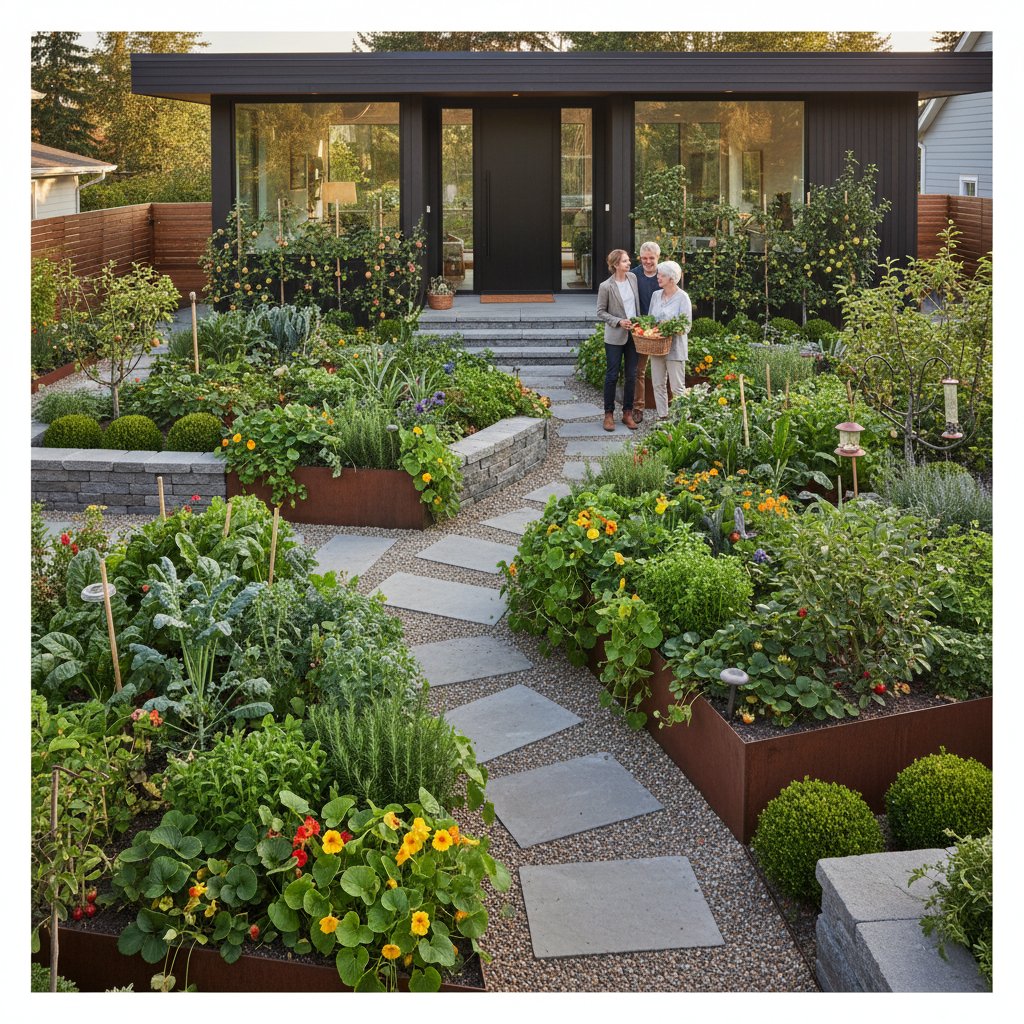
- Structure and flow: Define spaces with gravel paths, stone borders, or elevated planters to direct movement and contain growth, allowing easy access for both admiration and harvesting.
This approach treats the front yard as a multifaceted canvas, where each plant selection enhances both aesthetics and utility without compromise.
Practical Choices That Work
Transitioning to an edible landscape requires gradual implementation rather than wholesale overhaul. Begin by converting a modest section, such as the area adjacent to the entrance, into a herb-lined border or berry patch that serves as an immediate harvest zone. Over time, these elements expand to encompass larger portions of the yard.
Certain plants excel in prominent front yard positions due to their ornamental qualities and low-maintenance traits:
- Herbs: Compact varieties like English lavender, lemon thyme, marjoram, and winter savory offer evergreen structure and aromatic appeal that withstands foot traffic.
- Shrubs: Compact blueberries, gooseberries, or dwarf honeyberries provide year-round interest with spring blooms, summer fruit, and autumn foliage color.
- Perennials: Establish rhubarb crowns, asparagus spears, or globe artichokes for bold architectural forms that perennialize and demand minimal annual intervention.
- Annuals: Sow compact bush beans, cherry tomatoes, or mesclun mixes to occupy temporary spaces, delivering quick yields and seasonal color bursts.
Combining these groups fosters continuous visual engagement and streamlines care by minimizing replanting efforts. For optimal results, assess local climate zones; in temperate regions, prioritize cold-hardy options like kale hybrids for winter persistence.
The Social Side of Edible Gardens
Edible front yards naturally spark interactions within the community. Neighbors often pause to inquire about plant selections or offer cultivation tips based on their experiences. Children develop curiosity about botany and nutrition as they observe pods forming or fruits ripening in plain view.
Passersby encounter an inspiring model of integrated living, where productive gardens replace monotonous turf and encourage dialogue. This visibility instills a sense of communal pride, demonstrating how personal spaces can contribute to broader conversations on sustainability and self-sufficiency.
Care and Maintenance
Edible landscapes introduce a distinct care routine focused on targeted tasks rather than broad upkeep. Prune overgrown branches to maintain shape, harvest produce regularly to stimulate growth, and rotate annual crops to preserve soil health. Apply organic mulch, such as shredded bark or straw, to suppress weeds and retain moisture, while integrating homemade compost replenishes nutrients without synthetic additives.
This system typically demands less overall effort than lawn care, including reduced watering through drought-tolerant selections like native berries. The tangible outcomes, from vibrant harvests to healthier ecosystems, far outweigh the adjusted labor.
Living with Your Design
As the initial growing season concludes, homeowners notice a deeper connection to their yard. The space transforms into an active participant in daily life, prompting frequent visits for tending and tasting. Adjustments occur naturally, with thriving plants retained in prime locations and underperformers relocated based on observations of sunlight patterns and soil conditions.
This iterative process refines the landscape into a personalized haven that balances form, function, and flavor year after year.
Steps to Create Your Edible Front Yard
Initiate your project by selecting a single, visible zone, such as the porch-adjacent bed, and introduce a starter palette of low-water herbs like chives and strawberries alongside perennials such as strawberries. Monitor growth metrics, including bloom times and pest resistance, to inform future expansions. Consult soil tests to amend pH levels, ensuring edibles like blueberries flourish in acidic conditions.
Gradual implementation allows experimentation without overwhelm, yielding a front yard that sustains both visual harmony and culinary inspiration. This evolution not only beautifies the property but also enriches life with the direct benefits of homegrown abundance.