Illuminate Your Landscape Without Polluting the Sky
Step outside on a clear evening and gaze upward, only to discover that harsh glare from your yard obscures the stars. Homeowners often install outdoor lights for security, convenience, and visual appeal, but many overlook the impact on the night sky. The solution lies in strategic design and appropriate equipment, allowing your garden to radiate a gentle warmth while maintaining clear views of the cosmos above.
Understanding Light Pollution Causes
Light pollution occurs when artificial illumination escapes its intended boundaries, illuminating the sky unnecessarily. This phenomenon disrupts animal behaviors, squanders electricity, and obscures celestial displays. In residential settings, common sources include fixtures without shields, excessively powerful bulbs, and lights left burning unattended. Addressing these elements fosters a more harmonious outdoor environment that respects natural darkness.
Evaluating Existing Lighting Setup
Begin improvements by conducting a nighttime inspection of your property. Walk slowly through the space and observe areas that appear overly bright, inadequately lit, or prone to spillover. Light may reflect off surfaces like fences or windows, or intrude into adjacent properties, indicating poor efficiency.
Pose these targeted questions to guide your assessment:
- Does reduced intensity still permit safe movement?
- Do certain lights operate routinely without necessity?
- Are any fixtures directed upward or laterally rather than toward the ground?
Such analysis pinpoints inefficiencies, enabling targeted adjustments that amplify both aesthetics and functionality.
Developing a Dark-Sky Compatible Lighting Strategy
A strategy aligned with dark-sky principles directs illumination precisely to functional zones, avoiding widespread brightness. Prioritize subtle enhancement over intense flooding to preserve the night's tranquility. Draft a simple diagram of your yard, noting essential illumination spots like walkways, doorways, and social areas. Integrate understated highlights for ornamental elements, allowing foliage and hardscapes to reveal their inherent forms.
Incorporate these lighting tiers for balanced coverage:
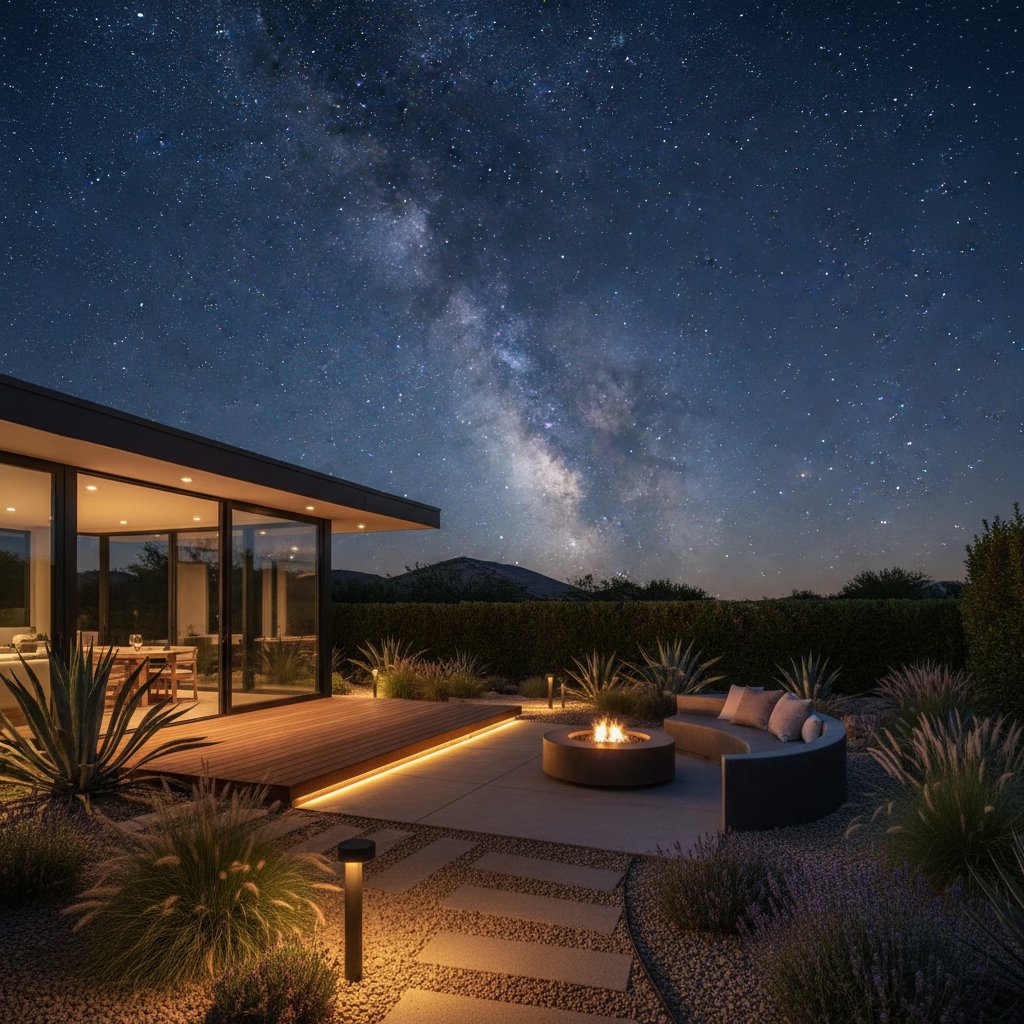
- Task lighting for navigation and security, including ground-level path markers and stair illuminators.
- Highlight lighting for focal points such as trees or flower borders, employing focused beams under 10 degrees.
- General lighting for lounging zones like decks, sourced from fixtures with outputs below 5 watts per bulb.
This layered method ensures an engaging space without overwhelming the surrounding darkness.
Selecting Appropriate Fixtures
The architecture of a fixture determines its effectiveness in curbing upward light leakage. Seek options certified as dark-sky compliant, featuring complete shielding that conceals the light source and channels rays downward. This configuration eliminates direct glare and confines illumination to useful areas.
Apply these selection criteria:
- Prioritize housings with solid, non-translucent covers to prevent skyward emission.
- Install bulbs rated at 2700 Kelvin or lower for a soothing amber hue that complements organic tones.
- Steer clear of transparent enclosures, which diffuse light omnidirectionally.
- Choose outputs under 300 lumens to achieve sufficient visibility without excess.
Effective illumination emphasizes precision and moderation over sheer intensity, yielding clearer and more comfortable results.
Purposeful Installation Techniques
Proper placement influences light distribution profoundly. Position path fixtures 12 to 18 inches above ground level, angled to graze surfaces without illuminating vegetation or vertical planes. Secure wall sconces to project beams straight down, encompassing just the desired footprint. For uplights on features like sculptures, employ adjustable hoods to restrict spread and avoid celestial intrusion.
Integrate automation tools for optimal performance. Install photocell timers to activate at dusk and deactivate at midnight, or motion detectors for entry points that trigger only upon approach. Dimmers allow fine-tuning brightness for different occasions, from dinner parties to quiet evenings, thereby conserving resources and upholding darkness.
Fostering Ambiance with Restrained Lighting
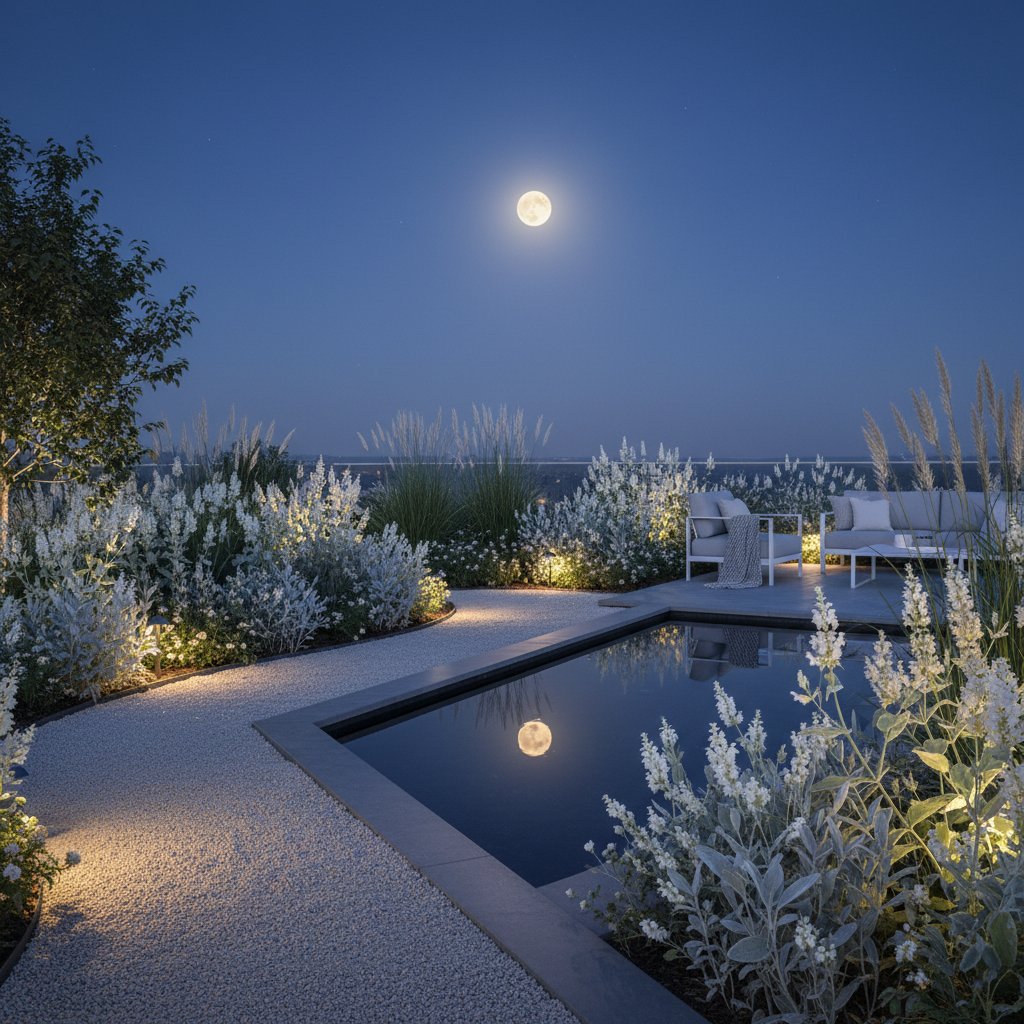
Subdued illumination cultivates a serene and hospitable outdoor realm. Uniform brightness flattens contours and erodes intrigue, whereas targeted application accentuates details and depth. Apply a soft graze to masonry surfaces or a diffused glow across perennials to evoke peace. Permit shadows in peripheral zones to facilitate eye adaptation, thereby sharpening the contrast with overhead stars.
Observe how moderated light alters perceptions: foliage gains subtle luster, timber textures intensify, and routes appear more navigable. With restrained use, the environment syncs with innate nocturnal patterns, enhancing overall tranquility.
Safeguarding Wildlife and Ecosystems
Artificial light extends beyond human utility, affecting biodiversity significantly. Avian species rely on darkness for orientation during migration, while insects and mammals require it for foraging and rest. Excessive glow disorients these creatures, elevating predation risks and physiological strain. Shielded setups and minimized outputs mitigate these effects, promoting ecological equilibrium.
Incorporate wavelengths in the 2000-2500 Kelvin range near habitats like woodlands or ponds, as these mimic sunset hues less disruptive to sensitive eyes. Schedule shutoffs during peak activity hours for nocturnal fauna, and opt for bug-resistant LEDs to curb insect attraction. Such practices bolster pollination and sustain vibrant local populations.
Achieving Energy Efficiency and Cost Savings
Thoughtful lighting yields financial advantages alongside environmental ones. Upward-spilling light represents pure inefficiency, inflating consumption without benefit. Transition to LEDs with 80% greater efficiency, pair with sensors, and trim redundant sources to slash usage by up to 50%. These modifications not only trim monthly expenses but also prolong equipment durability.
Moreover, a tempered setup promotes mindful relaxation, fostering extended enjoyment of natural evenings. Reconnecting with the visible stars delivers intangible yet profound returns, enriching daily life at no additional cost.
Observing and Maintaining Your Enhanced Night Garden
After implementing changes, dedicate evenings to appreciating the transformation. Venture into the space and sense the newfound equilibrium. A thoughtfully lit garden encourages contemplation, with ambient sounds and stellar vistas drawing you outward longer.
Sustain this setup through routine care. Inspect components seasonally for obstructions or wear, replacing elements with matching specifications. Reassess layouts as landscaping evolves, realigning beams to sustain focus and containment. Through consistent attention, your outdoor area remains a testament to mindful stewardship, blending human ingenuity with cosmic splendor.