Revolutionize Budget Hardscaping with Decomposed Granite
Many homeowners gaze at their yards and envision greater potential amid bare patches or outdated concrete. A complete renovation often exceeds budgets, yet decomposed granite provides an accessible alternative. This natural material delivers versatility and warmth, transforming underutilized areas into inviting spaces without significant expense.
Understanding Decomposed Granite
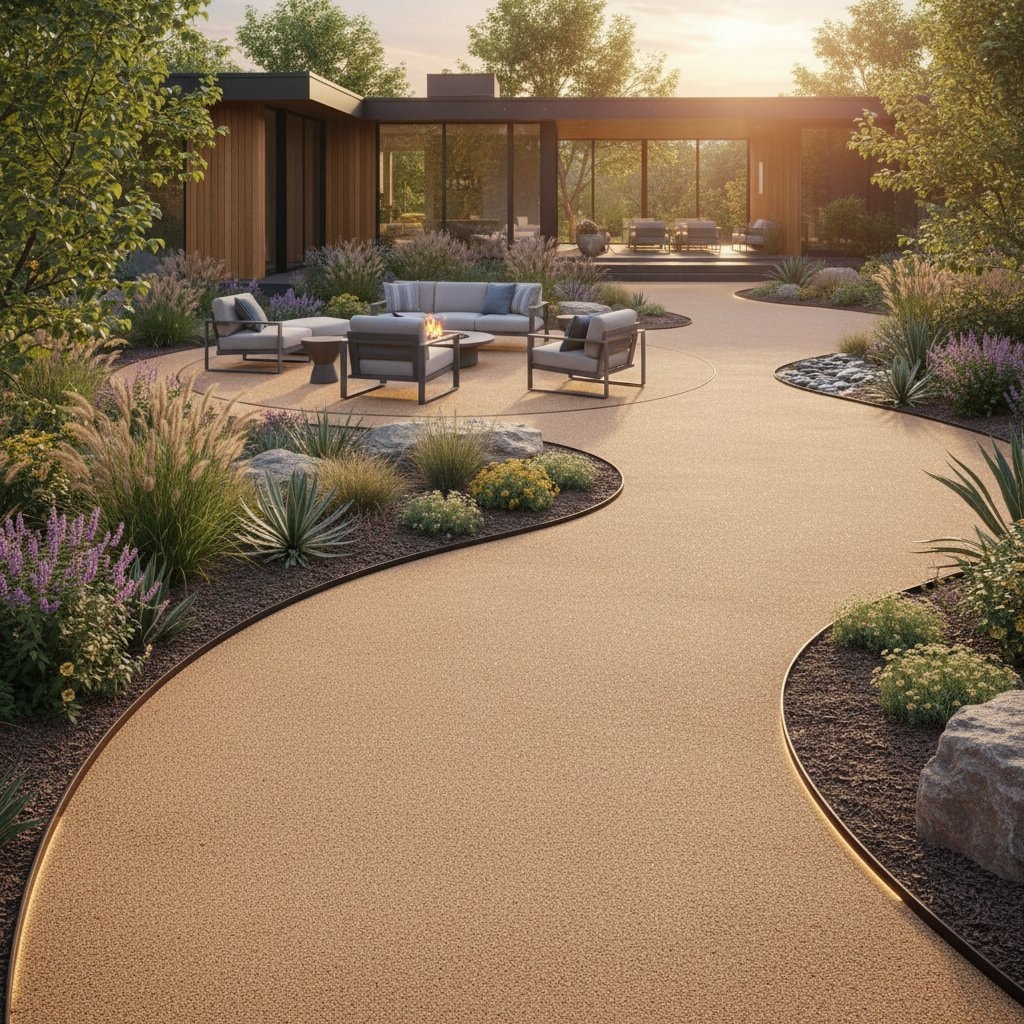
Decomposed granite, commonly abbreviated as DG, originates from weathered solid granite broken down into small, gravel-sized particles. The result offers a soft texture underfoot combined with sufficient stability for pathways, patios, and driveways. Earthy hues from golden brown to gray integrate seamlessly with surrounding plants, wood elements, and stone features.
In contrast to standard gravel, decomposed granite compacts firmly when watered and tamped, forming a solid yet permeable surface. Water infiltrates rather than pools, minimizing runoff and fostering healthier underlying soil. Homeowners seeking aesthetic appeal alongside practical benefits find DG an environmentally sound selection.
Assessing Your Space Before Installation
Observe your yard closely prior to any project commencement. Identify natural foot traffic patterns, water accumulation spots, and neglected zones. Decomposed granite suits areas requiring definition without demanding robust structural reinforcement, such as trails, lounging spots, and bed borders.
Create a basic yard sketch on paper to outline potential DG applications. Designate sections for durable, economical surfacing. Consider how a compact DG patio adjacent to garden beds could serve as an ideal spot for morning beverages, or how a meandering path might link the front entrance to rear areas more elegantly. Advance planning minimizes rework and promotes a unified appearance.
Planning for Function and Aesthetic Appeal
Determine the desired ambiance for DG zones once suitable locations are identified. Envision a structured walkway bordered by stone, or an informal route that appears inherent to the landscape. These preferences influence base preparation and layer thickness.
Lightly trafficked paths require approximately two inches of depth. High-use areas like driveways demand three to four inches for enduring stability. Select natural DG for loose particles or stabilized DG with a binding agent for enhanced firmness. The stabilized version incurs higher upfront costs but demands reduced upkeep over time.
Incorporate color considerations during planning. Golden tones capture sunlight to foster a vibrant, expansive feel, whereas gray or tan varieties harmonize with stone barriers and vegetation. Aligning selections with home and landscape elements ensures cohesive visual flow.
Preparing the Installation Site
Decomposed granite installation requires no specialized equipment, though thorough groundwork yields optimal results. Clear the designated area of weeds and debris first. Level irregularities and infill depressions, establishing a subtle slope away from the house to facilitate drainage. Install weed barrier fabric for added prevention of intrusive growth.
Spread a two-inch base of crushed stone or gravel to enhance drainage and stability. Compact this foundation using a hand tamper or plate compactor until it supports firm footing. Distribute decomposed granite in incremental layers, applying light moisture to each. Compact subsequent layers progressively to achieve a uniform, secure finish.
Incorporating Design Elements
Decomposed granite extends beyond utility to inspire creative outdoor enhancements. Integrate it with stone pavers, stepping stones, or bricks to craft intricate patterns and visual interest. Employ DG to line garden beds for navigable routes or to encircle fire pits, delineating communal areas.
The material complements vegetation effectively. Its subdued palette serves as a neutral backdrop accentuating foliage, succulents, and blooms. Permeability ensures moisture reaches roots, sustaining adjacent plant health. The outcome yields a curated yet organic environment, balancing form and ease.
Simplifying Ongoing Maintenance
Decomposed granite maintenance proves straightforward compared to rigid surfaces like concrete or asphalt, which prone to cracking and necessitate sealants. Post-rain or heavy use, minor shifts may occur, but restoration involves raking to evenness, light watering, and tamping. For stabilized variants, hose reactivation of the binder precedes recompaction.
Occasional weeds emerge at borders, yet their removal remains simple due to the surface's upper looseness. Refresh appearance annually or biennially with a thin overlay to preserve vibrancy and smoothness. These minimal interventions sustain the installation's integrity.
Maximizing Budget Efficiency
Financial constraints frequently dictate outdoor project scopes. Conventional options such as concrete, flagstone, or brick entail substantial material and labor investments. Decomposed granite, procurable in bulk from regional sources, presents a cost-effective counterpart, particularly with self-installation.
Long-term fiscal benefits further commend DG. Permeability averts drainage issues and erosion mitigation needs. Absence of slab replacements or water-related repairs accumulates savings. Budget-conscious individuals appreciate these enduring advantages.
Embracing Sustainable Permeable Options
Permeable choices like decomposed granite contribute to effective water stewardship. Impervious surfaces in typical yards direct rainfall toward drains, transporting sediment and pollutants. DG permits infiltration, recharging subsurface moisture and curbing excess flow to safeguard against erosion and bolster landscape vitality.
As a naturally derived substance, decomposed granite aligns with eco-friendly practices. It eschews chemical treatments or fixatives, permitting environmental respiration. Opting for DG advances both economic prudence and ecological responsibility.
Avoiding Installation Pitfalls
Decomposed granite accommodates user errors gracefully, yet certain oversights invite complications. Refrain from applying it atop irregular terrain absent a foundational layer, which risks water pooling or inconsistent settling. Neglecting compaction results in a powdery, unstable topcoat.
Positioning near entryways without edging can introduce particles indoors. Mitigate these by dedicating effort to site readiness. Employ metal, stone, or wooden borders to secure boundaries and maintain crisp contours. Compact meticulously and verify levelness throughout the process.
Nurturing Your Landscape Integration
With the hardscape established, observe the yard's evolution. Decomposed granite subtly alters navigation and ambiance, rendering spaces more purposeful. Trails encourage exploration, lounging zones beckon relaxation, and overall cohesion emerges.
Treat the surface akin to garden vitality: sweep routinely, rake displacements, and replenish as required. As it integrates, confidence may inspire expansions or pattern innovations. The enduring harmony reflects thoughtful stewardship.