Turn Your Privacy Hedge Into a Source of Fresh Fruit
There is something deeply satisfying about stepping into a garden that feels both beautiful and useful. The idea that a hedge, traditionally planted for privacy or boundary definition, could also feed you is one of those quiet revelations that changes how you see the landscape. Many homeowners think of hedges as purely ornamental or functional screens, but with a thoughtful approach, a hedge can become a living pantry.
It can offer color, fragrance, and texture while producing berries, fruits, and even nuts that enrich your table. The beauty of a fruiting hedge lies in its dual purpose. It protects your space from wind and noise while inviting birds, pollinators, and a touch of abundance.
Rethinking the Traditional Hedge
Traditional hedges are usually composed of evergreens like boxwood, yew, or arborvitae. These plants serve privacy well, holding their color through winter and forming dense walls of foliage. Yet they ask for regular trimming and contribute little beyond visual structure.
An edible hedge changes that equation by introducing a rhythm of flowering, fruiting, and seasonal transformation. You might notice that an edible hedge feels more alive. Bees hum through it in spring, fruit ripens in late summer, and colorful leaves mark the shift to autumn.
The idea is not to abandon structure or privacy but to find plants that meet those needs while offering something more. Many fruiting shrubs naturally grow dense and respond well to pruning, which makes them excellent hedge candidates.
Choosing the Right Plants
Selecting plants for an edible hedge depends on your climate, soil, and how much sun the area receives. The goal is to combine plants that create a continuous barrier while providing staggered harvests and visual interest through the seasons.
Here are a few reliable options to consider:
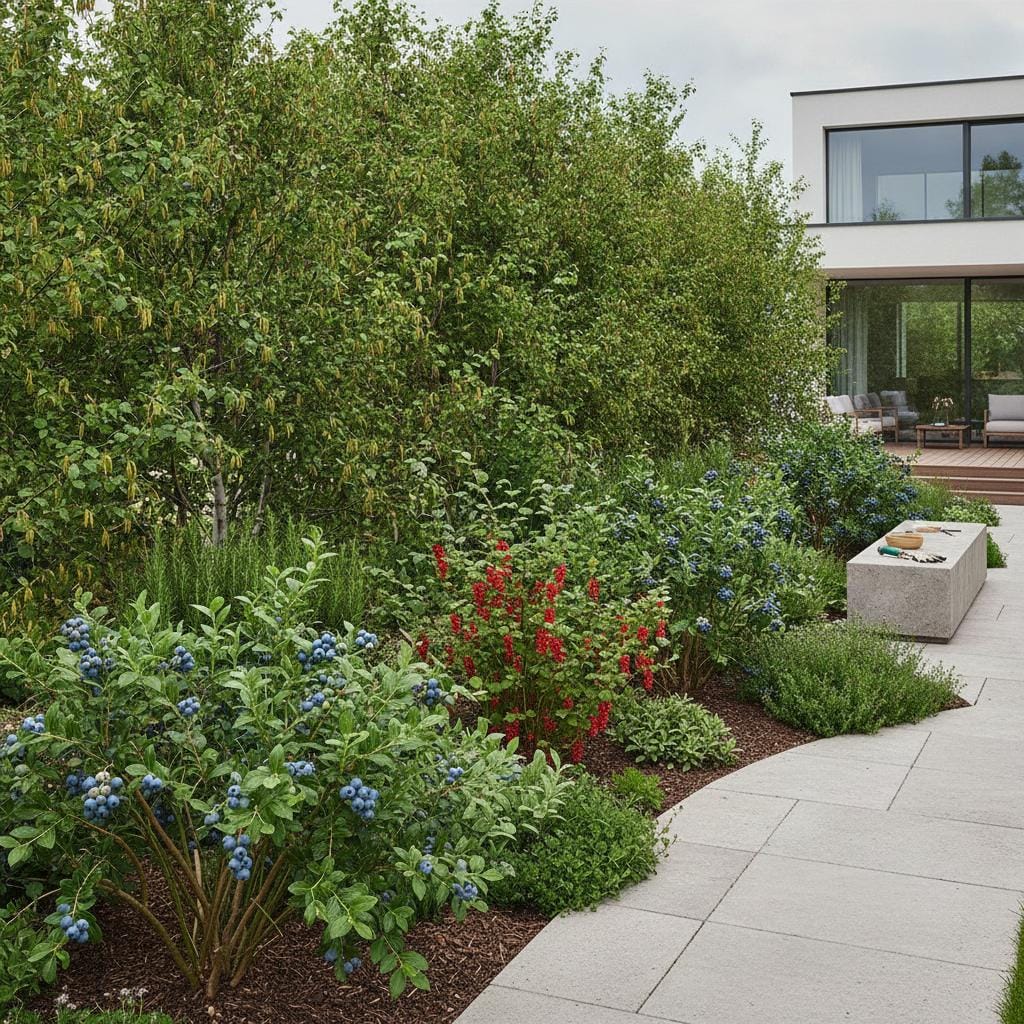
- Blueberries form neat, compact shrubs with glossy leaves that turn fiery red in fall. They need acidic soil and consistent moisture, but when those conditions are met, they reward you with clusters of deeply flavored berries.
- Currants and gooseberries thrive in partial shade and produce fruit even in cooler conditions. Their small, translucent berries hang like jewels along the stems and make excellent preserves.
- Serviceberry produces white spring blossoms, followed by sweet purple fruits that resemble blueberries. Its branching habit and moderate height make it ideal for mixed hedgerows.
- Rugosa rose offers tough growth and fragrant summer blooms. Its vibrant hips ripen in late summer and provide vitamin-rich fruit suitable for jams and teas.
- Hazelnut creates a taller, more substantial hedge that offers both privacy and edible nuts. It can be pruned to maintain shape and density.
- Aronia produces glossy black fruits rich in antioxidants. It tolerates poor soils and provides fiery autumn foliage.
A good edible hedge is rarely made of a single species. Mixing varieties increases resilience against pests and diseases, and it extends the harvest season.
Balancing Aesthetics and Practicality
A hedge that produces fruit does not have to look wild or unkempt. With thoughtful planning, it can be as elegant as any ornamental planting. The key is to match the level of formality to your overall garden style.
For a structured look, choose shrubs that respond well to pruning, such as blueberries or aronia. Keep them in even rows and trim lightly after fruiting to maintain shape. For a more natural effect, combine shrubs of varying heights and textures.
Serviceberries, rugosa roses, and hazelnuts blend beautifully in informal settings. Allow them to grow in gentle layers, softening boundaries rather than defining them sharply.
Establishing Your Fruiting Hedge
Creating a hedge that produces fruit begins with proper preparation. The first step is assessing soil conditions. Most fruiting shrubs prefer rich, well-drained soil with plenty of organic matter. Loosen the ground before planting, removing weeds and stones.
Space plants according to their mature width. Crowding them might seem appealing for faster coverage, but over time, it reduces airflow and increases disease risk. Most shrubs should be spaced between two and four feet apart, depending on the variety.
Water deeply after planting and mulch generously with compost or shredded bark. Mulch keeps the soil cool, retains moisture, and gradually improves fertility. In the first few seasons, consistent watering is vital as roots establish.
Caring for an Edible Hedge
Maintenance is much the same as for ornamental hedges, with a few extra steps focused on fruit production.
Prune lightly after fruiting to maintain shape and encourage new growth. For species like currants or blueberries, remove the oldest stems every few years to keep plants vigorous. Apply compost or well-rotted manure each spring to replenish nutrients.
Avoid over-fertilizing with nitrogen, which encourages leafy growth at the expense of fruit. Fruit development depends on consistent moisture. Deep watering once a week is better than frequent shallow watering.
Mixed plantings naturally reduce pest pressure, but regular observation is still wise. Encourage beneficial insects by keeping some wildflower areas nearby. Pick fruits when fully ripe and handle them gently.
Blending Edible Hedges Into the Landscape
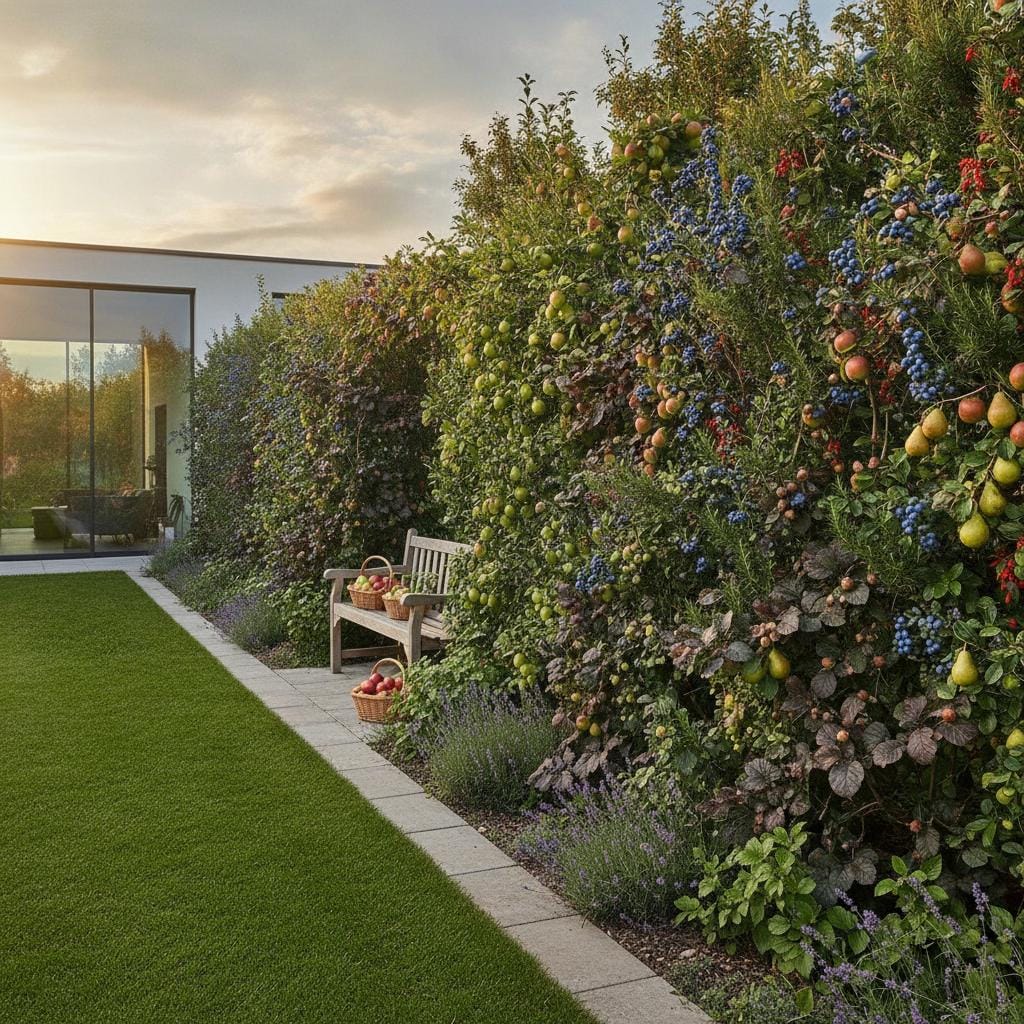
A fruiting hedge can be more than a boundary. It can define garden rooms, edge a vegetable plot, or frame a patio. Its character changes with the seasons, giving structure to the garden even when beds lie dormant.
In larger spaces, edible hedges can serve as windbreaks for delicate crops or as wildlife corridors connecting different parts of the property. In smaller gardens, they can replace traditional fences, offering privacy without the hardness of wood or metal.
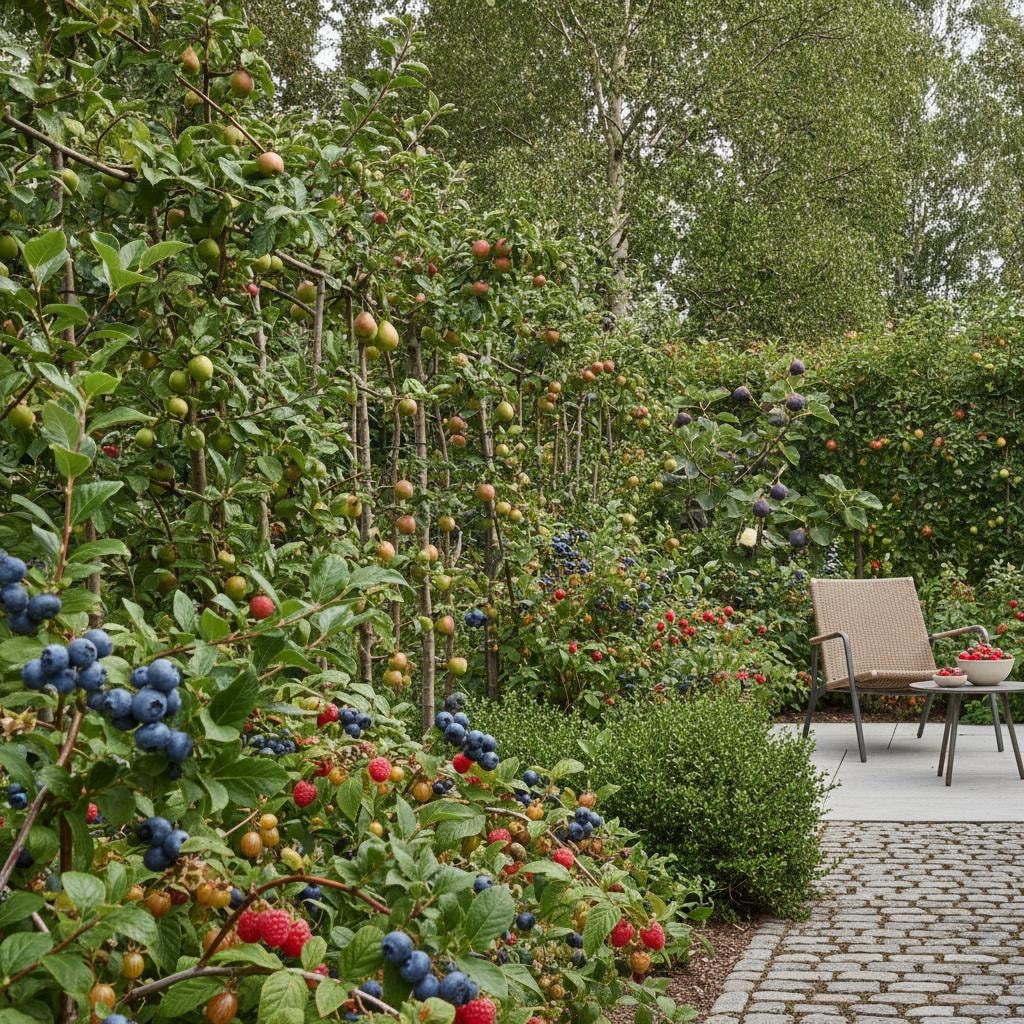
Pair it with espaliered fruit trees along walls or with herb borders at its base. The repetition of edible elements ties the space together, creating harmony between beauty and utility.
The Pleasure of Seasonal Change
One of the joys of a fruiting hedge is how it marks time. In early spring, blossoms appear in soft whites and pinks, hinting at the season ahead. By midsummer, the leaves are full and green, and fruits begin to color.
Autumn brings the harvest, then a blaze of foliage before winter quiets everything again. This rhythm keeps you connected to the natural world. A traditional evergreen hedge may offer constancy, but an edible one offers story and progression.
Common Mistakes to Avoid
Even experienced gardeners sometimes stumble when creating edible hedges. A few pitfalls are worth keeping in mind. Overcrowding plants leads to poor airflow and reduced fruiting. Give shrubs room to breathe.
Ignoring soil needs can limit success. Test pH and adjust for species like blueberries that prefer more acidic conditions. Neglecting pruning results in tangled growth and fewer fruits. Regular light maintenance is better than occasional heavy cuts.
Choosing plants poorly suited to your climate often ends in frustration. Local garden centers can recommend varieties proven to thrive in your region. Forgetting about wildlife can lead to disappointment when birds harvest before you do. Netting or timed picking can help balance sharing with protecting your crop.
Living with Your Design
Once established, a fruiting hedge becomes part of daily life. It softens the edges of your property and invites small routines. Morning walks to check the berries, clipping a few sprigs for the kitchen, or watching birds dart among the branches all create quiet pleasures.
Over time, you may find yourself adjusting the mix of plants. Perhaps adding more early-bearing species or introducing new colors for visual interest. The hedge can evolve with you, responding to changing tastes and needs.
A well-tended edible hedge endures for years, offering both privacy and productivity. It reminds us that beauty and usefulness are not separate goals but complementary ones.