Edible Hedges: Grow and Harvest Fruit from Your Garden Borders
An edible hedge serves multiple purposes beyond simply marking property lines. It establishes privacy, provides structural definition, and delivers a reliable source of fresh fruit directly from the garden's edge. Opt for berry-producing shrubs, compact fruit trees, or blooming edible varieties that enhance visual appeal while sustaining your household. Proper planning transforms this border into a dual-purpose element that functions as both a practical divider and a generative landscape feature.
Benefits of an Edible Hedge
Traditional hedges focus primarily on decoration, yet an edible hedge combines aesthetics with practical advantages. Seasonal blooms and foliage offer vibrant color, draw in pollinators, and yield harvests that persist annually. In compact gardens, this approach maximizes limited space efficiently. On expansive lots, it introduces texture and naturally segments open expanses.
Edible hedges support local wildlife effectively. Fruit-bearing plants lure bees and butterflies during spring blooms, then invite birds to consume remaining berries in late summer. The thick growth furnishes nesting sites and wind protection. Gardeners gain seclusion alongside a dynamic ecosystem visible from indoors.
Suitable Plant Varieties
Select plants suited to local soil conditions, climate zones, growth habits, and preferred flavors. Prioritize species that reach appropriate heights for hedging and deliver enjoyable yields. The following options integrate seamlessly into edible borders.
Berry-Producing Shrubs
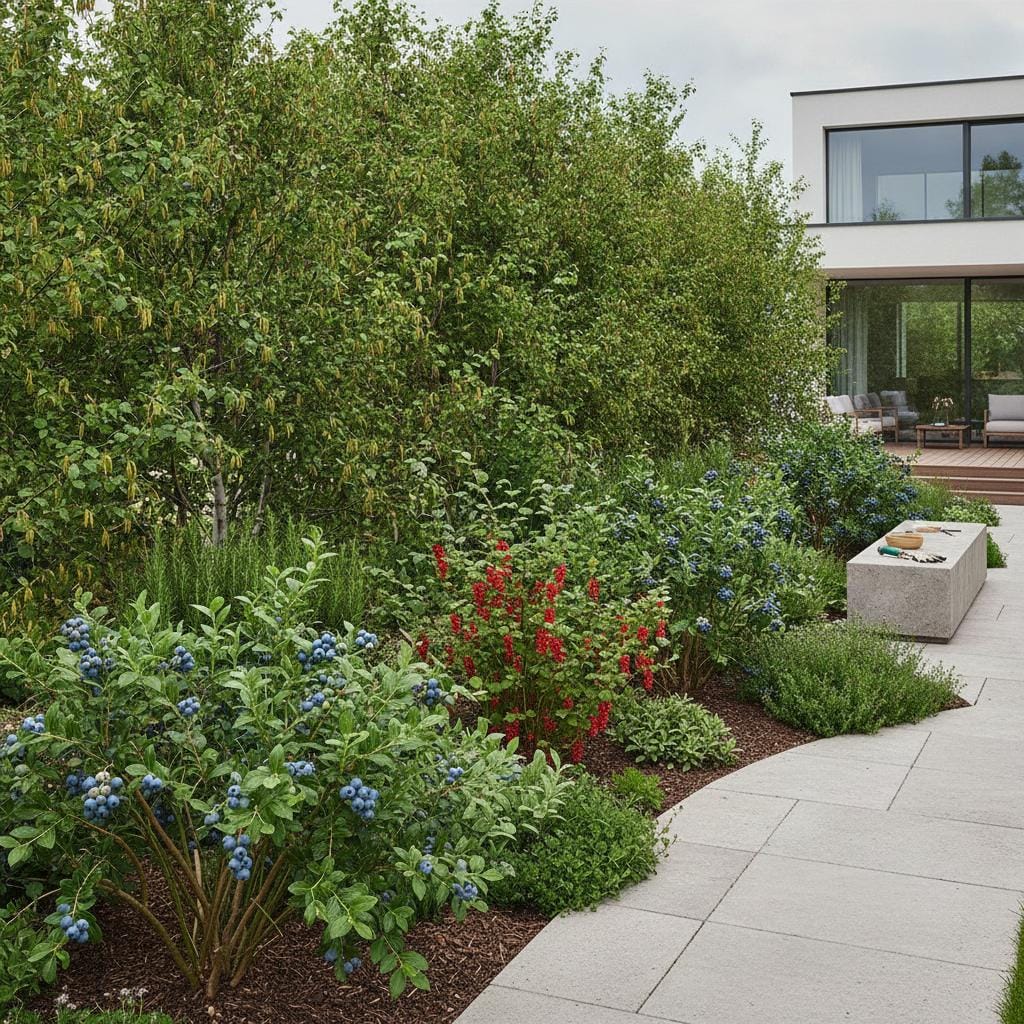
- Blueberries attain heights of 3 to 6 feet and flourish in acidic soils. They produce sweet berries alongside striking red foliage in autumn.
- Currants and gooseberries adapt to shadier conditions more readily than many fruit shrubs. Their compact profiles suit confined areas, and the tangy fruits excel in preserves and desserts.
- Raspberries develop into thick clusters that close spaces swiftly. Annual pruning manages their expansion, though established plants yield abundantly.
Compact Fruit Trees
- Dwarf apple or pear trees lend themselves to hedging through regular pruning or espalier techniques. Plant at least two pollinator-compatible cultivars for reliable fruiting.
- Plum trees display aromatic spring flowers and succulent summer fruits. Certain self-fertile types simplify cultivation in narrow borders.
Other Edible Options
- Serviceberries (known also as Juneberries) feature white spring blossoms, purple edible berries, and vivid orange autumn leaves.
- Elderberries establish rapidly and endure moist soils. Their deep purple berries suit syrups and wines, provided they undergo cooking prior to consumption.
- Viburnum trilobum (cranberry viburnum) or aronia (chokeberry) contribute decorative fruit clusters ideal for sauces and gels.
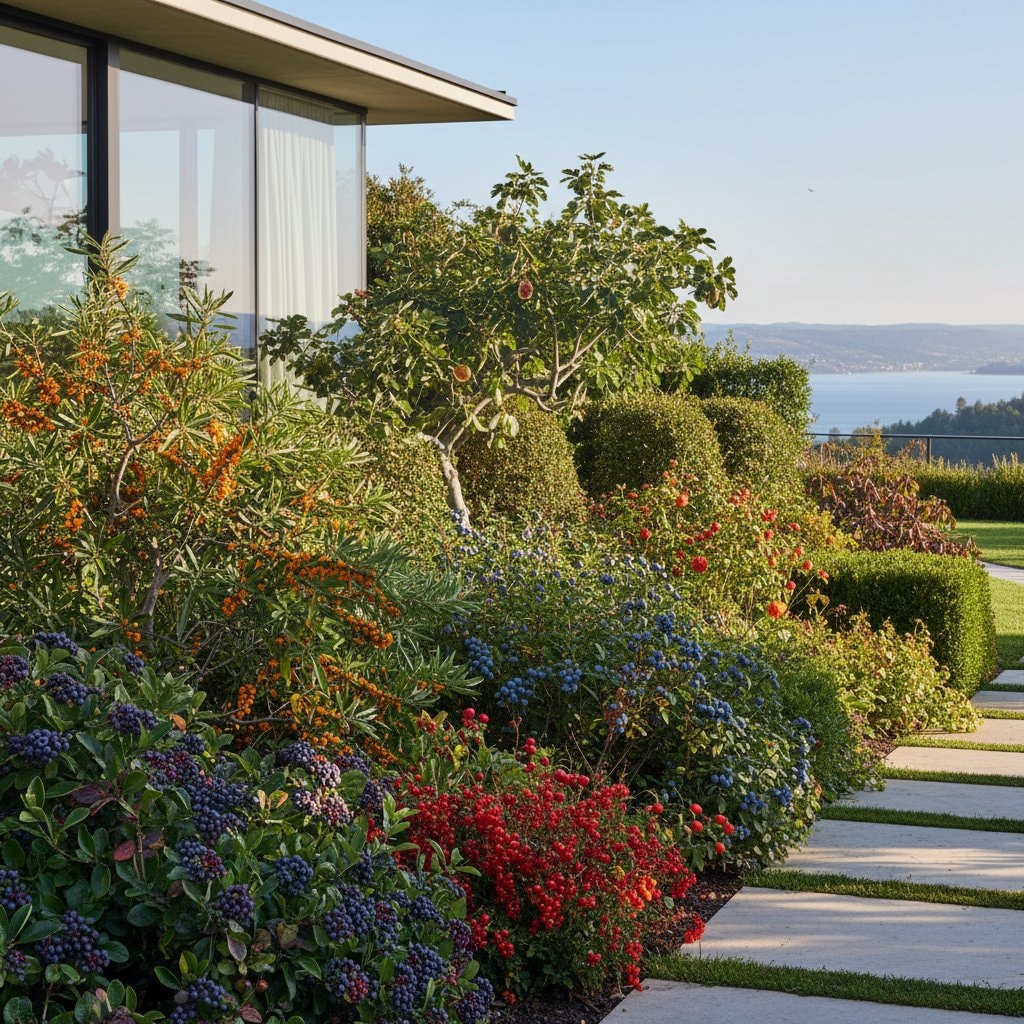
Mix several species within a single hedge to prolong the harvest period and introduce diverse textures and colors.
Designing Your Edible Hedge
Define the hedge's primary role upfront, whether as a high privacy screen, a modest edging, or a garden compartment divider. Target height determines plant choices and spacing intervals.
Choosing the Location
Select sites receiving full sunlight to optimize fruit output. Aim for a minimum of six hours of direct exposure daily. Steer clear of low-lying spots prone to water pooling, and allocate room for adequate airflow to deter diseases. In areas with partial shade, favor currants or gooseberries for their tolerance.
Preparing the Soil
Fruit shrubs generally require well-draining soils with balanced nutrients. Conduct a pH test prior to planting. Blueberries demand acidity around 5.0, whereas other varieties thrive in neutral to mildly acidic ranges. Incorporate compost or well-rotted manure to boost fertility. Blend in sand or grit where drainage proves inadequate.
Arranging Plants
Position shrubs 2 to 4 feet apart to form a dense hedge, or 4 to 6 feet for individualized specimens. Space tree trunks at least 6 to 10 feet apart. Employ a staggered double-row pattern for enhanced thickness. Apply a thick mulch layer at the base to conserve water and suppress weeds.
Group compatible species to simplify care routines. For instance, isolate blueberries from neutral-soil preferences to adjust irrigation and amendments accordingly.
Ongoing Care Practices
Established edible hedges demand routine upkeep, though the effort remains straightforward. Focus on pruning, irrigation, and nutrition to sustain health and productivity.
Pruning Techniques
Perform cuts during the dormant season to refine shape and eliminate aged or damaged branches. For raspberries and blackberries, remove canes that have borne fruit, as production occurs on new growth. With currants and gooseberries, excise one or two oldest stems annually to stimulate vigor. Level the upper growth for formality, or permit natural form for an informal appearance.
Irrigation Strategies
Supply young plants with steady moisture throughout the initial season. Deliver deep soakings once or twice weekly, avoiding superficial daily applications. Mature shrubs withstand brief droughts, yet regular watering during bloom and fruit development enhances quantity and taste.
Fertilization Methods
Distribute compost or slow-release organic fertilizers at spring's onset. Limit nitrogen applications, which favor foliage over fruit. Annual compost renewals maintain soil vitality and promote enduring yields.
Managing Pests and Diseases
Birds frequently target ripening fruits ahead of harvest. Employ netting or shimmering deterrents to safeguard crops. Address aphids or sawfly infestations with forceful water blasts or mild soap solutions. Promote circulation through selective thinning to minimize powdery mildew and other fungi.
Investment and Time Considerations
Expenses for an edible hedge depend on selected plants and overall dimensions. Inexpensive bare-root currants or raspberries start affordably, ranging from minimal costs for small stock to more for established pots. Dwarf trees involve higher initial outlays but provide decades of returns.
Installation effort scales with hedge length. Soil work and planting typically span a weekend for standard borders. Subsequent pruning and picking require only several hours seasonally. Benefits include homegrown produce, heightened seclusion, and enriched scenery with minimal recurring costs.
Styling Ideas for Appealing Edible Hedges
Integrate design principles to ensure the hedge complements surrounding aesthetics without appearing utilitarian.
- Formal Design: Employ a single species, sheared to uniform height. Dwarf apples or precisely clipped blueberries suit this approach.
- Cottage Garden: Blend berries with herbs and petite bloomers for a casual, vibrant perimeter.
- Contemporary Layout: Pair fruit shrubs with ornamental grasses or evergreen elements for bold contrasts and form.
- Wildlife-Oriented: Incorporate indigenous options such as serviceberry, chokeberry, and elderberry to bolster pollinators and avian visitors.
Incorporate pathways of gravel or stone borders to organize access and facilitate picking.
Sustaining Seasonal Rewards
As your edible hedge matures, it integrates seamlessly into daily garden activities. Observe its evolution: delicate spring petals give way to midsummer bounty and autumnal hues. Density and output increase progressively with time.
Apply judicious pruning to preserve form, and substitute underperformers promptly. Gradually, the structure evolves into a sophisticated, organic barrier. It supplies fresh edibles, opportunities for nature observation, and a harmonious garden backdrop.
This hedge project suits gardeners of varying experience levels. It merges utility with ornamentation, creating a boundary that nourishes and a focal point that endures across seasons.