Gravel Gardens: The 2025 Low-Water Mediterranean Trend
Gardeners seeking enduring beauty with reduced watering and effort often find inspiration in gravel gardens. This approach mirrors Mediterranean terrains, where vegetation flourishes amid sun-drenched, rocky expanses. These designs gain prominence for their refined appearance, water conservation benefits, and diminished need for ongoing labor compared to conventional turf or floral arrangements.
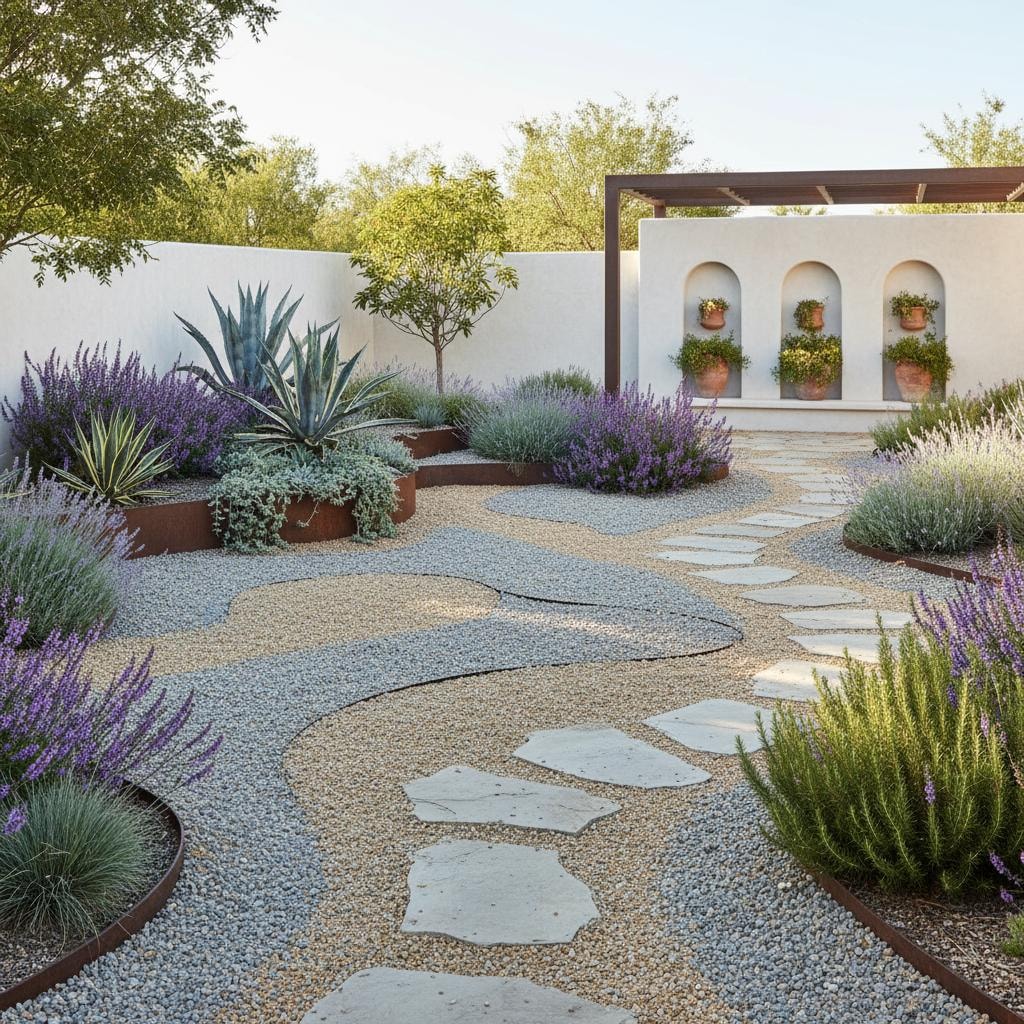
A gravel garden transcends mere stone placement. It represents a thoughtfully composed area where gravel serves as the foundation for resilient, dry-adapted flora. The outcome yields a serene, organic environment rich in tactile variety. Tailor the arrangement to complement architectural styles, from sleek contemporary forms to quaint rural charm.
Defining Elements of a Gravel Garden
Gravel gardens employ unbound stones as dual-purpose mulch and aesthetic feature. The gravel layer shields the underlying soil, curbing weed emergence, retaining hydration, and averting erosion. Supporting this is a stratum of permeable soil suited to robust vegetation.
Typical selections draw from Mediterranean flora, including lavender, rosemary, sage, and thyme. These specimens endure arid settings and emit aromatic notes. Incorporate ornamental grasses, succulents, and resilient perennials for diversity. Strategic combinations ensure seasonal intrigue throughout the calendar year.
Factors Driving the Popularity of Gravel Gardens
Property owners increasingly adopt gravel gardens for their utility and ecological merits. Escalating water limitations and intensified summer heat challenge upkeep of standard lawns. Such gardens demand merely a portion of the irrigation required by grass or hydration-dependent species.
Maintenance demands plummet as well. Eliminate mowing routines, minimize pruning tasks, and confront fewer invasive growths. The gravel inhibits proliferation while moderating soil temperatures during warm months. This allocation shifts focus from toil to leisure within the landscape.
Their aesthetic allure further fuels adoption. Gravel scatters light, expanding the perceived scale and luminosity of compact zones. Contrasts between aggregates and foliage introduce dynamism and depth. Select from varied gravel hues and granulometry to align with preferences, such as subtle golden pea gravel or substantial white marble fragments.
Planning Your Gravel Garden Layout
Initiate the process with deliberate site evaluation. Gravel gardens thrive in illuminated, unobstructed locales with efficient drainage. Avoid shaded or waterlogged terrains.
Follow these steps to commence:
- Evaluate drainage. Observe post-rainfall retention. Persistent pooling signals the need for soil amendments like added sand or organic matter to enhance percolation.
- Prepare the ground. Eradicate existing turf, weeds, and root systems to forestall resurgence beneath the surface.
- Outline features. Delineate walkways, planting zones, and accents using string lines or marking chalk. Consider circulation patterns for practical navigation.
- Select aggregates. Choose gravel tones harmonious with the residence and locale. Neutral beige or gray blends universally, whereas deeper shades impart drama.
- Install borders. Employ metal strips, brick pavers, or natural stone to confine materials and articulate boundaries.
Choosing Suitable Plants for Gravel Gardens
Success hinges on selecting flora adapted to arid, sun-exposed environments. Mediterranean herbs form the cornerstone, yet diverse alternatives abound.
- Lavender provides vibrant blooms and scent, ideal for bordering trails.
- Rosemary develops into a compact bush, serving both ornamental and culinary roles.
- Sedum and sempervivum (hens and chicks) excel in minimal soil depths, offering architectural form.
- Ornamental grasses such as blue fescue or Stipa tenuissima introduce gentle sway with breezes.
- Euphorbia and verbena deliver extended flowering periods.
Position specimens with adequate spacing for maturation and expansion. Over seasons, they populate voids, mellowing the gravel's starkness into a cohesive tableau.
Installation Process and Budget Considerations
Expenses for constructing a gravel garden vary by scale, components, and botanical choices. Anticipate $3 to $6 per square foot covering gravel, containment, and base preparation. Professional installation may elevate costs through labor fees. Self-directed efforts conserve funds at the expense of time investment.
Key elements include:
- Gravel depth: Apply one to two inches to suffice. Excess depth risks impeding root development.
- Barrier options: Landscape fabric underlies some installations, though it may retain excess dampness. A substantial gravel application frequently suffices independently.
- Soil amendment: Combine native earth with sand or coarse grit for optimal drainage.
- Plant integration: Excavate through gravel to accommodate roots, then refill with amended soil. Irrigate thoroughly to establish anchorage.
Projects spanning moderate areas typically span one to two weekends. Post-establishment, interventions limit to sporadic weeding and minor shaping.
Ongoing Maintenance and Care Strategies
While gravel gardens approach negligible upkeep, vigilance remains essential. Extract occasional weeds and redistribute displaced stones via sweeping.
Sustain initial irrigation for transplants until rooting solidifies, then taper applications. In temperate regions, natural precipitation often meets needs beyond the inaugural year. Annually trim herbs and grasses for neatness. Clear debris like autumn foliage to inhibit rot and preserve gravel integrity.
Periodically, every few years, rake the surface or replenish gravel for renewed vibrancy. Aggregates endure without frequent substitution.
Cultivating Enduring Harmony in Your Gravel Garden
Gravel gardens evolve gradually, with flora propagating, reseeding, and intermingling to foster an innate aesthetic. The composition remains hospitable across seasons, showcasing evolving palettes and surfaces that interplay with illumination.
Incorporate elements like flagstone paths, seating nooks, or subtle fountains to amplify ambiance. Ambient lighting via solar fixtures extends usability into evenings.
Opt for this format to achieve water efficiency, Mediterranean flair, and sustained allure with minimal intervention. Thoughtful design uniting gravel and apt plantings yields a perennial sanctuary of poise and simplicity.