Embrace Gravel Gardens: The 2026 Shift from Traditional Lawns
Homeowners across regions are quietly transforming their yards. The classic expanse of green turf, long associated with upkeep and uniformity, yields to textured, resilient alternatives. Gravel gardens emerge as a practical choice, redefining outdoor spaces through reduced demands on time and resources. This evolution highlights a broader commitment to sustainable living, where landscapes support rather than strain the environment.
Defining the Appeal of Gravel Garden Aesthetics
Gravel gardens transcend simple rock coverings to become dynamic ecosystems. Drought-resistant perennials and shrubs nestle among layers of pebbles and larger stones, creating a permeable surface that facilitates drainage and retains soil warmth. This setup promotes healthy root growth for selected plants, resulting in a vibrant display that evolves with natural cycles.
The palette of gravel options provides versatility in tone and texture. Neutral hues like soft beige, slate gray, or warm ivory serve as subtle foundations, highlighting the greens, silvers, and occasional bursts of color from blooms. Designs range from wild, flowing arrangements where succulents cascade over edges to structured layouts with precise borders, ensuring adaptability to modern or cottage-style homes.
Key Advantages Over Conventional Lawns
Standard turf requires ongoing attention that many find burdensome. Gravel gardens address these challenges directly, delivering multiple benefits that enhance daily life.
- Water conservation: Established installations rely primarily on natural precipitation, potentially cutting irrigation needs by 50 to 75 percent compared to grass.
- Simplified upkeep: Eliminate weekly mowing and chemical treatments; focus instead on seasonal tidying, such as removing debris or trimming overgrown stems.
- Year-round stability: Gravel maintains its form through droughts, freezes, and heavy rains, providing consistent curb appeal without seasonal decline.
- Ecological enhancement: Incorporate pollinator-friendly natives like bee balm or coneflowers to attract wildlife and bolster local ecosystems.
These features not only ease maintenance but also cultivate a deeper connection to nature's rhythms.
Drawing Inspiration from Mediterranean Landscapes
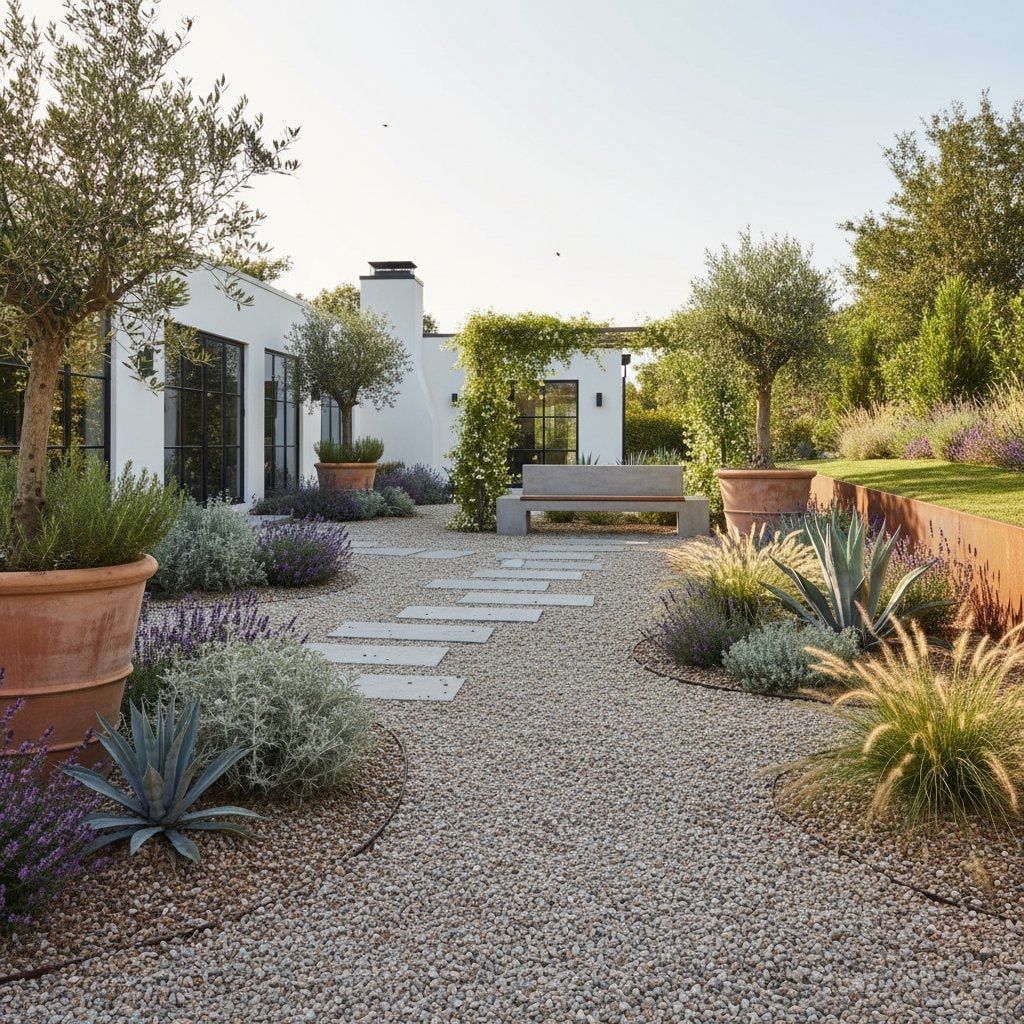
Mediterranean regions offer timeless models for gravel gardens, adapted to arid conditions with sun-loving flora. Evergreen elements such as dwarf olive varieties, lavender bushes, and creeping thyme flourish in rocky substrates, releasing aromatic scents that infuse the air. The interplay of foliage against stone evokes a sense of enduring tranquility, enhanced by the subtle sounds of gravel shifting underfoot.
Adapt these principles to diverse climates by selecting resilient equivalents. In cooler zones, opt for lavender alternatives like catmint or stonecrop, which tolerate frost while mimicking the silvery tones. For wetter areas, include moisture-tolerant sedges alongside gravel to prevent erosion, ensuring the design remains functional and visually harmonious.
Essential Design Strategies for Success
Effective gravel gardens demand intentional planning to integrate seamlessly with existing landscapes. Define boundaries using durable materials like corten steel edging or reclaimed bricks to contain the gravel and prevent migration. This framework guides visitor flow and accentuates planted areas.
Layer materials for visual interest: spread 2 to 4 inches of base gravel topped with finer pea gravel for a polished finish. Select three to five plant types for repetition, such as repeating clusters of yarrow every few feet to establish unity. Stick to a limited color scheme, combining cool blues with warm earth tones, to achieve a balanced, enduring composition.
Incorporate functional accents to elevate usability. Position oversized boulders as natural seats or windbreaks. Add a simple water feature, like a shallow basin for birds, to draw focus. Subtle solar path lights embedded in the gravel extend enjoyment into evenings, creating inviting glows without overwhelming the natural aesthetic.
Test and Expand: A Phased Approach to Implementation
Undertake your gravel garden project incrementally to minimize risks. Target a modest area, such as a 10-by-10-foot plot near a patio, to experiment with soil amendments like adding sand for better drainage. Monitor performance through one full season, noting how plants establish and gravel settles after weather events.
Refine selections based on observations: replace underperformers with hardier options, such as switching to feather reed grass if initial choices falter in wind. This method allows budget-conscious adjustments, like sourcing gravel in bulk from local suppliers. As familiarity grows, scale up confidently, potentially converting larger lawn sections over subsequent years.
Nurturing and Enjoying Seasonal Transformations
Gravel gardens reveal their character through gradual changes. Spring brings fresh growth pushing through stones, while summer intensifies colors under full sun. Autumn scatters seed heads for texture, and winter offers stark, sculptural forms dusted with frost.
Routine care remains straightforward: rake surfaces monthly to redistribute gravel and remove invasive weeds promptly. Prune spent flowers to encourage reblooming, fostering a self-sustaining cycle. This low-intervention style frees time for appreciation, turning the yard into a restorative haven.
Ultimately, gravel gardens foster harmony with the environment. They demand partnership rather than dominance, yielding spaces that enrich well-being through simplicity and vitality. Homeowners discover renewed joy in landscapes that thrive effortlessly, aligning personal retreats with planetary health.