Why Gravel Gardens Are Trending for Easy Beauty
Gravel gardens provide texture, color, and structure without the ongoing demands of watering or mowing traditional lawns. Homeowners increasingly adopt this approach to accommodate demanding schedules while achieving striking visual interest. These designs adapt seamlessly to diverse spaces and climates, from sleek urban courtyards to rustic natural settings.
What a Gravel Garden Is
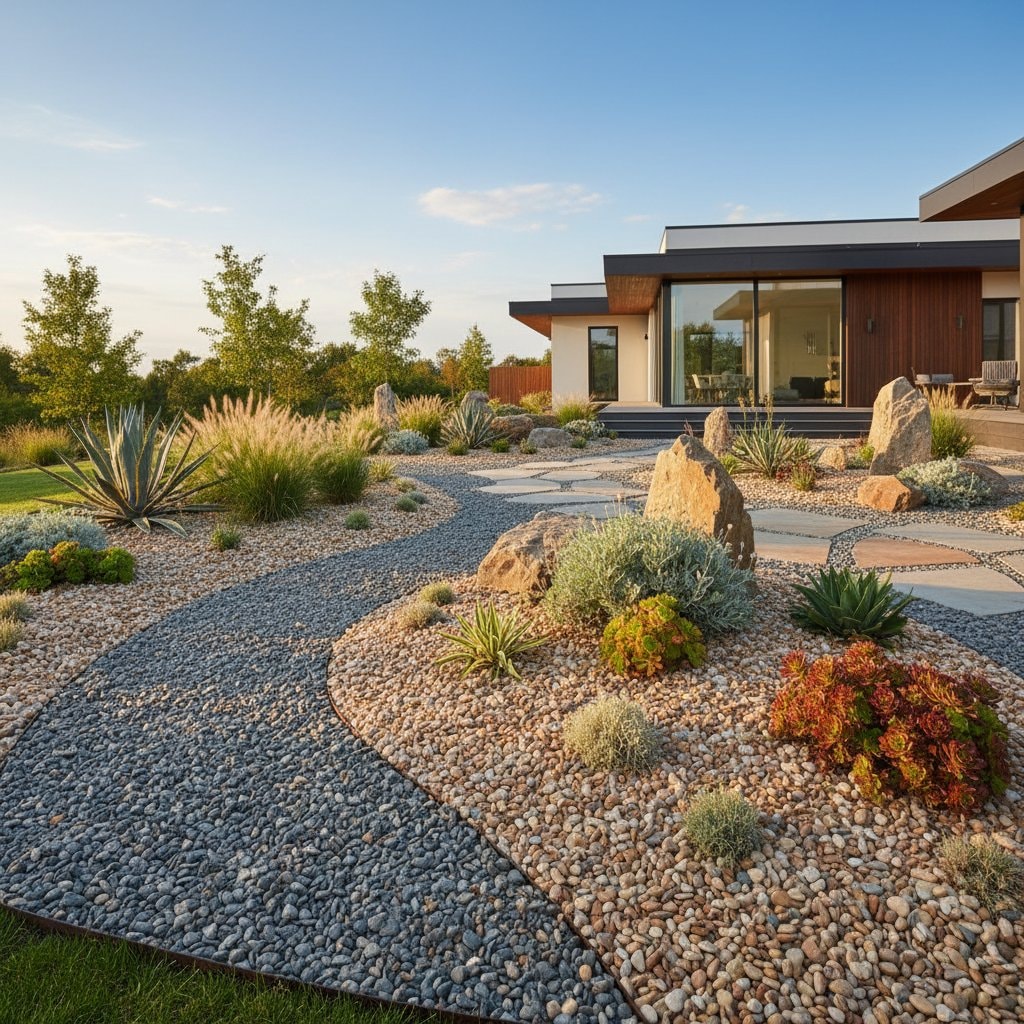
A gravel garden features a surface layer of decorative stone in place of turf or organic mulch. Drought-tolerant plants punctuate the gravel, which conserves soil moisture, suppresses weeds, and delivers a polished appearance. Unlike rock gardens that emphasize large boulders and alpine species, gravel gardens employ finer stones, typically under one inch in diameter, to form a gentle, traversable expanse.
Popular gravel varieties encompass pea gravel, decomposed granite, crushed limestone, and river rock, each contributing distinct hues and textures. Pea gravel offers a soft feel suitable for foot traffic, whereas crushed stone imparts a rugged character. River rock, with its polished, rounded forms, excels in edging or focal points.
Why Gravel Gardens Are Growing in Popularity
Low-maintenance demands drive the rise of gravel gardens. After establishment, these landscapes demand minimal intervention, sparing the effort required for lawn care or dense planting schemes. Routine tasks involve merely extracting stray weeds or smoothing the surface with a rake.
Water conservation represents another key advantage. Drought-resistant selections like lavender, sedum, yarrow, and ornamental grasses thrive with reduced irrigation. The gravel layer enhances moisture retention in the underlying soil, rendering this option ideal for arid zones or water-conscious households.
Contemporary aesthetics further boost their appeal. The straightforward lines and subdued palette of gravel accentuate complementary elements such as elevated beds, artistic installations, or hardscaped surfaces. This versatility supports designs ranging from stark modernism to cozy informality, integrating harmoniously with materials like timber, masonry, and poured concrete.
Cost and Installation Basics
Gravel garden creation proves more economical than constructing extensive patios or decks, though it exceeds basic sod installation. Expect expenses of three to eight dollars per square foot, influenced by gravel selection and preparatory efforts. Homeowners can lower costs by handling preliminary tasks, including sod removal and fabric installation.
Follow these steps to establish a gravel garden:
- Clear the area. Excavate grass, roots, and debris thoroughly to prevent future intrusions.
- Shape the layout. Outline borders and routes using string lines or marking paint for precise definition.
- Improve drainage. Ensure optimal percolation by incorporating two to four inches of coarse sand or aggregate if the soil holds water.
- Lay landscape fabric. Install permeable geotextile to curb weed emergence while permitting drainage.
- Add gravel. Distribute the material uniformly to a depth of two to three inches for stability and coverage.
- Plant and water. Select resilient species and position them thoughtfully; irrigate deeply for the initial two to four weeks to foster root development.
Small-scale projects suit a single weekend, while expansive areas may span several days. The outcome yields a resilient, visually compelling feature enduring years with scant attention.
Choosing the Right Gravel
Gravel selection influences aesthetics and functionality alike.
- Pea gravel: Rounded pebbles under half an inch provide a yielding path, perfect for strolls or lounging zones.
- Crushed granite or limestone: Angular fragments form a stable base, suitable for vehicular access or busy thoroughfares.
- River rock: Polished stones from one-half to two inches evoke organic flow, enhancing perimeters or swales.
- Decomposed granite: Powdery aggregate compacts into a solid, low-shift layer, ideal for terraces or trails.
Consider tonal and dimensional aspects during selection. Pale gravels diffuse sunlight to illuminate dim corners, while deeper shades mask debris and forge bold contrasts. Combining varieties introduces layers of intrigue and sophistication.
Selecting Plants That Thrive in Gravel
Suitable plants endure aridity and intense exposure, often displaying adaptations like extensive root systems, reflective foliage, or protective cuticles. Recommended choices include:
- Lavender
- Sage
- Thyme
- Sedum
- Yarrow
- Russian sage
- Blue fescue
- Coneflower
Cluster specimens in odd-numbered groupings of three or five to simulate organic distribution. Allocate ample intervals for maturation and expansion. A light gravel topping around bases further deters weeds and refines the overall composition.
Maintenance Made Simple
Simplicity defines gravel garden care. Primary duties center on weed vigilance and periodic surface renewal. Rake gently to erase impressions and even the spread, restoring uniformity.
Initial site preparation underpins weed management. Address emerging growth manually or with organic solutions to safeguard nearby vegetation. Steer clear of broad-spectrum chemicals that risk collateral damage.
Annual soil enrichment benefits plants. Apply a modest layer of compost or balanced organic matter adjacent to stems, avoiding gravel displacement. This practice sustains vigor without complicating the design.
Design Ideas for Every Yard
Gravel gardens adapt to varied contexts. Transform a compact patio with neutral pea gravel accented by potted succulents, or delineate broad expanses with meandering trails and rugged edges. Explore these concepts for guidance:
- Modern minimalism: Employ uniform gravel tones alongside bold forms like agave or yucca for geometric precision.
- Cottage charm: Pair earthy gravels with lavender drifts, daisies, and swaying grasses to evoke pastoral ease.
- Mediterranean style: Integrate fractured limestone with clay vessels, rosemary shrubs, and citrus accents.
- Natural retreat: Fuse river rock with indigenous blooms and sinuous paths to replicate a seasonal stream.
Strategic illumination amplifies evening allure. Position ground-level solar fixtures or suspended globes to cast subtle glows across the stone, fostering serene nocturnal ambiance.
Long-Term Benefits
Beyond aesthetics, gravel gardens enhance environmental performance. They facilitate runoff infiltration, mitigate soil loss, and bolster biodiversity. Stones shield earth from deluges and purify percolating water.
Mature plantings further optimize efficiency. Established roots and canopies minimize evaporation, curtailing hydration needs. The gravel endures indefinitely, requiring only intermittent augmentation for vibrancy.
This configuration represents a strategic outlay, yielding enduring returns in labor savings and resource efficiency.
Making It Happen
Embrace gravel gardens for landscapes that endure seasonally with minimal oversight. Initiate with modest zones like entry paths or borders, scaling to comprehensive reconfigurations as confidence grows.
Strategic foresight merges form, utility, and ecology. Shift focus from yard toil to outdoor appreciation through this enduring solution.