Gravel Gardens: The Rise of Low-Water Luxury Landscaping
The initial encounter with a gravel garden lingers in memory. The space exudes quiet vitality, where muted stones capture lingering light and plants integrate seamlessly with their surroundings. This design contrasts with lush lawns or vibrant flower beds, offering instead a landscape of composed assurance.
Homeowners increasingly select gravel gardens for their aesthetic appeal without demanding frequent irrigation or intensive upkeep. These gardens embody a simplicity that bridges modern and enduring styles. Originating as a response to arid environments, they now represent intentional elegance, prioritizing texture and moderation over abundance.
Core Principles of Gravel Garden Design
A gravel garden thrives on efficiency and harmony. Designers employ well-draining substrates, resilient vegetation, and stone elements to establish visual stability. The gravel layer shields the earth, minimizes moisture loss, and inhibits weed growth.
This approach diverges from conventional gardens reliant on consistent hydration. Gravel gardens align with environmental cycles, fostering equilibrium through thoughtful adaptation rather than imposition.
Selecting Appropriate Stone Materials
Stone choice defines the garden's ambiance. Light limestone or granite imparts openness and luminosity to the area. In contrast, slate or basalt introduces depth and solidity.
Consider compatibility with architectural features and local surroundings when selecting gravel. Pea gravel, with its rounded form, conveys informality and organic flow, whereas crushed stone's sharp edges suggest precision and form. Each option suits specific moods, from casual retreats to defined compositions.
Effective designs incorporate varied stone sizes for cohesion. Position larger boulders along borders or paths, apply finer gravel in planting zones, and integrate flat stepping stones for navigation. Such combinations generate visual cadence, ensuring the layout appears deliberate and unified.
Selecting and Arranging Resilient Plants
Plants in gravel gardens endure arid conditions with poise. Mediterranean varieties such as lavender, thyme, and rosemary flourish in warmth, emitting scents upon contact with breezes. Ornamental grasses like feather grass or blue fescue introduce subtle motion.
Succulents and compact shrubs, including sedum and euphorbia, provide structural interest and tonal variation. Arrange these elements in naturalistic clusters rather than rigid lines to evoke organic patterns. Incorporate expanses of exposed gravel amid groupings to promote visual respite.
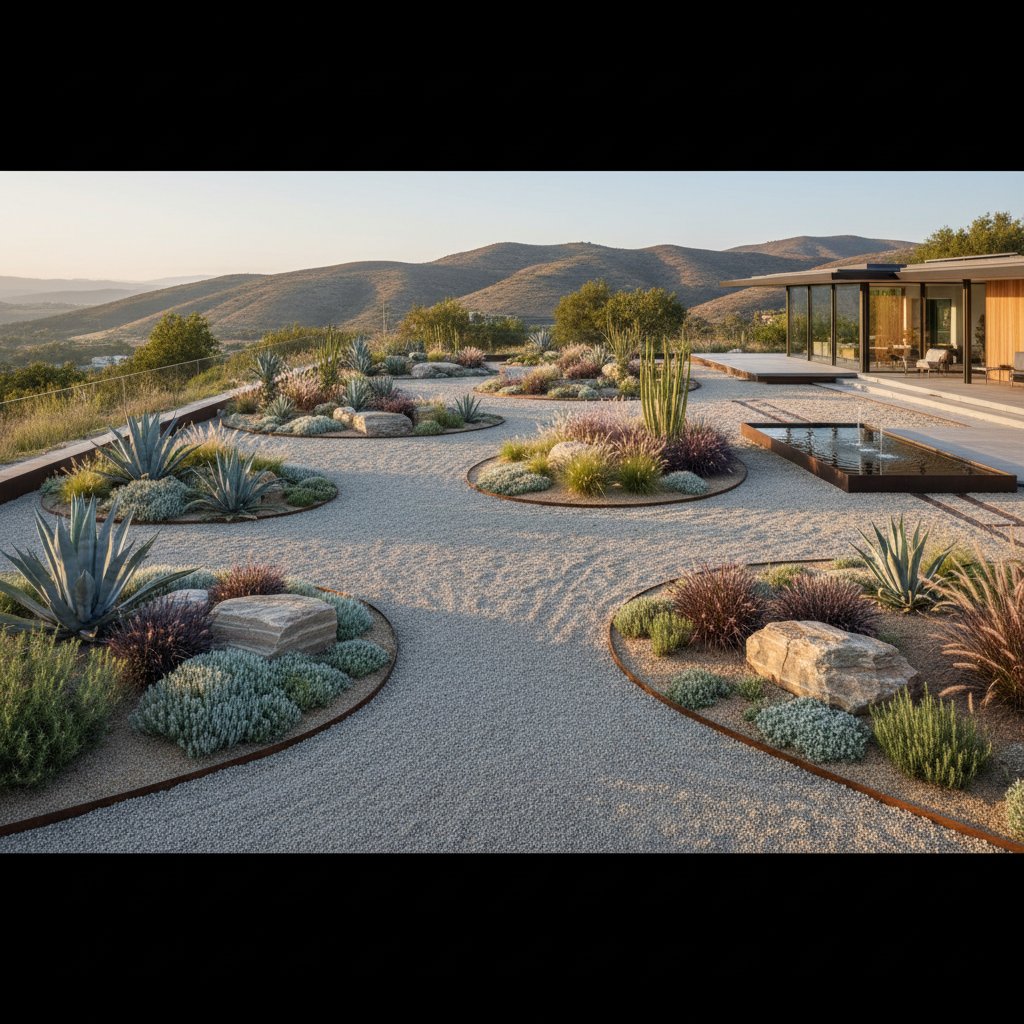
Strategic placement enhances interaction between flora and substrate. Feature assertive specimens like agave or yucca as anchors, surrounded by finer fillers. Established plantings require minimal intervention, with deep roots accessing subsurface water and gravel conserving surface moisture. Focus efforts on periodic pruning and selective weeding to sustain vitality.
Exploring Design Styles and Inspirations
Gravel gardens lend themselves to diverse aesthetics. Rustic iterations incorporate aged boulders, clay containers, and gray-green foliage suited to rural contexts. Contemporary versions emphasize sleek contours, material juxtapositions, and sparse vegetation.
Consider these stylistic pathways:
- Mediterranean Serenity: Employ light gravel alongside lavender, rosemary, and olive-hued specimens for a warm, leisurely vibe.
- Contemporary Restraint: Opt for dark aggregates, precise plant layouts, and angular routes to achieve sculptural clarity.
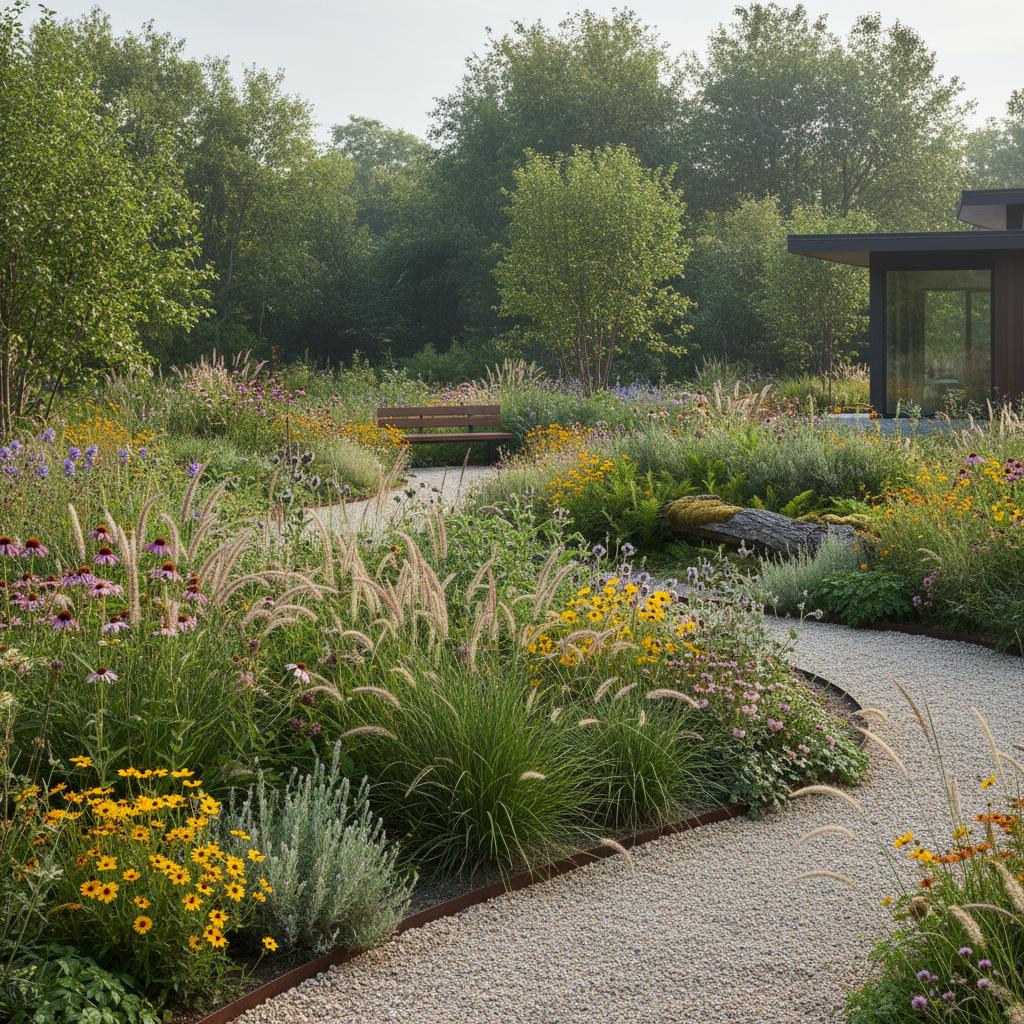
- Prairie Expanse: Blend gravel with indigenous grasses and perennials for an untamed yet bounded effect.
- Zen Simplicity: Utilize polished pebbles, sparse arrangements, and ample voids to evoke contemplation.
These variations balance structure and spontaneity. Gravel gardens accommodate refinement or casualness, adapting to personal preferences with ease.
Implementation Steps for Lasting Results
Initiate a gravel garden on a modest scale, such as adjacent to an entry or seating area. Transform an existing turf segment or edging into a gravel-planted zone to assess integration.
Follow these steps for optimal outcomes:
- Site Preparation: Clear vegetation and debris, then till the soil and incorporate coarse amendments like sand or grit to enhance permeability.
- Barrier Installation: Position permeable geotextile beneath the surface to curb weeds while permitting drainage.
- Gravel Application: Distribute material to a uniform two-inch thickness, ensuring coverage without submerging emerging plants.
- Initial Plant Care: Provide deep, infrequent irrigation to new additions until roots establish firmly.
As the installation matures, components integrate organically. Gravel compacts naturally, vegetation expands, and the composition gains cohesive appeal.
Sustaining and Evolving the Garden
Gravel gardens evolve gradually, enhancing their allure over time. Stones acquire patina, plants develop fullness, and sunlight patterns animate the terrain across hours.
This design encourages attentive stewardship over strenuous work. Rake surfaces periodically, trim encroaching growth, or introduce fresh aggregates to renew texture. These interventions preserve equilibrium without disrupting serenity.
Embracing Gravel Gardens for Enduring Appeal
Developing a gravel garden involves confidence in natural processes. Release expectations of dominance and permit environmental cues to shape outcomes. Start modestly, layer textures thoughtfully, and echo elements for consistency.
What commences as an adaptation to water scarcity transforms into profound satisfaction. Gravel gardens deliver tranquility, refinement, and affirmation that elegance emerges from mindful restraint.