The Emergence of Productive Front Yard Landscapes
Consider the potential of your front yard beyond routine mowing. Sunlight bathes the ground, suggesting opportunities for herbs, salad greens, or fruit-bearing shrubs rather than uniform turf. Homeowners increasingly embrace this vision, converting visible spaces into modest food-producing areas that reshape perceptions of residential greenery.
Reasons for the Transition
Traditional lawns represent tidiness and status, yet they demand resources like water and chemicals while offering minimal returns. Edible front yards reverse this dynamic. They yield fresh produce, support beneficial insects, and prompt discussions among passersby.
The change extends beyond utility to foster relationships. Publicly accessible gardens shift cultivation from secluded backyards to communal views. Onlookers pause to appreciate climbing tomatoes or inquire about basil cultivation techniques. Isolated labor transforms into collective engagement.
Evaluating Your Site
Initiate the process by examining sunlight patterns throughout the day. Identify drainage after rainfall and test soil texture for compaction or dryness. Gauge the area's overall appeal: Does it draw you closer, or appear overlooked?
Space constraints or imperfect soil pose no barriers. Compact front areas accommodate elevated beds, pots, or wall-mounted supports. Designate specific zones: Position sun-loving herbs such as rosemary and thyme along pathways, reserve partial shade for greens like spinach or Swiss chard.
Observe neighboring successes for insights. Thriving lavender, sage, or indigenous blooms indicate adaptable species that require little intervention.
Designing for Productivity and Appeal
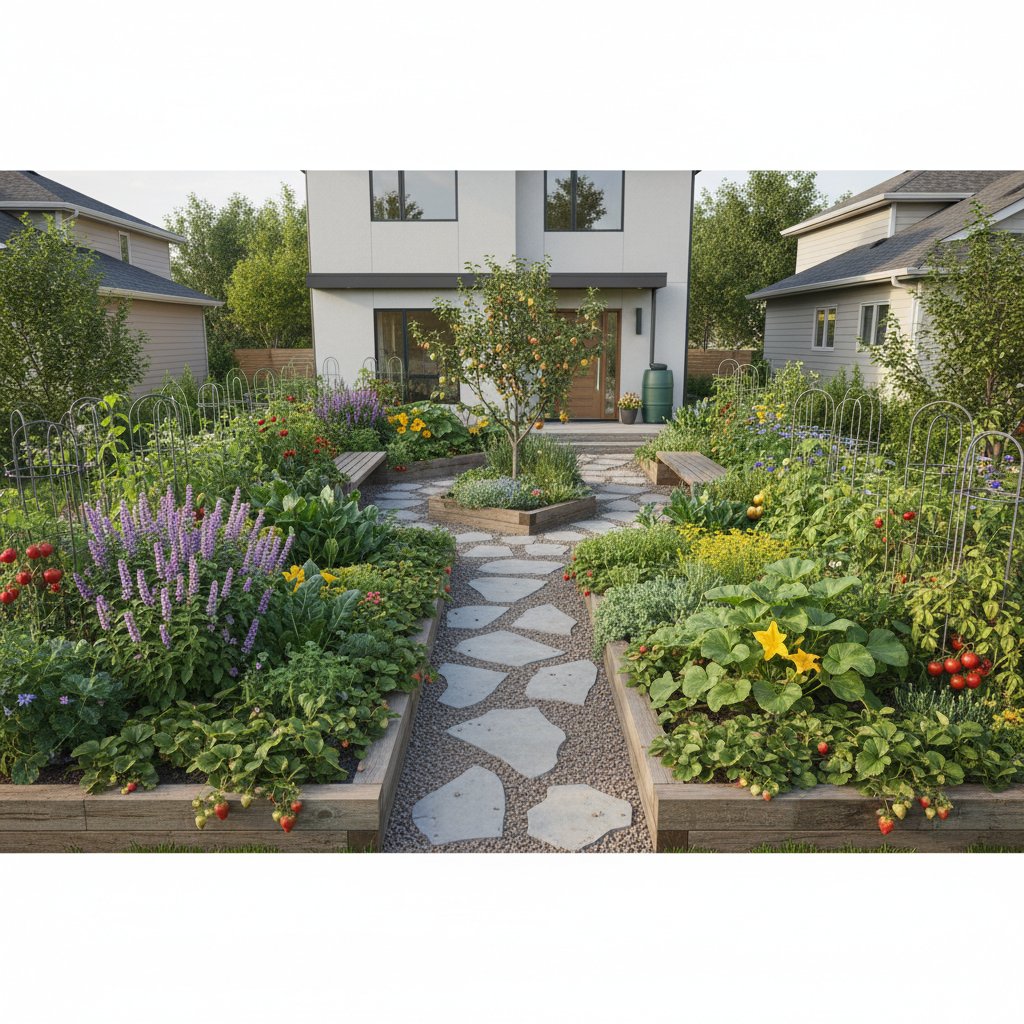
Effective planning combines aesthetics with output, ensuring the garden appears deliberate and inviting. Draft a basic diagram incorporating walkways, vegetable plots, and pollinator-attracting floral edges.
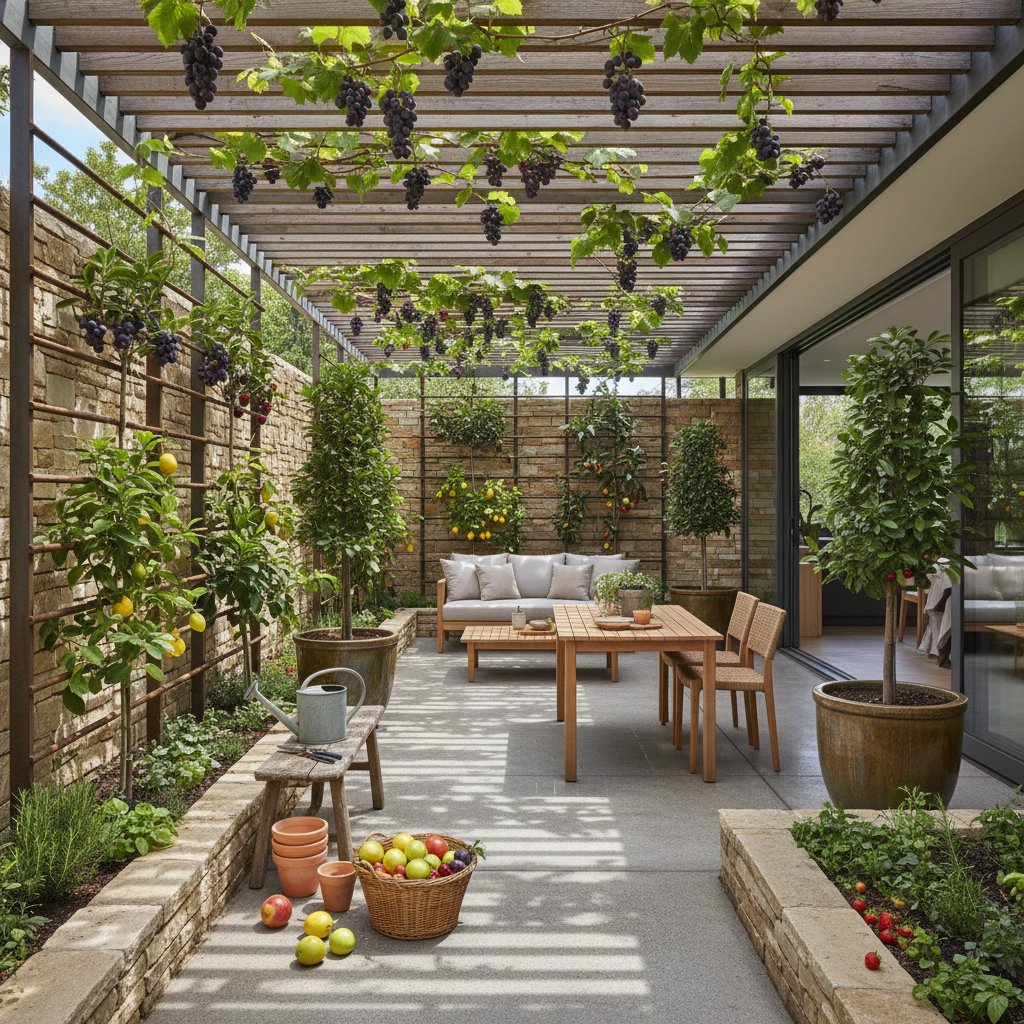
View the yard as an evolving artwork where visual elements enhance edibility. Structural purple kale provides form, vivid nasturtium flowers cascade with consumable petals. Strawberries serve as edging while dwarf citrus or apple trees introduce vertical interest and partial cover.
In regulated communities, select dual-purpose varieties like blueberry shrubs, decorative chili plants, or rainbow chard to align with landscaping norms. Apply wood chip mulch along paths for neatness and install defined borders to organize beds.
Implementing Initial Changes
With a solid design, prepare the ground. Vital soil health underpins garden vitality. Clear persistent weeds, aerate dense areas, and incorporate aged compost to boost fertility. For challenging clay or stony soils, construct raised frames using natural lumber or rock to enhance percolation and simplify upkeep.
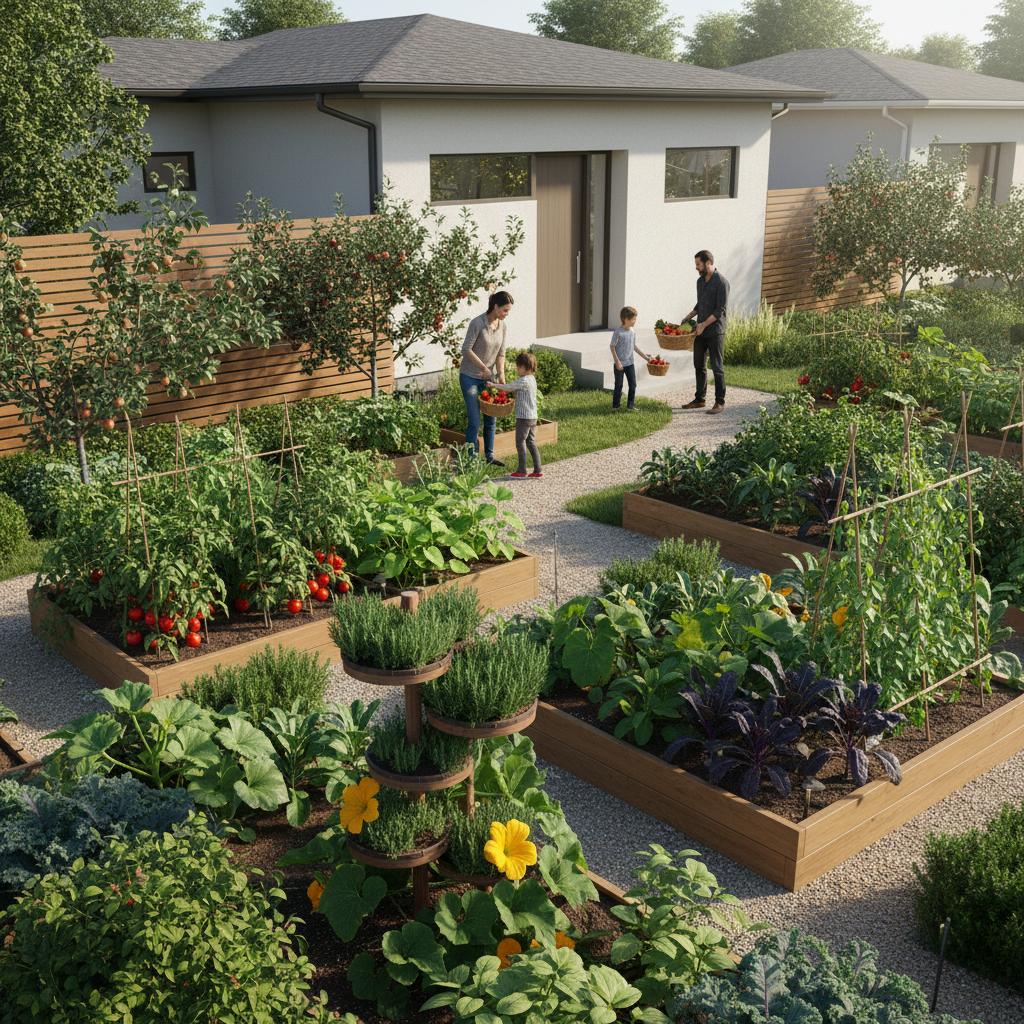
Scale modestly at first. Establish one or two beds or porch-adjacent pots with dependable selections like loose-leaf lettuce, sweet basil, or compact cherry tomatoes. Achievements in these build expertise for gradual seasonal expansions.
Establish watering routines for robust development. Deliver thorough, regular applications to promote deep root systems. Cluster compatible plants to streamline irrigation; opt for subsurface drip lines or porous hoses over surface spraying to conserve resources and minimize evaporation.
Attracting Essential Wildlife and Building Bonds
Vibrant edible yards flourish with ecological support. Bees, butterflies, and hummingbirds aid pollination for optimal yields. Integrate companion blooms such as marigolds to deter pests, zinnias for nectar, and sunflowers for stature amid edibles.
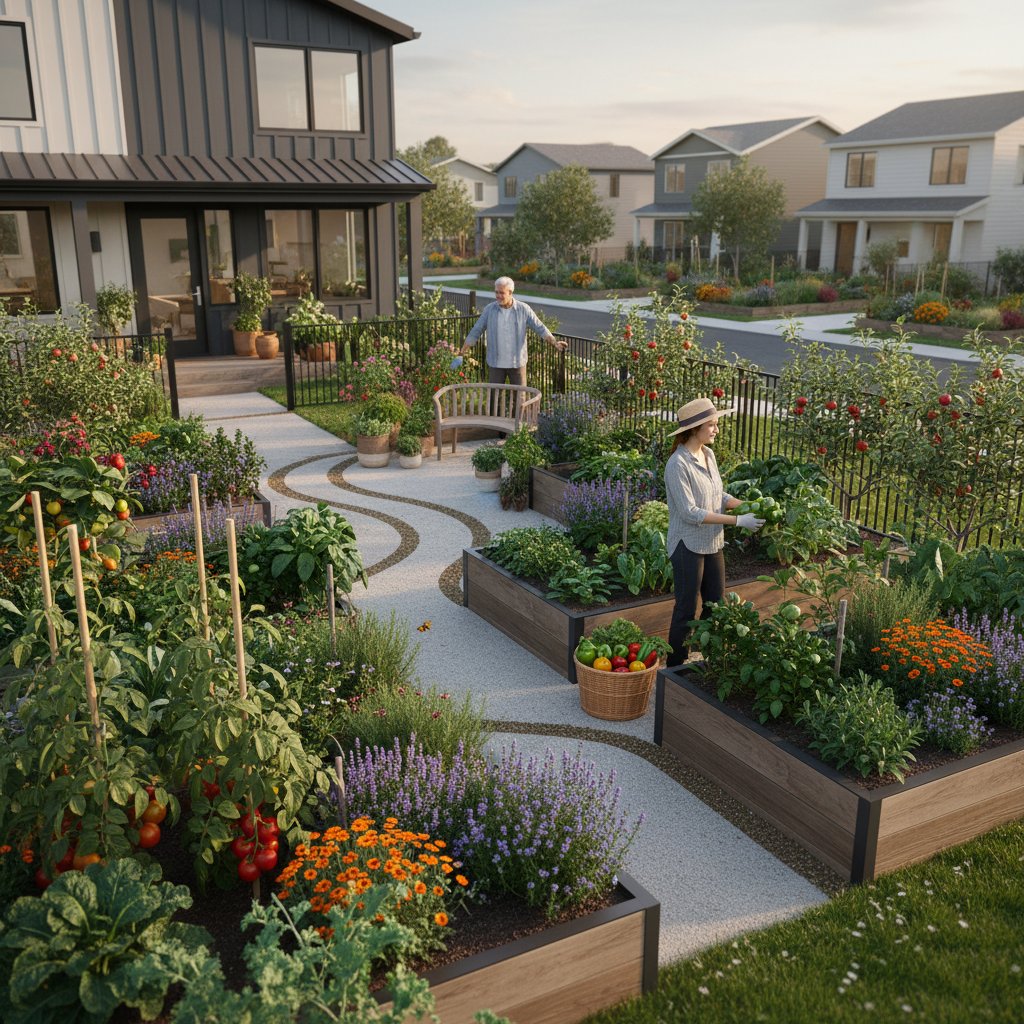
These displays also encourage social ties. Sidewalk-adjacent herbs or boundary-reaching vines prompt inquiries. Some gardeners add labeled markers or harvest-sharing baskets, converting personal plots into interactive hubs.
One initiative often motivates others, evolving from solitary greens to block-wide exchanges of surplus. This cycle of sowing and gathering cultivates subtle unity.
Strategies for Sustainable Maintenance
Aesthetic edible spaces remain enjoyable when upkeep integrates seamlessly into daily life. Develop routines that prioritize efficiency.
Consider these approaches:
- Apply thick mulch layers to retain soil moisture and limit weed emergence; options include straw, leaf litter, or bark fines.
- Harvest produce frequently to stimulate regrowth and avoid bolting or decay.
- Alternate plant families across beds annually to maintain soil vitality and curb insect issues.
- Supplement with compost or natural amendments two to three times yearly for nutrient replenishment.
Such practices sustain a regenerative loop. Regular involvement yields reciprocal garden vitality.
Harmonizing Utility with Visual Charm
Edible front yards transcend mere sustenance; they celebrate functional elegance. Morning light on chard foliage, post-rain herbal aromas, and doorstep-picked meals affirm nurturing's rewards.
This practice reshapes awareness. Patterns in illumination, insect activity, and seasonal shifts emerge. Routine tasks evolve into centering rituals.
Nurturing Long-Term Growth
Mature edible yards mirror invested ingenuity. Incremental choices accumulate: A bean-laden arch tempers entryway sun, or robust oregano edges trails. These elements infuse personality and narrative.
Monitor and refine continuously. Resilient varieties exceed expectations; others demand adaptation. This iterative learning refines knowledge of placement, nourishment, and selection.
Season by season, the yard embodies integrated prosperity. It demonstrates that foreground realms sustain vision, kin, fellowship, and earthly ties.
Next Actions for Your Landscape
To initiate an edible front yard, commence modestly with a single bed, vessel, or perennial herb. Follow observations of growth and preferences. Progressive refinements yield a tailored, rewarding haven.