Embracing Edible Front Yards: Beauty Meets Bounty
Stepping out to harvest fresh herbs or ripe tomatoes from your front yard offers a profound connection to your home. This practice surpasses the appeal of mere decorative shrubs by blending productivity with visual charm. Homeowners increasingly recognize that front yards can serve multiple purposes: they nourish residents, enhance neighborhood aesthetics, and reflect intentional living.
The rise of edible landscaping redefines outdoor spaces. These designs prioritize both form and function, ensuring that practical elements integrate seamlessly with traditional beauty. As a result, yards become dynamic environments that invite interaction and appreciation.
Understanding the Evolution of Front Yard Design
Traditionally, front yards focused on distant visual impact through lawns and structured plantings. Integrating vegetables and edibles once appeared unconventional in residential settings. However, shifting priorities toward sustainability and self-sufficiency have blurred these distinctions.
Homeowners now seek landscapes that align with personal values, such as local food production. Initial efforts often involve modest additions, like herb borders along pathways or fruit bushes near entryways. These evolve into comprehensive layouts where edibles form the core without compromising elegance.
This progression stems from broader cultural changes. Urban gardening movements and environmental awareness encourage visible, functional designs. Front yards thus transform into expressions of creativity, practicality, and stewardship.
Principles of Integrating Edibles with Aesthetics
Effective edible landscaping requires deliberate arrangement, treating food plants with the precision of ornamental selections. The objective involves creating balanced compositions using edibles for structure, color, and texture. For instance, select compact varieties that maintain tidy appearances throughout the growing season.
Focus on harmonious combinations to achieve visual cohesion. Pair the silvery foliage of sage with the bold reds of Swiss chard for striking contrast. Use the upright form of rosemary to frame entry points, much like evergreen shrubs provide definition.
Incorporate vertical elements for depth and interest. Train vining peas on simple arbors to soften fence lines, or plant sunflowers to draw the eye upward. Such choices ensure the yard remains engaging from the street while facilitating easy access for care and harvest.
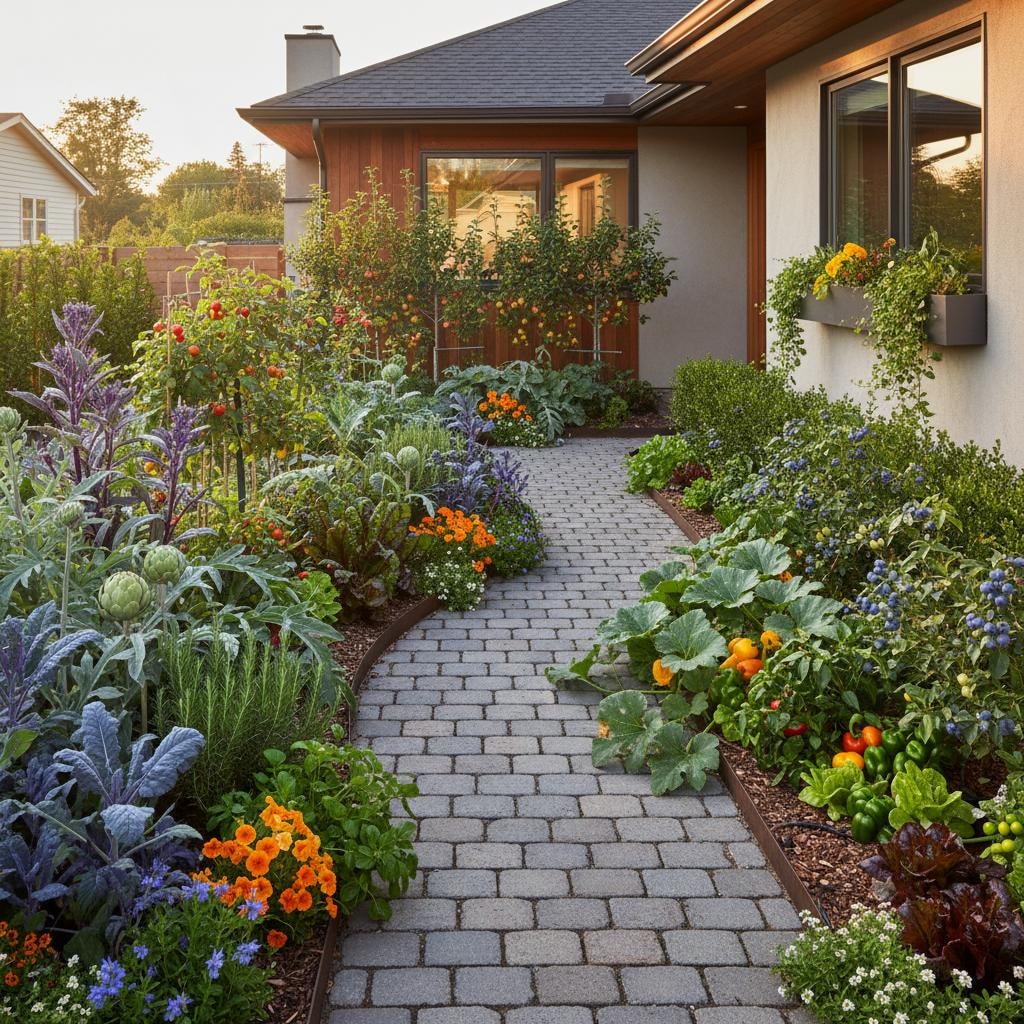
Pathways enhance both utility and design. Install meandering brick or flagstone walks to guide movement and delineate beds. Border these with low-growing mint or thyme to release subtle aromas underfoot, reinforcing a sense of order.
Repetition fosters unity. Employ consistent materials, such as matching raised beds or uniform edging, to create rhythmic patterns. This approach prevents the space from appearing haphazard, instead presenting a polished, intentional whole.
Selecting Plants for Year-Round Appeal
Plant choice determines the landscape's success, particularly for front yards exposed to public view. Prioritize varieties that offer prolonged attractiveness and reliable yields. Consider local climate, soil type, and sunlight to match selections with site conditions.
Herbs provide foundational structure: Opt for evergreen options like rosemary and lavender, which maintain form through winter and draw bees with their blooms. Chives offer grassy tufts and edible flowers, while sage delivers textured leaves in muted tones.
Leafy greens add vibrant color: Choose kale for its curly, blue-green fronds or rainbow Swiss chard for multicolored stems. Loose-leaf lettuce in mixed hues fills gaps quickly, allowing succession planting to sustain visual density.
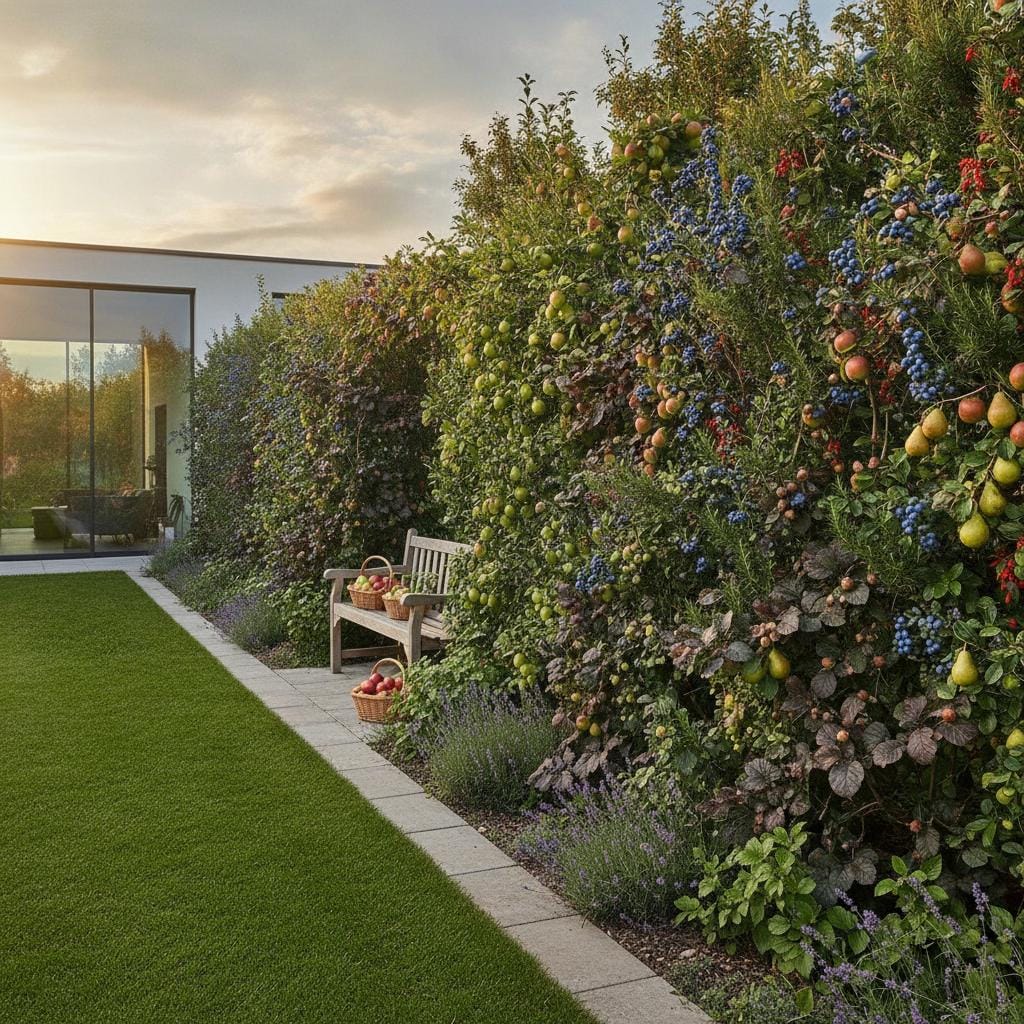
Fruit plants deliver seasonal highlights: Dwarf blueberries feature glossy leaves and berries, transitioning to autumn color. Strawberries cascade from containers, and compact citrus trees suit warmer zones with fragrant blossoms.
Root vegetables contribute subtle texture: Beets display red-veined leaves above ground, and carrots' fern-like tops soften edges. Radishes mature swiftly, serving as placeholders until perennials establish.
Climbers enhance architecture: Pole beans climb trellises with heart-shaped leaves, and cucumbers bear yellow flowers before fruit. These soften hardscapes while maximizing vertical space.
Balance edibles with non-edible companions. Intersperse perennials like daylilies to cover fading annuals, ensuring continuous coverage. Test small groupings first to observe performance and adjust accordingly.
Addressing Practical Site Factors
Sunlight remains essential, with most edibles requiring full exposure for optimal growth. Assess your yard's orientation to position sun-loving plants accordingly, such as south-facing beds for tomatoes. Partial shade suits greens like spinach, which tolerate dappled light.
Soil preparation supports diverse plant needs. Amend with organic matter to improve fertility and drainage, aiming for a neutral pH. Raised beds prove ideal for poor native soil, offering control over depth and composition.
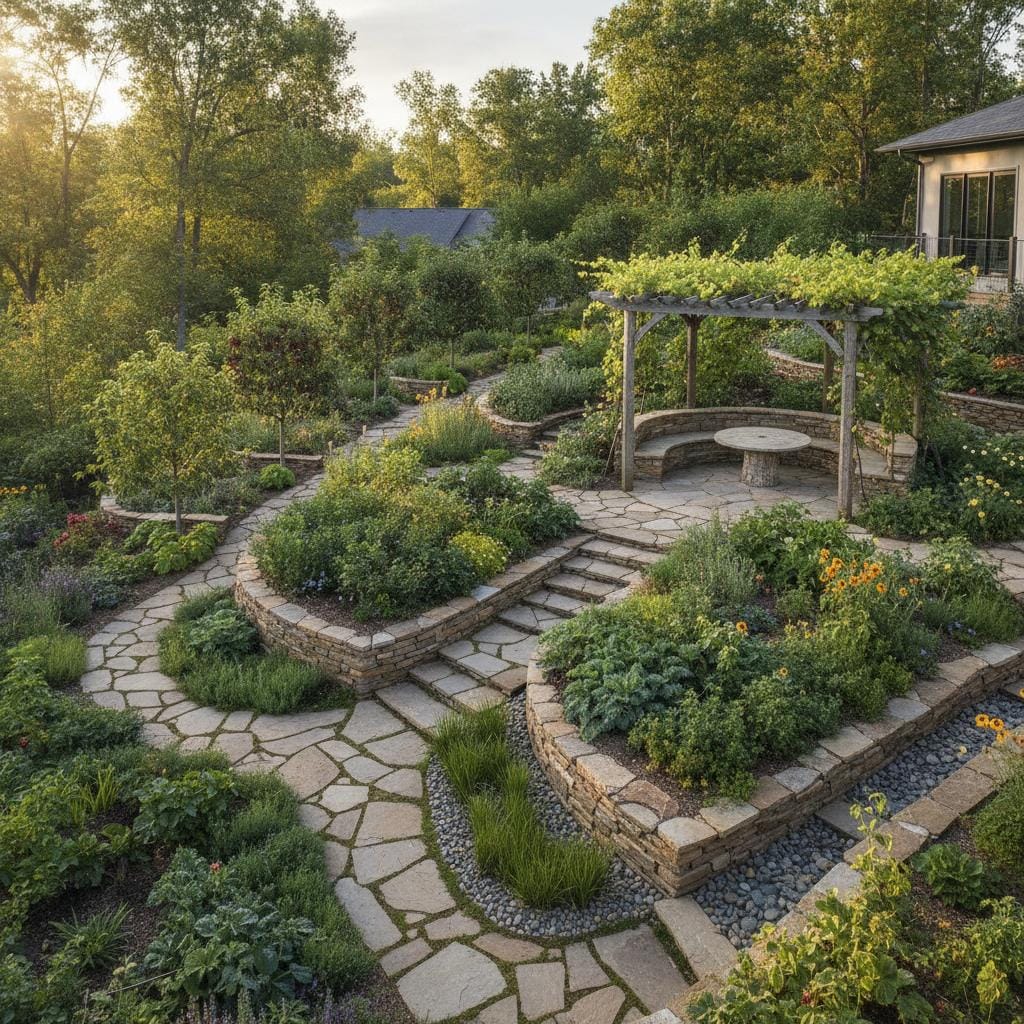
Sloped terrains benefit from terracing. Construct low walls with retained soil to prevent erosion and form tiered planting levels. This not only aids water management but also creates multidimensional vistas.
Maintenance aligns with seasonal cycles. Water deeply but infrequently to encourage strong roots, and mulch to suppress weeds. Prune fruiting plants post-harvest to promote airflow, reducing disease risk. Dedicate time weekly for weeding and monitoring, integrating these tasks into daily routines.
Navigating Neighborhood Dynamics
Concerns about neighbor perceptions often deter edible yard projects. Well-executed designs, however, elevate rather than detract from street appeal. Maintain crisp lines with metal or wood edgings to distinguish growing areas from hardscapes.
Incorporate framing elements for polish. Low boxwood hedges or feather reed grass borders contain beds visually, blending edibles into the overall composition. Mulch uniformly to unify the palette and minimize bare soil.
Edible yards frequently spark positive interactions. Passersby inquire about heirloom varieties or share propagation tips, fostering neighborly bonds. Such gardens promote shared values around sustainability, turning private spaces into communal assets.
Local regulations may influence designs. Review homeowner association guidelines or zoning rules to ensure compliance, focusing on non-invasive species. Community gardens nearby can provide inspiration and support networks.
Evolving Your Edible Landscape Over Time
An established edible front yard serves as an ongoing learning space. Observe daily to track growth patterns, pest activity, and bloom sequences. Adjust irrigation based on weather shifts, and rotate crops to preserve soil health.
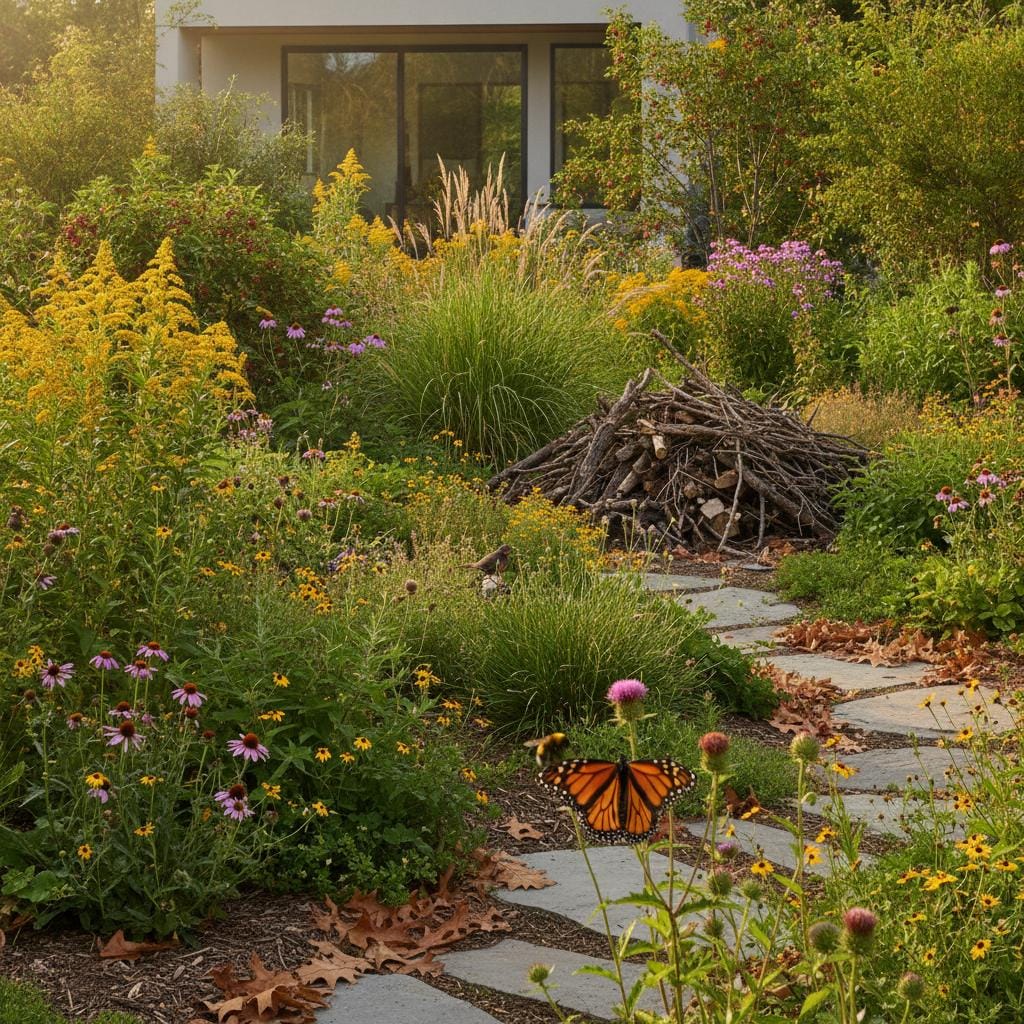
Refinements occur naturally with experience. Transition underused annuals to hardy perennials for reduced effort, or introduce pollinator-friendly natives to boost biodiversity. Add benches amid berry patches to encourage lingering and enjoyment.
This adaptability ensures the yard remains relevant. As family needs change, so can the plantings, from child-friendly strawberries to low-maintenance herbs. The constant element is the deepened bond with nature through active stewardship.
Steps to Launch Your Edible Front Yard
Begin modestly to build confidence. Identify a single sunny bed and replace ornamental fillers with herbs like basil and parsley. Monitor integration with surrounding plants, noting any adjustments for scale or color.
Sketch a basic plan on paper, mapping sun paths and access routes. Source plants from reputable nurseries, selecting disease-resistant cultivars suited to your region. Install simple supports, such as wire cages for tomatoes, to guide growth.
Commit to consistent care from the start. Harvest regularly to encourage production, and document successes in a journal. Expand gradually, incorporating feedback from the space's performance and your lifestyle.
Ultimately, these yards embody integrated living. They sustain through fresh yields, enchant through design, and connect through shared stories. Embrace this approach to create a front yard that thrives in every sense.