Plant Now for Spring Color That Lasts All Season
Does your garden feel a little tired after summer, or are you already picturing the bright, lively beds you would love to see when spring returns? Fall can feel like a quiet closing chapter outdoors, but it is also the right moment to set a more colorful season in motion. Planting bulbs now gives them time to settle beneath the soil, then reward you with blooms when the landscape is ready to wake.
The best part is that you do not need a grand garden plan. A few thoughtfully chosen bulbs can bring color to a front walk, brighten a container, or fill a planting bed with flowers that arrive in waves. With a little care at planting time, you can enjoy spring color that lasts across much of the season.
Choose Bulbs for a Longer Spring Display
Bulbs bloom at different points in spring. By combining early, midseason, and late bloomers, you can keep fresh color coming instead of seeing everything flower at once.
- Early bloomers such as crocuses, snowdrops, and some miniature daffodils bring color while the garden still feels sleepy.
- Midseason choices such as tulips, hyacinths, and many daffodils add fuller displays as temperatures warm.
- Late bloomers such as alliums and certain tulips extend the show toward the end of spring.
When selecting tulips, look at the expected bloom period listed on the package. A mix of early and late varieties can stretch the display. Keep in mind that tulips may not return as reliably as some other bulbs, especially in warm or damp conditions. For dependable repeat color, consider planting plenty of daffodils, crocuses, or other bulbs suited to your garden.
Think about color as well as timing. You might choose a soft palette of cream, pale pink, and lavender, or bring energy with bright yellow and red. Repeating a few colors in different spots helps the garden feel connected, even when each area blooms at a different time.
Find the Right Place in Your Garden
Most spring flowering bulbs need well drained soil and plenty of sun. A sunny bed, the edge of a path, or an open space beneath deciduous trees can work well. These trees usually have bare branches while bulbs are growing and flowering, so light can reach the plants before the tree canopy fills in.
Check the spot after a rain or watering. If water sits there for a long time, bulbs may rot before spring arrives. A raised bed or a different planting location may be a better choice. If the soil feels heavy, mix in organic matter to improve its structure. Avoid placing a layer of loose material only in the planting hole, since that can hold water around the bulb instead of helping it drain.
Look for spaces you pass often. A small group near the entry, along a garden path, or beside a favorite window can make the flowers easier to enjoy. You can also plant bulbs among perennials. The spring blooms will add color before many perennials reach their full size.
Know When to Plant Fall Bulbs
A useful guide for fall bulb planting is the soil temperature. Bulbs generally do best once the soil has cooled, but before the ground freezes. This gives roots time to develop without encouraging shoots to emerge too soon.
Your local climate, the weather, and the type of bulb all affect the best planting window. Follow the instructions on the bulb package, and ask your garden center for guidance suited to your area. If you are wondering when to plant tulips, use the same general approach: wait for cool soil and allow several weeks for roots to establish before winter conditions set in.
Try not to plant while the soil is warm and dry. If you have bought bulbs early, keep them in a cool, dry, well ventilated place until the bed is ready. Avoid storing them near ripening fruit, which can release gases that harm bulbs.
Plant Bulbs with Care
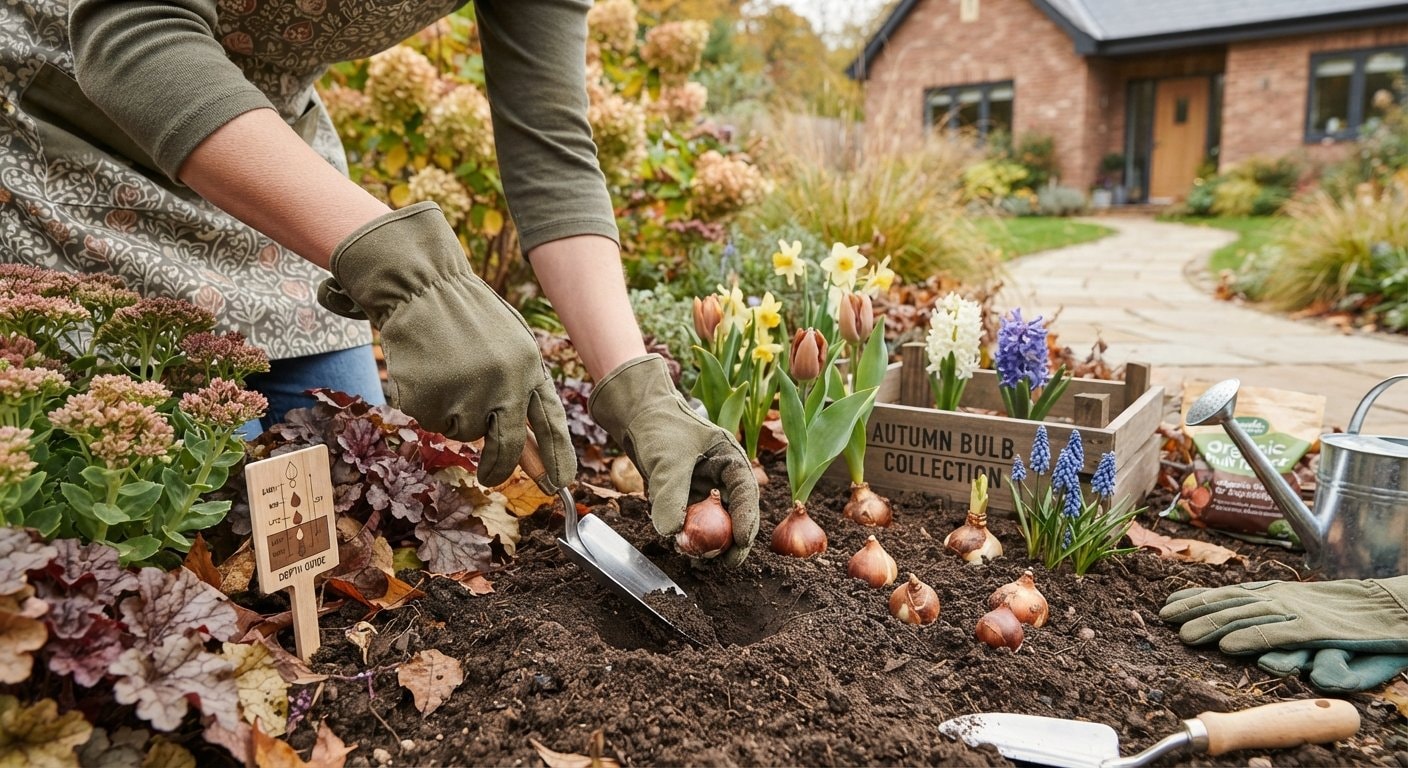
Before digging, arrange the bulbs on the soil surface. This lets you adjust the spacing and see how the planting will look. For a natural effect, plant small groups rather than lining up bulbs in a straight row. Odd sized clusters often look relaxed and full.
Use the planting depth recommended on the package. A common guideline is to plant a bulb about two to three times as deep as its height, with the pointed end facing up. If you cannot tell which end belongs on top, place the bulb on its side. It can usually find its way as it grows.
A simple planting process can keep the job manageable:
- Loosen the soil with a trowel or bulb planter.
- Set each bulb at the recommended depth and spacing.
- Cover it with soil, then water to help settle the planting area.
- Add a light layer of mulch after the soil has cooled.
Avoid pressing down hard over the planting area. Bulbs need air and healthy soil around them. A light layer of mulch can help moderate soil conditions and reduce weeds, but a thick layer may delay growth or hold too much moisture.
Add Spring Bulbs to Containers
Containers are a good option if your garden beds are full or you want color near a doorway. Choose a pot with drainage holes and use fresh potting mix. Make sure the container is large enough to hold several bulbs at the proper depth.
You can layer bulbs in a deeper pot, placing later bloomers lower and earlier bloomers above, as long as each type has enough soil beneath and above it. This method, sometimes called layered planting, can create a succession of flowers in one container. Follow the spacing and depth directions for each bulb, and do not crowd them tightly against the sides of the pot.
In colder areas, container soil can freeze more deeply than garden soil. Place the pot in a sheltered location, or protect it with insulation while keeping drainage clear. Check it occasionally so the mix does not dry out completely.
Protect Your Planting and Prepare for Growth
Some bulbs attract squirrels and other digging animals. If this is a concern, cover the bed with a layer of chicken wire or bulb protection mesh, then secure it beneath the mulch. Remove or adjust it as shoots appear. You can also choose bulbs that animals tend to avoid, such as daffodils, though no planting is entirely protected.
Mark where you planted bulbs. A small label or simple garden sketch can prevent accidental digging when you are adding other plants in spring. Keep the package information nearby, too. It can help you recognize what is coming up and remember which varieties performed well.
After the flowers fade, let the leaves remain until they yellow and wither. The foliage gathers energy that the bulb stores for future growth. It may look untidy for a while, so tuck bulbs among perennials or use nearby plants to soften the view. Remove spent flower heads if you want the plant to direct less energy into seed production.
Enjoy Watching Your Garden Thrive
Fall bulb planting is a small act of trust. You place quiet, unassuming bulbs in the soil, then wait through the colder months for signs of life. Choosing varieties with different bloom periods, planting them in suitable soil, and giving the foliage time to recharge can help your display last longer and return with better strength.
Start with one bed, a few containers, or a handful of tulips and daffodils along a path. Notice which colors and bloom times you enjoy most, then build on that experience. With steady attention and a few thoughtful choices, your spring garden can welcome you back with color that unfolds gradually and feels more rewarding each time.