Decomposed Granite: 2025's Premier Budget-Friendly Yard Enhancement
Homeowners seeking to revitalize their outdoor spaces without incurring high expenses on materials such as stone pavers or concrete often turn to decomposed granite. This material provides a natural appearance, comfortable texture underfoot, and significantly lower costs compared to traditional hardscape options. Professionals and DIY enthusiasts alike utilize it for pathways, patios, and garden features to achieve a polished yet integrated look with the surrounding landscape.
Decomposed granite, commonly abbreviated as DG, consists of crushed stone that has weathered into fine gravel and dust particles. When properly installed, it compacts into a stable surface while permitting water infiltration, thereby minimizing pooling and erosion issues. The result is a smooth, rustic finish that demands minimal ongoing attention.
Key Advantages of Decomposed Granite
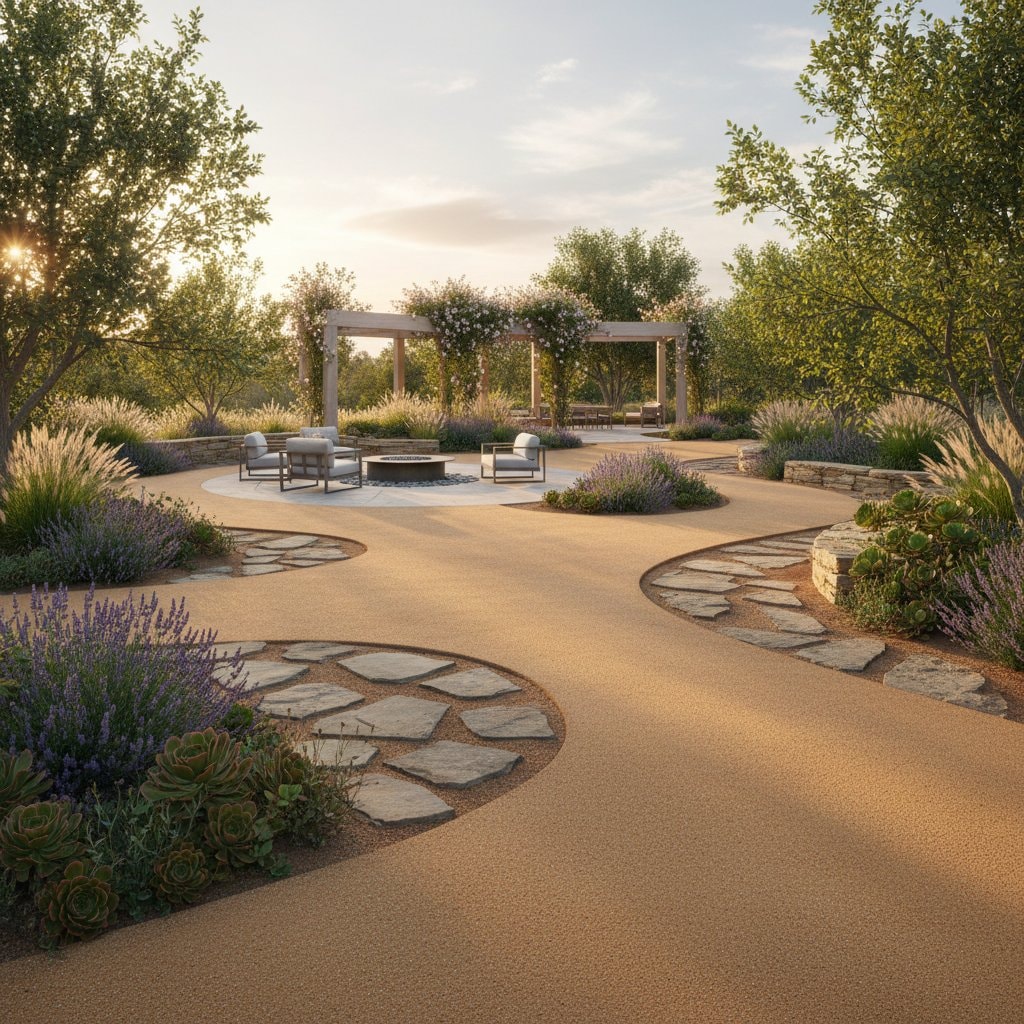
Decomposed granite gains widespread appeal due to its economic value, ease of application, and adaptable aesthetics. It suits a variety of applications, including walkways, lounging zones, and edging for planting beds. Available in natural hues such as gold, tan, gray, and reddish-brown, it harmonizes with diverse outdoor palettes.
The primary benefits include:
- Cost-Effectiveness: Prices range from one to three dollars per square foot, varying by color and grade. Including professional labor, the total rarely exceeds six dollars per square foot, far below alternatives like brick, flagstone, or poured concrete.
- Water Permeability: Precipitation filters through the surface rather than sheeting off, reducing soil erosion and aiding groundwater replenishment.
- Minimal Upkeep: After compaction, the material remains stable with basic maintenance. Periodic raking and replenishment every few years suffice to maintain its condition.
- Organic Aesthetic: Its granular texture and earthy tones integrate seamlessly with vegetation, timber elements, and rock features, fostering a unified natural environment.
- User Comfort: Softer than coarse gravel and less prone to shifting, DG offers a pleasant walking or seating experience.
These attributes position decomposed granite as an ideal solution for sustainable, attractive yard improvements.
Selecting the Appropriate Decomposed Granite Variant
Decomposed granite appears in three principal forms, each optimized for specific scenarios.
-
Unstabilized DG: The basic iteration delivers a relaxed, organic vibe suitable for informal garden trails. It requires occasional leveling through raking to preserve uniformity.
-
Stabilized DG: Incorporated with a stabilizer, this form yields a denser, even surface that retains a natural essence. It proves effective for patios, primary walkways, and low-volume driveways.
-
Resin-Bound DG: Coated with resin, it achieves near-pavement hardness at a higher price point. This option excels in demanding locations like steep inclines or heavy-use zones where displacement poses a risk.
For casual garden paths, unstabilized DG often meets needs adequately. In contrast, stabilized versions enhance durability for high-interaction areas while preserving visual appeal.
Project Planning Essentials
Commence by measuring the target area precisely. Standard installation depth measures two to three inches; determine volume by multiplying square footage by depth in feet, then dividing by twelve for inches-based calculations.
Assess whether to undertake the project independently or engage a specialist. Decomposed granite ranks among the more accessible hardscape materials for self-installation, yet proper site preparation remains crucial. This involves removing vegetation and debris, establishing proper grading for runoff, and layering the material methodically.
For constructing a pathway or patio, adhere to these steps:
-
Excavate to Depth: Remove soil to approximately three inches, ensuring a gentle slope away from structures to facilitate drainage.
-
Install Weed Barrier: Place landscape fabric across the base to inhibit weed emergence.
-
Prepare Sub-Base: Spread one inch of crushed rock or gravel and compact thoroughly.
-
Apply DG Layers: Distribute the decomposed granite in two one-inch increments over the sub-base.
-
Compact Progressively: Wet each layer lightly and use a plate compactor or manual tamper to achieve solidity.
-
Secure Borders: Install edging materials to confine the DG and avert migration into adjacent turf or beds.
A modest walkway may conclude over a weekend for solo efforts. Expansive patios or driveways benefit from professional assistance to ensure longevity.
Influencing Cost Elements
Although the core material remains budget-friendly, overall expenses hinge on several variables:
-
Variant Selection: Stabilized and resin-bound options command premiums over unstabilized DG.
-
Transport Charges: Bulk deliveries incur fees from fifty to several hundred dollars, based on proximity.
-
Installation Fees: Hiring experts typically adds two to four dollars per square foot.
-
Ancillary Supplies: Sub-base gravel, fabric, and borders contribute additional costs.
-
Ongoing Care: Basic refreshes occur every few years, with stabilized types enduring longer intervals.
Despite these factors, decomposed granite delivers exceptional value for enhancing yard aesthetics and utility.
Upkeep Strategies and Durability
Decomposed granite withstands regular use through straightforward maintenance routines. Regularly sweep or rake to eliminate debris and sustain evenness. Address depressions or erosion by applying and compacting fresh material as needed.
Stabilized surfaces occasionally require repairs for cracks in trafficked zones. Weeds may sprout at perimeters; manual removal or eco-friendly treatments resolve them promptly. The underlying fabric minimizes such intrusions.
Natural settling from weather and activity reinforces compaction. Refrain from heavy machinery on unstabilized or stabilized installations to prevent damage.
With diligent care, DG installations endure for years, evolving gracefully with the landscape.
Versatile Applications in Landscape Design
Decomposed granite adapts to numerous yard functions, enhancing both form and function:
-
Walkways: Provides stable, navigable routes.
-
Patios: Creates inviting, informal outdoor rooms.
-
Driveways: Stabilized variants support occasional vehicles.
-
Garden Zones: Defines spaces around raised planters or benches for tidiness.
-
Transitional Edges: Delimits boundaries between grass, mulch, or foliage effectively.
Pair it with complementary elements like flagstone accents or wooden accents to craft sophisticated, multi-textured designs.
Achieve Lasting Yard Transformation
Incorporating decomposed granite elevates outdoor areas affordably and sustainably. Its permeability supports environmental health, while versatility accommodates diverse styles. Proceed with planning to realize a durable, beautiful enhancement that endures through seasons.