Decomposed Granite: 2026's Low-Maintenance Patio Trend
Homeowners frequently seek outdoor spaces that integrate seamlessly with their natural surroundings. These landscapes appear to emerge organically from the earth, even though each stone and shrub receives careful placement. This harmonious balance of intentional design and effortless simplicity attracts many, and decomposed granite embodies this ideal. Previously common in pathways and rustic garden trails, decomposed granite now emerges as a preferred choice for patios that deliver texture, flexibility, and enduring style.
Understanding Decomposed Granite
Decomposed granite, commonly abbreviated as DG, forms when solid granite erodes over geological time. The process yields a blend of fine gravel, sand, and small rock fragments that compact into a stable, natural surface. This material provides a softer visual appeal compared to concrete or pavers, while maintaining durability for foot traffic in patios.
Landscapers utilize two primary types of decomposed granite in outdoor projects:
- Loose DG: This unstabilized form remains free-flowing and suits informal garden paths or casual areas. It delivers a gentle, organic sensation underfoot.
- Stabilized DG: Combined with a binding agent, this variant creates a firmer structure that withstands erosion. Professionals recommend it for high-use patios and driveways requiring reliable stability.
Both varieties retain an authentic earthy aesthetic, though stabilized DG ensures extended durability and reduced maintenance demands.
The Appeal of a Low-Maintenance Surface
An effective patio design encourages frequent use without requiring ongoing labor. Decomposed granite achieves this equilibrium. After proper installation and compaction, the surface resists weed growth, facilitates efficient drainage, and demands only periodic raking to maintain evenness.
Its permeable nature allows rainwater to infiltrate the ground, minimizing pooling and eliminating the need for elaborate drainage infrastructure. Unlike poured concrete, which develops cracks from thermal expansion, decomposed granite remains intact. Homeowners can address any uneven settling by loosening the top layer, incorporating additional material, and recompacting the area—a straightforward process that preserves both function and appearance.
Visual Warmth and Style Flexibility
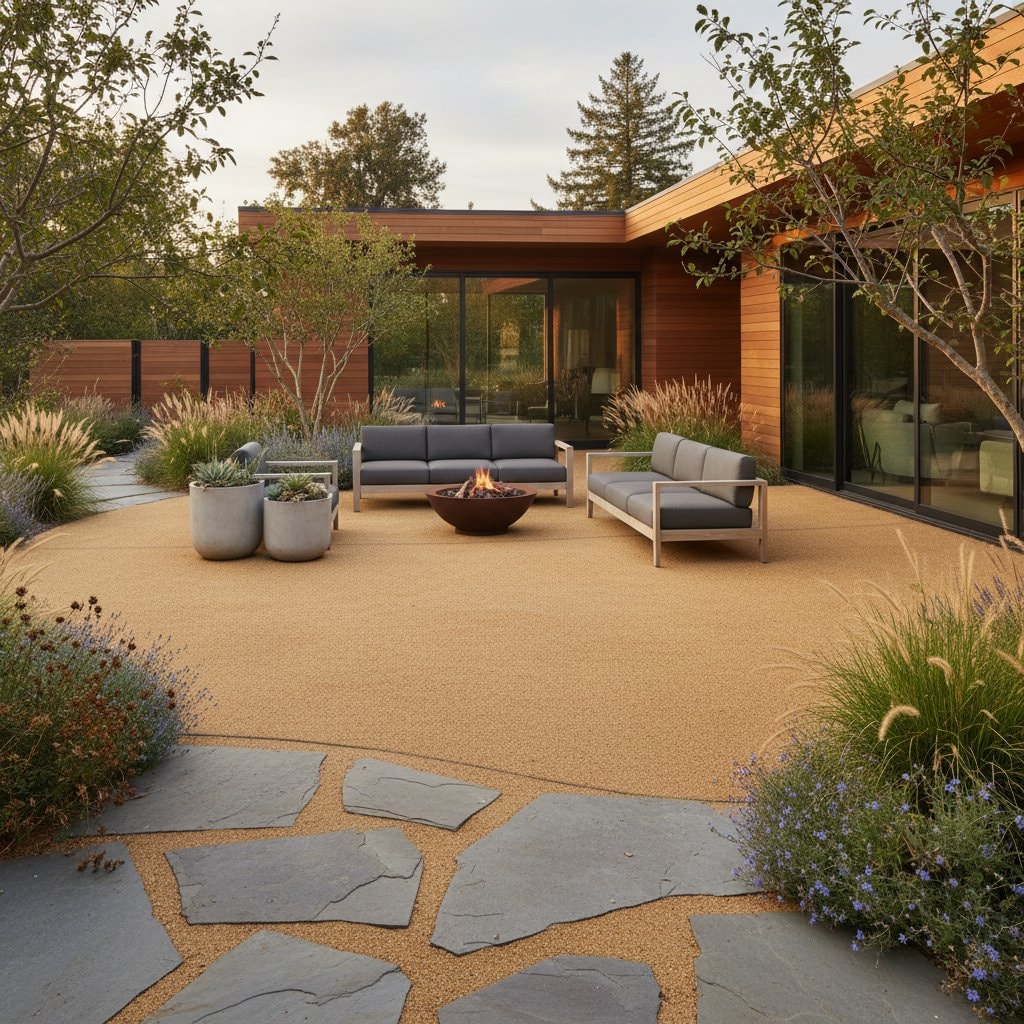
Decomposed granite captivates through its interaction with sunlight. The inherent minerals produce a subtle glow that evolves throughout the day, infusing outdoor areas with layered depth. Available in nuanced shades such as soft golds, warm tans, muted grays, and subtle reddish browns, the material harmonizes with diverse architectural motifs.
In a rustic garden setting, decomposed granite enhances native grasses, stone accents, and aged timber elements. For contemporary courtyards, pair it with metal borders or integrate it alongside concrete features to achieve a sleek, structured aesthetic. This versatile surface complements fire pits, outdoor kitchens, and lounging zones, where its tactile quality fosters a sense of connection to the earth.
To unify the landscape, extend decomposed granite into adjacent pathways or edging. Such repetition establishes a cohesive flow that guides the eye without imposing formality.
Installation Insights
Although decomposed granite patios require less complexity than many alternatives, thorough site preparation proves essential for longevity. Begin by excavating the designated area to a consistent depth of four to six inches, depending on expected traffic. Install a two-inch layer of compacted gravel base to provide foundational support and prevent shifting.
Incorporate a stabilizer additive into the decomposed granite mix at a ratio of about 5% by weight for enhanced cohesion. Spread the material evenly, then use a plate compactor to achieve a firm, level finish. Install durable edging, such as aluminum or plastic borders, around the perimeter to contain the granules and maintain crisp boundaries.
As a natural, granular substance, decomposed granite experiences minor settling over time. This subtle evolution adds character, yet annual maintenance ensures optimal performance. Inspect the surface in spring and fall: rake away debris, redistribute displaced material, and fill minor depressions to sustain a smooth, welcoming patio.
Living with Your Design
A decomposed granite patio promotes relaxed, mindful outdoor experiences. The material draws attention not through bold statements but via its nuanced texture, shifting hues, and faint crunch underfoot. It adapts well to various climates, from arid regions to temperate zones, and integrates smoothly with both manicured plantings and untamed natural elements.
For those new to the material, initiate with a modest project such as a small seating nook or connecting walkway. Monitor its performance through seasonal changes: note water absorption after showers, assess comfort during daily use, and evaluate harmony with surrounding foliage. This hands-on familiarity builds confidence for larger expansions.
Making It Happen
Thoughtful application of decomposed granite elevates a backyard into an inviting sanctuary that balances nature and refinement. The material provides stone-like elegance without the rigidity of hardscapes, alongside gravel's utility minus the disorder. Its understated allure persists across seasons, supported by simple, intentional upkeep.
Beyond mere functionality, a decomposed granite patio bridges indoor living with the broader environment. This connection creates enduring outdoor havens that enhance daily life with timeless grace.