Decomposed Granite: The 2026 Trend for Effortless Pathways
Consider a yard where paths guide movement without constant attention. Grass often thins in high-traffic areas, while traditional walkways develop cracks or uneven surfaces over time. Decomposed granite provides a reliable solution that maintains a natural appearance with minimal intervention, fostering an outdoor environment that encourages relaxation and exploration.
Decomposed granite, commonly abbreviated as DG, results from the natural breakdown of granite rock into fine particles. This material delivers a textured surface that integrates seamlessly into diverse landscapes. Suitable for curving garden trails, shaded patio extensions, or defined planting borders, DG combines aesthetic simplicity with long-term stability.
Key Characteristics of Decomposed Granite
Decomposed granite occupies a unique position between coarse gravel and fine sand, offering effective compaction alongside superior drainage. Available in natural hues like warm tan, subtle gold, and neutral gray, it harmonizes with local soil and vegetation. As a porous substance, it permits rainwater to infiltrate the ground, preventing surface pooling and promoting environmental sustainability for pathways and patios.
Classified as a permeable surface, DG facilitates water return to the soil rather than directing it to stormwater systems. This property mitigates erosion risks and bolsters soil health. Consequently, users experience reduced mud accumulation and fewer water-related issues following precipitation, enhancing usability in outdoor settings.
Evaluating Your Outdoor Area
Begin the process by traversing your property with intention. Identify natural traffic patterns, moisture-prone zones, and undefined spaces that benefit from clear boundaries. Reflect on the desired atmosphere: a formal, organized layout or a more fluid, naturalistic design?
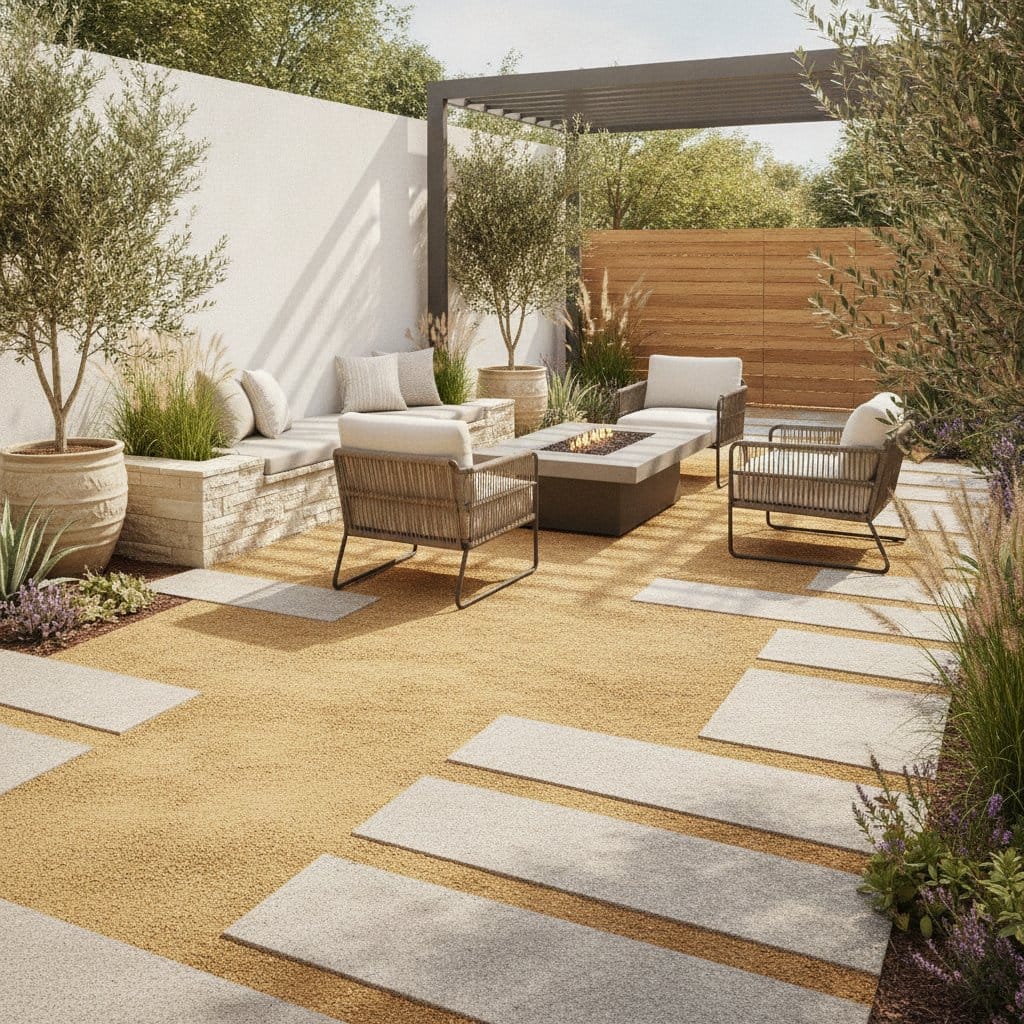
Decomposed granite adapts well to varied styles, yet clarity of purpose guides successful implementation. Integrate it alongside existing features such as stone pavers or isolated stepping stones to achieve a balanced, softened aesthetic. In expansive regions, DG serves as the primary ground cover, delivering a firm yet comfortable underfoot experience.
Drainage assessment proves essential. DG excels in areas where water naturally flows away from structures or depressions. For persistent wet spots, implement minor grading adjustments or install edging to channel excess moisture prior to path construction.
Designing Effective Pathways
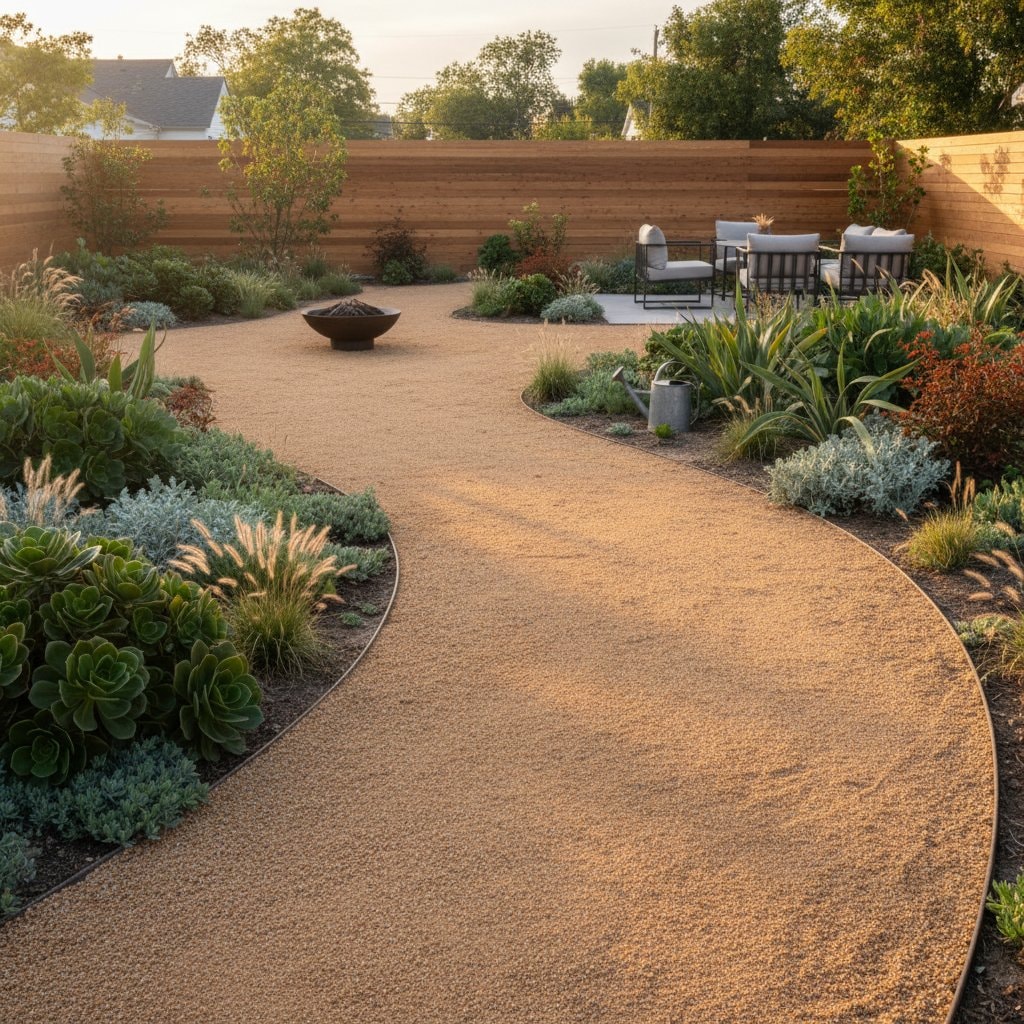
With a solid understanding of your site, proceed to pathway design. Outline initial sketches, favoring soft curves over rigid lines to evoke a sense of organic flow in garden settings. Curved designs promote leisurely pacing and discovery along the route. Standard path widths of 36 to 48 inches accommodate comfortable passage for two individuals.
Select appropriate edging materials to define boundaries. Options range from sleek metal strips to rugged stone accents, or allow a seamless merge with adjacent turf or mulch for a wilder effect. Edging not only refines the visual appeal but also secures the DG in place against displacement.
For applications involving furniture or frequent foot traffic, incorporate a stabilizer additive. This resin-based binder, mixed at a ratio of 5 to 10 percent by volume, unites particles for enhanced solidity and diminished loose aggregate.
Step-by-Step Installation Guide
Decomposed granite installation rewards patient effort and yields professional results, often completable over a weekend. First, delineate the project area with stakes and string. Excavate 4 to 6 inches of topsoil to prepare the sub-base, ensuring even depth across the site.
Lay a 2-inch layer of 3/4-inch crushed stone as the foundation for optimal drainage and support. Distribute DG to a depth of 3 to 4 inches, then apply a uniform water mist to initiate settling. Compact thoroughly using a manual tamper for small areas or a vibrating plate compactor for larger expanses, achieving a dense, unified layer.
Position the finished surface 1/2 to 1 inch above adjacent grades to guard against edge washout and preserve definition. Follow compaction with a final light watering, allowing 24 to 48 hours for curing. The outcome features a resilient tread with subtle texture that yields faintly under pressure.
Maintenance Strategies for Longevity
Decomposed granite stands out for its straightforward care regimen compared to rigid surfaces like concrete or brick, which prone to fracturing or displacement. Periodic inspections reveal minor depressions or scattered particles; address these by raking smooth and replenishing with 1/4 to 1/2 inch of fresh DG, followed by re-compaction.
Weed growth may occur at perimeters or in moist, shaded sections. Prevent intrusion by installing landscape fabric beneath the base layer during setup, or remove sprouts manually as needed. As a naturally evolving material, DG patinas gracefully, acquiring a refined patina that deepens its landscape integration through seasonal cycles.
In regions with intense precipitation, perform annual re-compaction to sustain firmness. High-use paths benefit from stabilizer integration at installation or renewal every two to three years, ensuring consistent performance.
Benefits of Permeable Surfaces in Landscape Design
Decomposed granite transcends utility to evoke a profound connection with the natural world. It bridges constructed elements and living greenery, enabling rainfall absorption that nourishes subsurface ecosystems. This permeability fosters smoother boundaries between paved and planted zones, cultivating tranquility.
Such surfaces aid adjacent vegetation by delivering filtered water directly to roots, minimizing runoff and erosion while optimizing hydration. For environmentally conscious individuals, selecting DG represents a practical step toward water conservation and biodiversity support.
Enhancing Outdoor Experiences
Following installation, observe how the pathway draws you into the garden more frequently. The defined routes invite enhancements like strategically placed seating, fragrant border plantings such as rosemary or thyme, or low-voltage path illuminators for evening ambiance. These additions personalize the space, amplifying its vitality.
Decomposed granite embodies the subtle endurance of well-tended landscapes. It demands occasional attention yet liberates time for enjoyment. As the path matures, it becomes an integral thread in your outdoor narrative, facilitating movement while celebrating the earth's quiet rhythms.