Why Dark Sky Lighting Enhances Gardens While Preserving the Night Sky
The quiet of a garden at night differs from its daytime counterpart. Air feels denser, colors intensify, and sounds travel farther. Harsh lighting often disrupts this serene scene, washing out the natural mystery. Dark sky lighting addresses this by integrating darkness as an essential design element, rather than an enemy to conquer.
Defining Dark Sky Lighting Principles
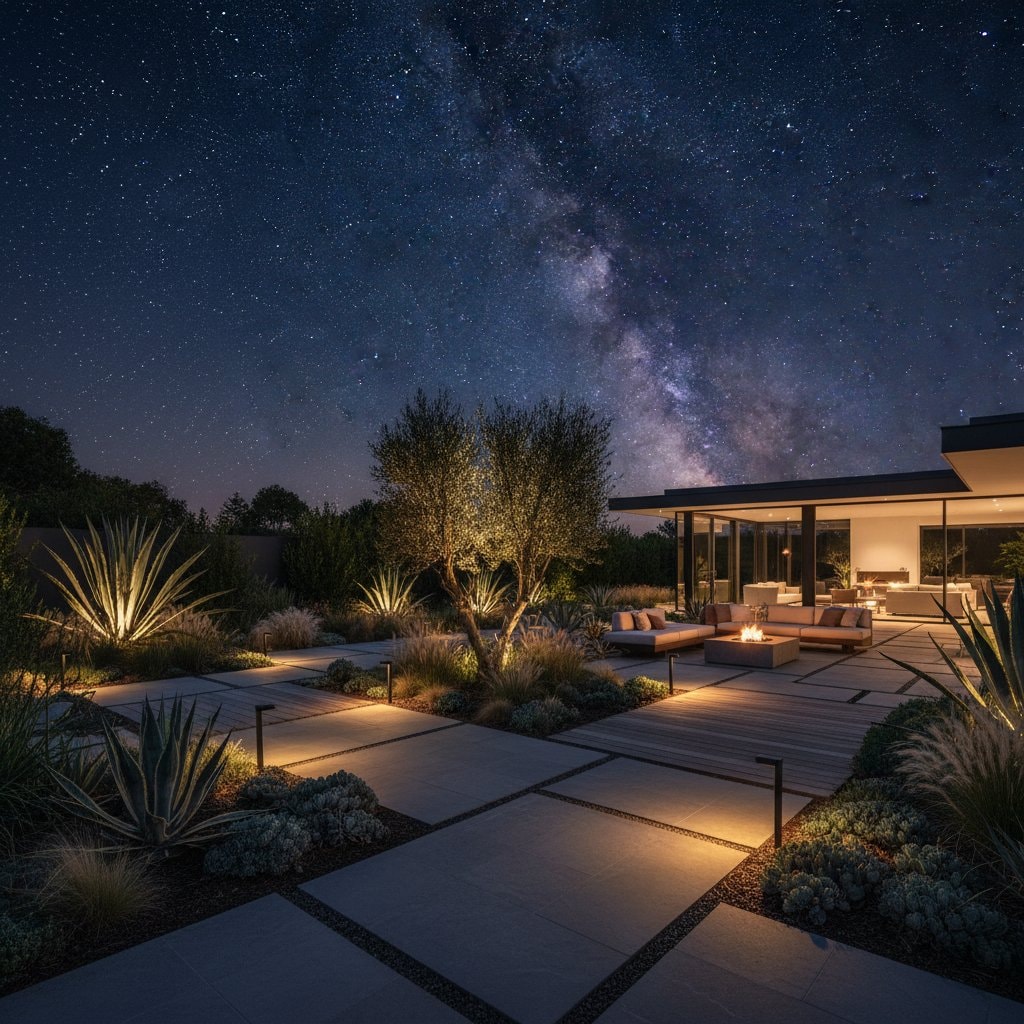
Dark sky lighting minimizes glare, curbs light pollution, and focuses illumination precisely. Fixtures feature shields or downward angles to light paths, plants, and seating areas without upward spill. This approach yields a subtle garden glow that maintains star visibility and nighttime tranquility.
Beyond stargazing benefits, dark sky methods foster equilibrium. Overly bright lights flatten textures and mute colors. In contrast, controlled lighting highlights forms, movements, and shadows, reshaping how one perceives the landscape through targeted, gentle beams.
Consequences of Excessive Outdoor Illumination
Homeowners often add outdoor lights for security, aesthetics, or ambiance. However, uncontrolled brightness produces unintended drawbacks. It disrupts avian, insect, and nocturnal wildlife rhythms; generates glare that impairs visibility; consumes excess energy and accelerates bulb wear; and obscures architectural and botanical details that thrive in moderation.
Unrestrained light creates skyglow, a hazy veil that dims stars and alters environmental moods. Dark sky strategies honor the night as an ecological component, positioning each light as a deliberate choice rather than a casual addition.
Elevating Garden Aesthetics Through Dark Sky Techniques
Effective dark sky lighting operates subtly, drawing focus to illuminated elements rather than the sources themselves. A low path light outlines a walkway's curve, while a focused beam accentuates a tree trunk's textured bark. Layered tones and shadows emerge, replacing uniform brightness with dynamic depth.
Such designs expand perceived garden scale, as dark zones separate lit vignettes. They spark exploration, prompting visitors to navigate and uncover nuances. Ultimately, dark sky lighting cultivates ambiance over mere visibility.
Selecting Appropriate Fixtures and Installation Methods
Opt for fixtures that conceal light sources from above and sides, directing output downward with controlled dispersion. Consider these garden-suited options:
- Path lights: Compact units that delineate trails or edges, featuring opaque hoods to block upward escape.
- Spotlights: Versatile for targeting trees, statues, or fountains; employ narrow beams aimed precisely to avoid scatter.
- Wall-mounted sconces: Suitable for patios and entrances, with shades that cast light solely below.
- String lights: Effective for events when positioned low and enclosed; pair with warm, adjustable bulbs for mellow effects.
Prioritize warm color temperatures, akin to soft incandescent hues, which complement foliage and stone. Avoid cool tones that appear stark against greenery. Incorporate dimmers, motion detectors, and timers to modulate intensity and limit runtime.
Environmental Advantages of Dark Sky Practices
Dark sky lighting extends beyond visual appeal to tangible ecological gains. Reduced waste lowers energy use and carbon emissions. Critically, it safeguards night-dependent species: insects orient via natural cues, birds navigate migrations without confusion, and amphibians plus mammals maintain feeding and resting cycles.
Individual efforts in modest yards accumulate community-wide impact. Redirecting a single fixture preserves shared night skies, fostering broader environmental health through understated actions.
Tailoring Lighting to Garden Usage and Ambiance
Map your garden's evening functions to inform layout. Contemplate patio relaxation, group dining, or strolls amid borders. Tailor illumination accordingly for optimal effect.
- Social zones: Employ even, subdued sources around furniture to soften features without overhead starkness or surface reflections.
- Navigation routes: Install markers for borders and stairs that ensure safe passage via gentle glows, such as reflections on aggregates.
- Accent features: Leverage singular, contrasting beams on specimens like arbors or ornaments for amplified drama over dispersed scattering.
Integrating Functionality with Visual Harmony
Dark sky principles offer pragmatic perks alongside artistry. Enclosed fixtures resist elements, extending durability. Efficient, low-output bulbs cut costs and upkeep. The result: a more hospitable space through intentional, restful radiance.
Commence modestly by swapping a glaring unit for a shielded alternative and observing ambiance shifts. Adjust or redirect current setups to emphasize select zones. Evening walkthroughs reveal evolving appreciations for nocturnal subtlety.
Evolving and Maintaining Your Dark Sky Installation
Integrated dark sky lighting often extends outdoor evenings. Gardens awaken anew, with foliage shimmering uniquely and shadows shifting softly. As vegetation matures or routines evolve, adapt by adding or pruning elements judiciously to sustain light-dark equilibrium.
Routine inspections of alignments and outputs ensure sustained performance. This ongoing refinement keeps the design vital and responsive.
Implementing Dark Sky Lighting Effectively
Dark sky integration refines light usage through intention, not restriction. Survey your garden post-sunset to pinpoint enhancement spots for ease or allure. Select shielded, warm-toned, low-intensity fixtures.
The outcome: a vibrant yet tranquil haven that encourages dwelling, rediscovers celestial views, and reframes landscapes in nuanced glow.