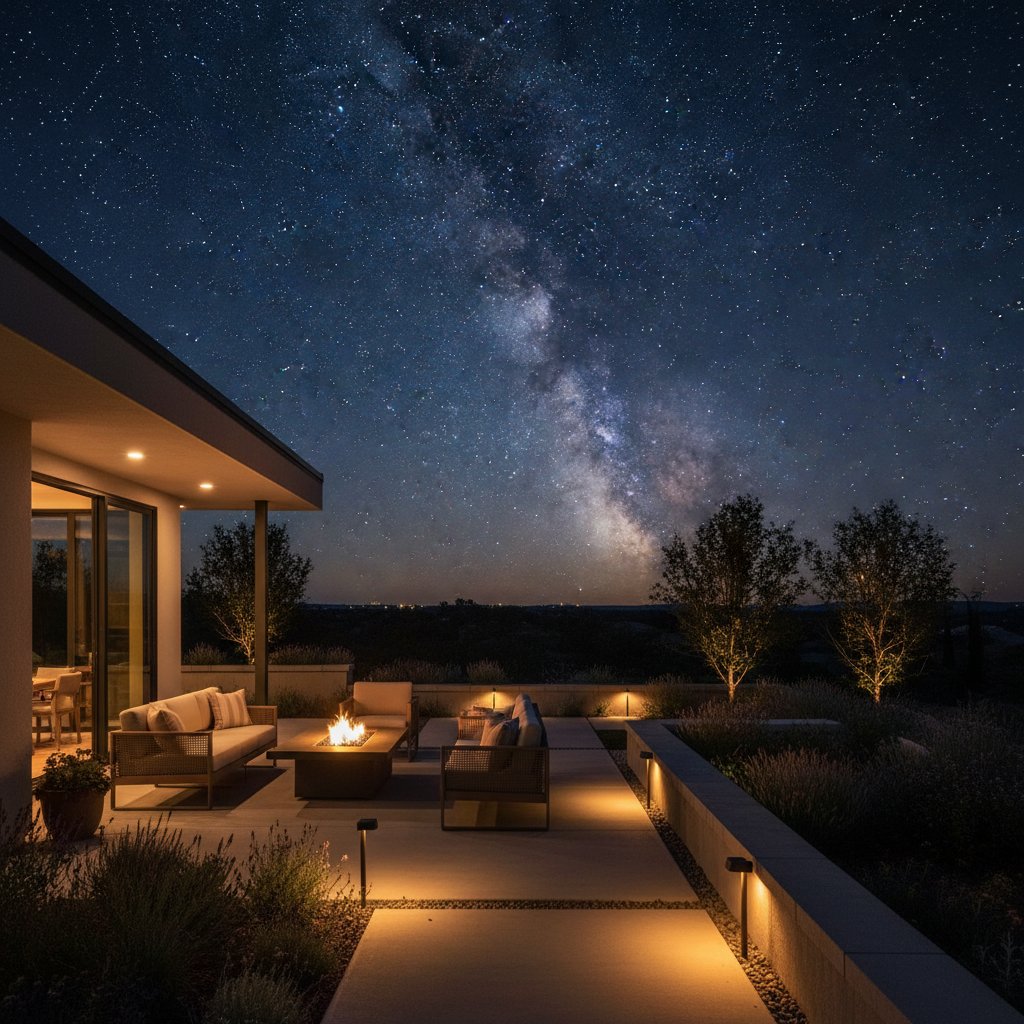
Cut Light Pollution with Eco Dark Sky Lighting
Outdoor lighting enhances safety, highlights landscaping, and creates a welcoming atmosphere around the home. However, poorly planned lighting contributes to light pollution. This misdirected light brightens the night sky, disrupts wildlife, interferes with sleep patterns, and obscures stars. Eco dark sky lighting provides a solution that maintains illumination on the property while preserving the natural night environment.
This guide defines dark sky lighting, explains its importance, and offers practical applications for home use. Readers will discover key fixture features, optimal placement strategies, and techniques to minimize glare and energy waste.
Why Dark Sky Lighting Matters
Dark sky lighting controls light direction, intensity, and spectrum to minimize pollution. It ensures visibility in needed areas without excess illumination that spills upward or sideways.
Benefits for Homeowners
- Enhanced visibility: Shielded fixtures direct light downward, illuminating walkways and driveways without creating shadows or blind spots.
- Energy efficiency: Low-wattage bulbs and targeted designs lower electricity consumption and reduce utility costs by up to 50 percent in some installations.
- Improved sleep quality: Warm-toned light, around 2700 Kelvin, supports natural circadian rhythms better than cooler, blue-rich alternatives.
- Elevated curb appeal: Precise lighting accentuates architectural elements and plants, fostering an elegant nighttime aesthetic free from distracting glare.
- Neighborly consideration: Contained light respects adjacent properties, preserving privacy and reducing potential conflicts.
Benefits for Nature
Many species rely on darkness for survival. Artificial light disorients nocturnal animals, such as sea turtles hatching on beaches or insects drawn to fatal glows. Migratory birds, for instance, depend on starlight for orientation; urban skyglow leads to disorientation and higher collision rates with structures. Dark sky fixtures restore balance by limiting interference, allowing ecosystems to function as intended.
Choosing the Right Fixtures for Your Property
Fixture selection aligns with site-specific needs, including terrain, usage patterns, and aesthetic goals. Assess essential illumination zones first, then select options that prioritize downward direction and efficiency.
Entry and Pathway Lighting
Illuminating entrances, stairs, and paths requires low-profile fixtures. Opt for shielded bollards or in-ground uplights positioned at knee height, spaced 6 to 8 feet apart for uniform coverage. These designs prevent light trespass while ensuring safe navigation.
Driveway and Garage Lighting
Motion-sensor fixtures suit high-traffic areas like driveways. Choose full-cutoff models where the light source remains below the housing edge, directing beams solely toward pavement. Position them 8 to 10 feet high, angled 10 to 15 degrees downward to cover vehicles without upward spill.
Patio and Deck Lighting
Create ambiance on patios with soffit-mounted downlights or shielded pendants. Integrate dimmable LEDs for versatility, adjusting from full brightness for gatherings to subtle glows for relaxation. Avoid unshielded lanterns that project light onto vertical surfaces.
Landscape and Garden Lighting
Low-voltage systems, operating at 12 volts, excel in gardens. Use spotlights with adjustable arms to graze foliage or uplight trunks from ground level, focusing on 3 to 5 key features per area. This approach balances drama and restraint, preserving natural shadows.
Security Lighting
Replace broad floodlights with layered, moderate-output options. Combine wall-mounted area lights with sensor-activated path illuminators, using 3000 Kelvin bulbs to maintain color accuracy without stark contrasts. Direct beams to cover doors and gates precisely, enhancing detection without overwhelming surroundings.
Installation and Placement Tips
Correct installation maximizes fixture performance. Consider these guidelines to achieve optimal results.
- Direct light downward: Ensure the lens or shield angles no more than 10 degrees from vertical, confining illumination to horizontal planes.
- Prevent beam overlap: Calculate spacing based on fixture beam spread, typically 45 degrees, to avoid hot spots and inefficiency.
- Incorporate shielding elements: Employ landscaping features like shrubs or arbors to block stray light from neighboring views or the sky.
- Conduct nighttime evaluations: After setup, observe from multiple angles under actual conditions; tweak elevations or tilts for refinement.
- Integrate automation: Employ photocell timers to activate at dusk and deactivate by midnight, or app-controlled systems for customized schedules.
These practices promote focused, sustainable lighting that benefits users and the environment alike.
Maintenance and Upkeep
Routine care sustains dark sky systems. Perform these tasks seasonally to uphold efficiency.
- Clean components regularly: Remove dust and debris from lenses with a microfiber cloth and mild soap solution every three months to prevent diffusion.
- Verify positioning: Inspect for shifts caused by weather; realign using a level to restore downward focus.
- Select compatible replacements: Match new bulbs to original specifications in lumens, color temperature, and base type for consistent output.
- Calibrate controls: Test sensors for sensitivity and timers for accuracy, adjusting ranges to suit activity patterns.
Diligent maintenance ensures long-term reliability and minimal environmental impact.
Building Community Momentum
Personal efforts amplify through collective action. Engage neighbors in discussions about retrofitting lights or adopting warm-spectrum bulbs. Many communities provide incentives, such as rebates for compliant upgrades, through environmental groups or local ordinances. Collaborative initiatives can transform suburban glow into starlit harmony.
Sustained Advantages for Homes and Habitats
Adopting dark sky principles yields tangible improvements. Properties gain refined nighttime presence, with energy savings accruing monthly. Residents enjoy clearer views of celestial wonders, fostering a deeper connection to the outdoors.
Broader adoption restores ecological integrity, supporting biodiversity and human well-being. Neighborhoods with reduced pollution witness revived stargazing traditions and serene evenings, underscoring the power of informed choices.