Dark Sky Lighting: Minimizing Light Pollution in Outdoor Spaces
One evening in the backyard, the expectation was a canopy of stars overhead. Reality presented a hazy veil obscuring all but the most prominent celestial bodies. Sources included distant street illumination and fixtures installed around the property itself. This experience prompted a reevaluation of outdoor lighting priorities, extending beyond aesthetics and security to encompass the preservation of natural darkness and the maintenance of nocturnal harmony.
The Principles of Dark Sky Lighting
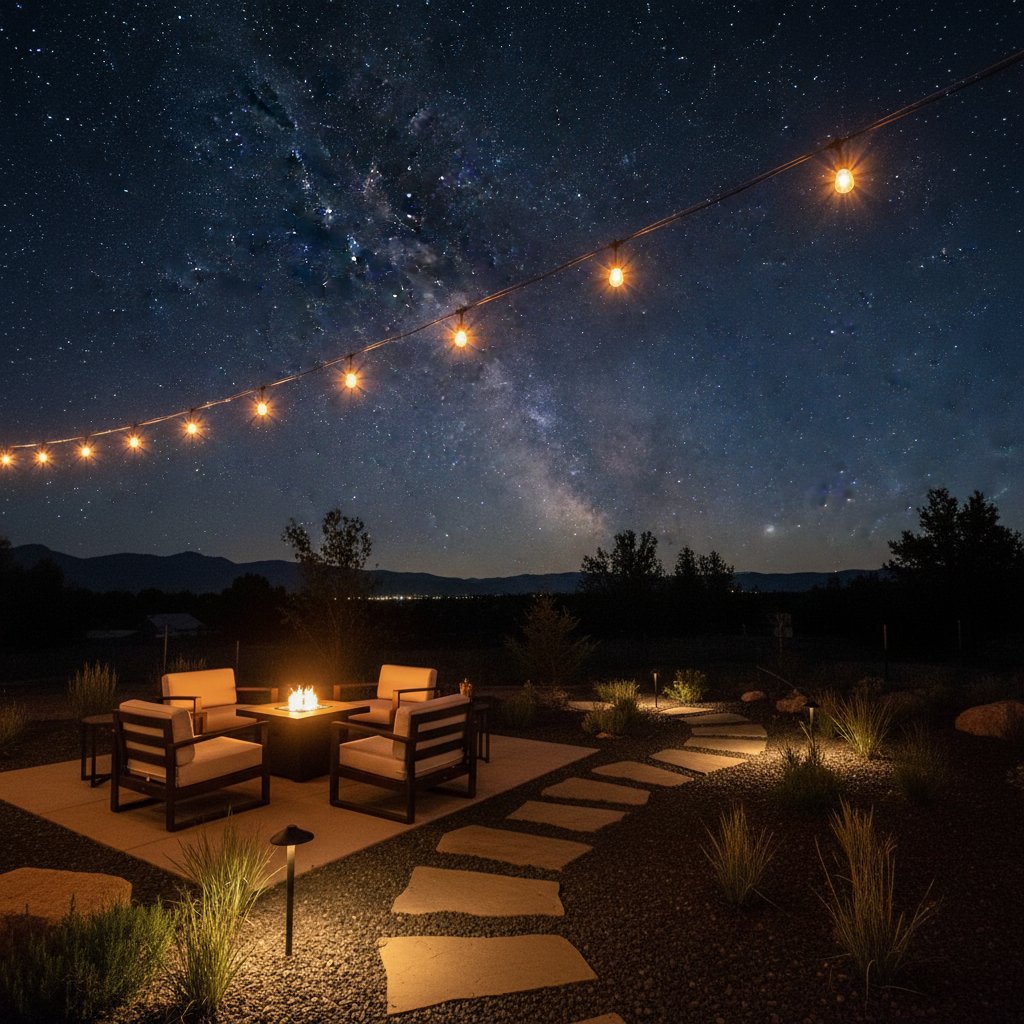
Dark sky lighting employs fixtures engineered to contain artificial illumination, preventing upward or sideways spillover. Shielded designs ensure that light beams downward onto targeted surfaces such as pathways or seating areas. This technique diminishes glare for human observers and curtails the atmospheric glow that veils the stars.
Beyond visual comfort, these systems benefit ecosystems. Nocturnal creatures rely on unlit environments for foraging, migration, and reproduction. Insects, birds, and mammals face disruption from pervasive brightness, which alters behaviors and habitats. Implementing dark sky principles restores balance, allowing wildlife to thrive while enhancing human appreciation of the natural night.
The core concept revolves around precision. Light serves its purpose without waste, fostering visibility where required and obscurity elsewhere. Homeowners achieve this through strategic placement and technology integration, yielding environments that feel secure yet unobtrusive.
Selecting Appropriate Dark Sky Fixtures
Begin the selection process by identifying products certified as dark sky compliant, often verified by organizations like the International Dark-Sky Association. These fixtures feature opaque housings with full cut-off tops, positioning the light source below the shield's rim to eliminate upward emission. Materials such as durable aluminum or bronze withstand weather exposure while maintaining light containment.
Consider bulb specifications carefully. Opt for LED options in warm white tones, around 2700K to 3000K, which replicate moonlight's gentleness without harsh blue wavelengths that scatter and pollute more extensively. Limit lumen output to 1000 or less per fixture unless illuminating large areas, as excessive brightness contributes to spillover.
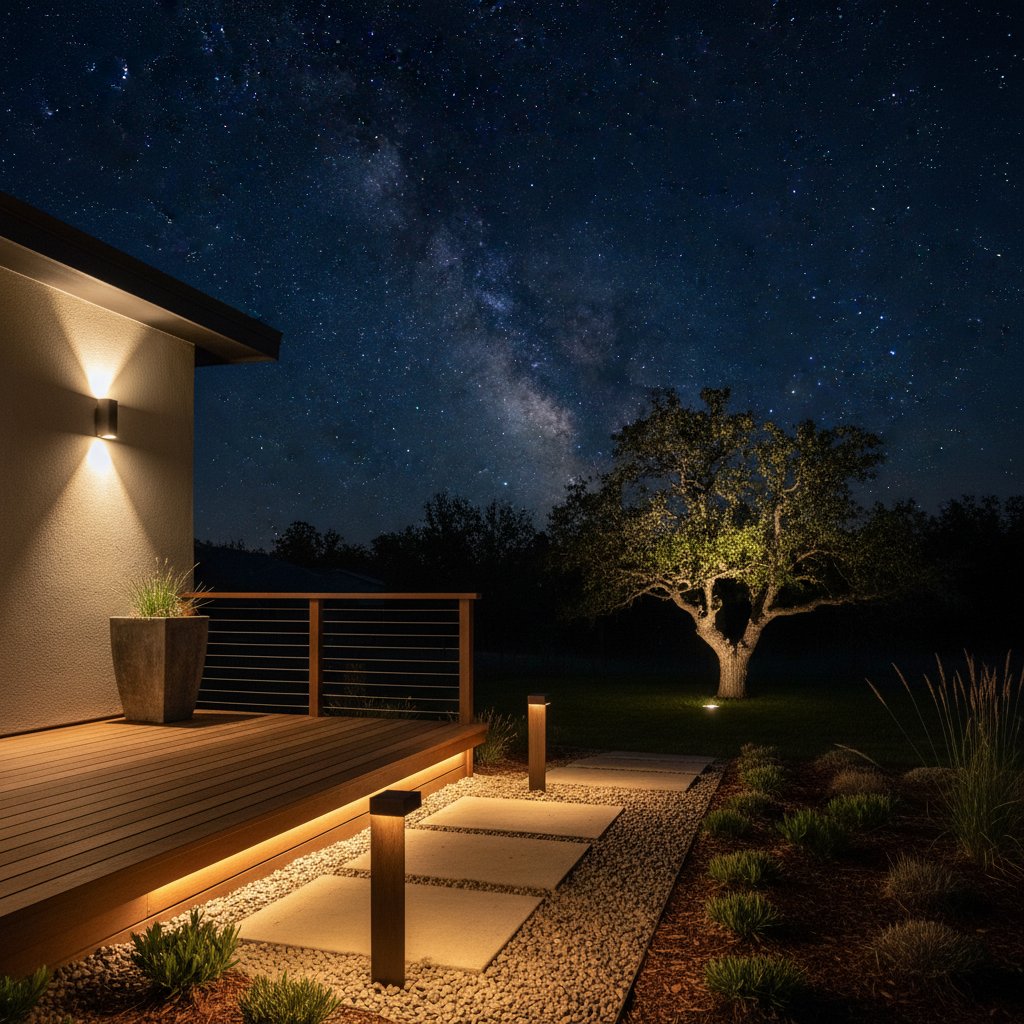
Incorporate smart features for efficiency. Motion-activated sensors activate lights only upon detection, conserving energy and reducing constant glow. Timers or astronomical clocks align operation with dusk and dawn, further minimizing unnecessary exposure. For pathways, choose bollard-style lights at 18 to 24 inches high, spaced 6 to 8 feet apart to create even, non-intrusive coverage.
Wall-mounted sconces suit entryways, with downward-facing shields preventing light from spilling over fences or into neighboring skies. Avoid uplights entirely; instead, use ground-level spots for accenting architectural features or plants, angled no higher than 10 degrees from horizontal.
Integrating Design for Aesthetic and Practical Harmony
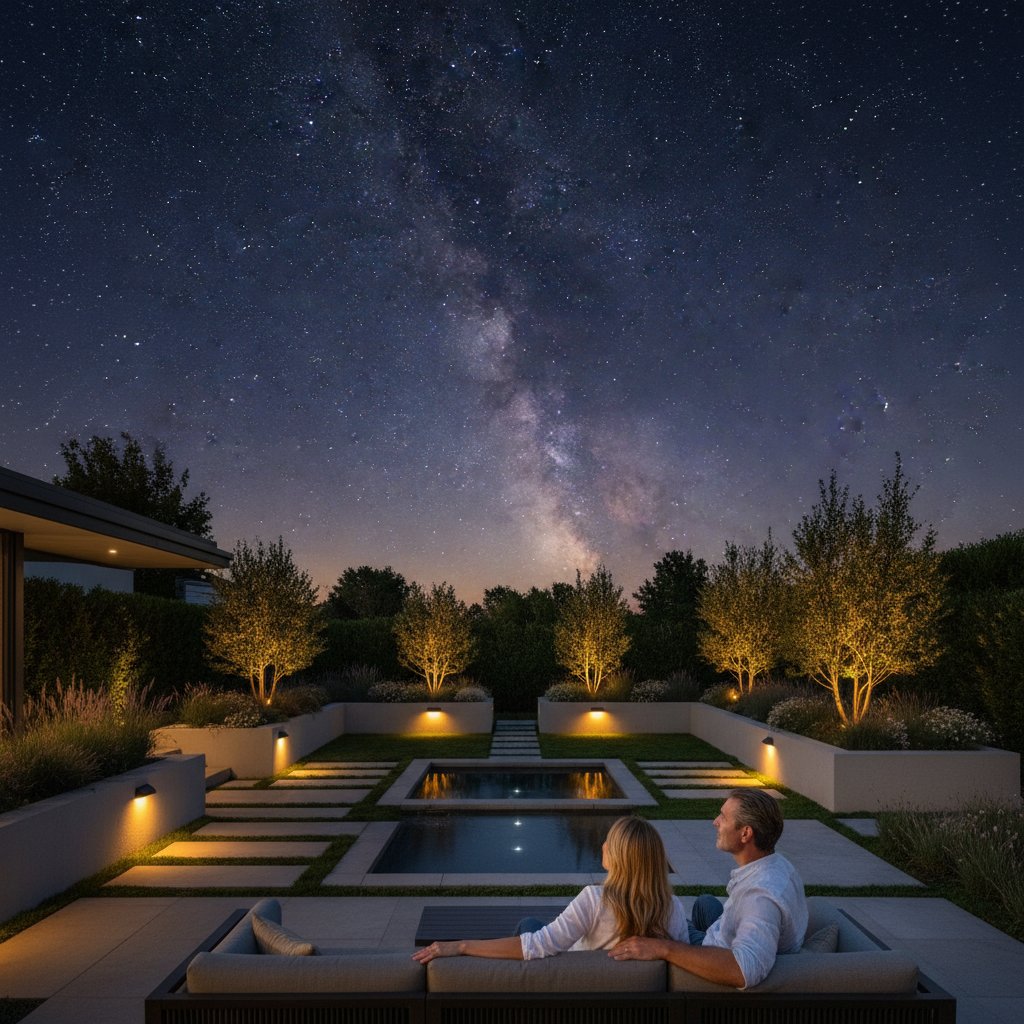
Effective outdoor illumination integrates seamlessly with the landscape, emphasizing contours rather than dominating them. Dark sky methods promote layered lighting: ambient glow for overall safety, task lighting for specific functions, and accent highlights for visual interest. This stratification avoids uniformity, creating depth through alternating lit and shadowed zones.
For patios, install recessed deck lights or low-profile path markers that hug the ground, illuminating steps without casting beams skyward. In gardens, solar-powered stakes with frosted lenses provide subtle edging, activating only at night to guide without overwhelming foliage. Consistency in scale and finish unifies the scheme; pair matte black fixtures with neutral stone elements for a cohesive, understated elegance.
Address challenges like tree canopies or tall structures that might redirect light unintentionally. Trim overhanging branches and mount fixtures at optimal heights, typically 6 to 8 feet for posts, to direct beams parallel to the ground. Test installations at night using a lux meter app on a smartphone to measure spill and adjust angles accordingly.
Seasonal adaptations enhance longevity. In winter, shorter days demand reliable performance, so select fixtures with IP65 weatherproof ratings. Summer evenings benefit from dimmable controls, allowing adjustment for gatherings while reverting to low levels afterward.
Implementing and Maintaining Dark Sky Practices
Transitioning to dark sky compliant setups starts with an audit of existing lights. Identify and replace upward-aimed floods with downlight equivalents, such as adjustable gimbal spots that focus on surfaces below. Budget for phased updates: prioritize high-impact areas like driveways first, then expand to gardens.
Maintenance ensures sustained effectiveness. Clean fixtures quarterly to remove dust that diffuses light, and inspect seals for integrity against moisture ingress. Replace bulbs promptly when output dims, as failing LEDs can alter directionality.
The rewards extend to community and personal well-being. Sharper star views invite stargazing, fostering relaxation and connection to nature. Reduced energy use lowers costs, with many systems paying for themselves through efficiency gains. Neighbors benefit from diminished trespass light, potentially inspiring collective adoption.
Embrace incremental changes to build confidence. A single shielded porch light demonstrates immediate improvements in sky clarity and ambiance. Over time, these efforts cultivate yards that honor the night's inherent beauty, blending human needs with environmental stewardship.