Budget-Friendly Mediterranean Gravel Gardens: Timeless Design on a Dime
Mediterranean gravel gardens evoke a sense of enduring calm through their use of sunlit stones and resilient greenery. These designs prioritize simplicity and texture over elaborate features. They transform ordinary yards into inviting retreats that withstand dry conditions and require minimal intervention.
Core Elements of Mediterranean Design
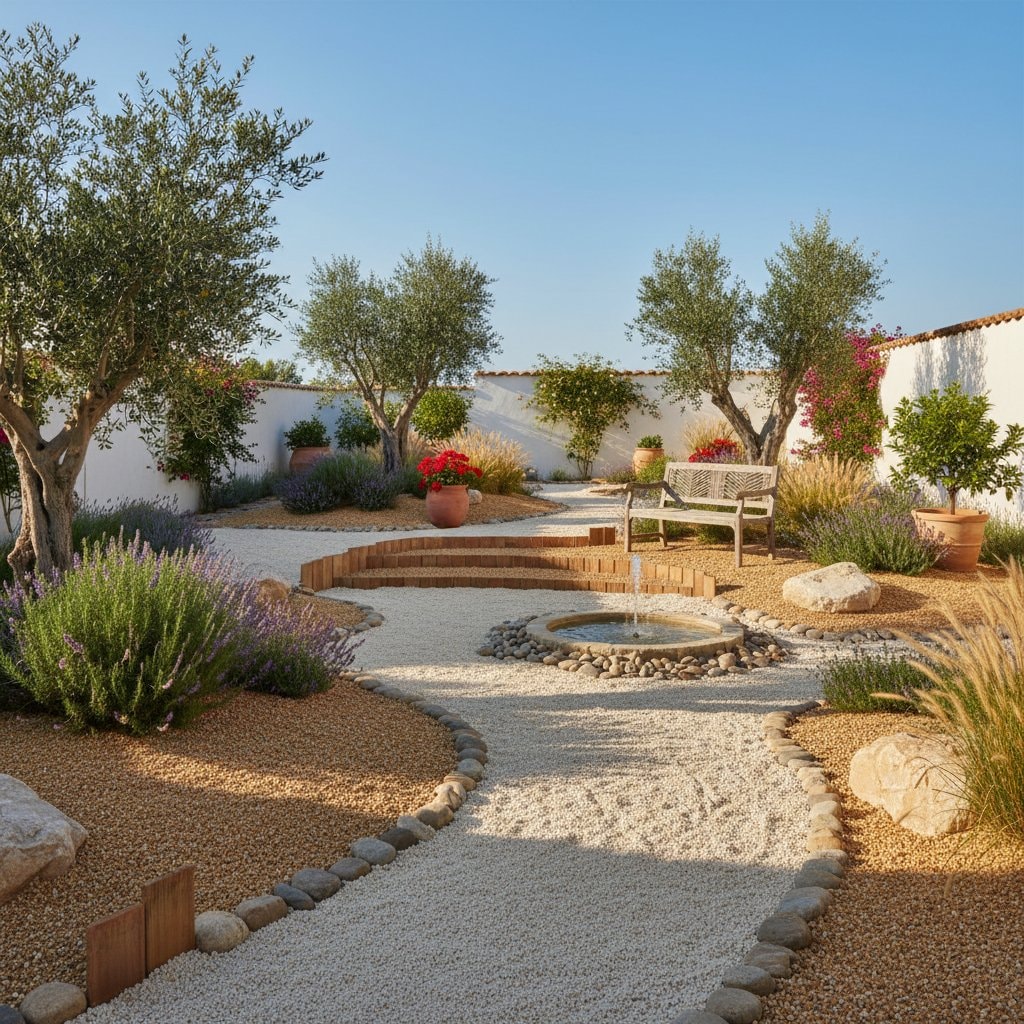
Mediterranean gardens originate from sun-drenched coastal areas with arid climates and limited water resources. The aesthetic emphasizes openness and ease, substituting gravel for grass to provide a clean, enduring surface. Select plants for their durability and form, such as lavender for its fragrant spikes, thyme for ground cover, and olive trees for stature.
This style achieves harmony by blending hardscape with soft elements. Gravel forms the foundation, while sparse plantings introduce subtle color and movement. Incorporate terracotta containers and natural stone accents to enhance the rustic yet refined atmosphere without excess.
Selecting Gravel for Authentic Appeal
Gravel selection influences the garden's mood and practicality. Opt for light-colored options like crushed limestone in 3/8-inch sizes to mimic sun-bleached shores and reflect heat effectively. For a warmer tone, choose golden pea gravel around 1/4-inch diameter, which adds subtle glow and pairs well with earthy plants.
Steer clear of dark or uniform aggregates that absorb heat excessively. Source decomposed granite for a finer, compacted texture ideal for pathways. Install a permeable landscape fabric beneath the gravel layer, about 2-3 inches deep, to suppress weeds and ensure proper drainage while maintaining soil health.
Building Layout and Pathways
Effective gravel gardens incorporate deliberate structure to guide the eye and foot. Outline winding paths using string lines to mark gentle curves that promote a natural flow. Edge these paths with dry-stacked stones or reclaimed bricks, rising no higher than 12 inches, to delineate areas economically.
Plant in clusters for cohesion: position lavender every 18 inches along borders, flanked by artemisia for silver foliage contrast. Introduce height with cordyline or pampas grass spaced 4-6 feet apart to create focal points. This arrangement fosters unity and prevents the space from appearing sparse.
Adding Subtle Accents for Depth
Refine the garden with purposeful accessories that enhance without dominating. Place a large terracotta planter filled with trailing rosemary near entry points for immediate fragrance. Construct a simple birdbath from a halved whiskey barrel lined with gravel to introduce reflective water elements affordably.
For evening use, install ground-level LED path markers spaced 5 feet apart, selecting fixtures in matte bronze to blend seamlessly. Repurpose existing items like vintage lanterns or stacked crates as seating nooks. These touches celebrate patina and functionality, aligning with the style's appreciation for weathered authenticity.
Strategies for Minimizing Expenses
Gravel gardens appeal due to their affordability and ease of upkeep. Begin with a 100-square-foot trial area adjacent to existing hardscapes to test the layout. Procure bulk gravel from local quarries, aiming for $30-50 per ton, and transport in small loads to avoid delivery fees.
Prioritize native or adaptive perennials like santolina and oregano, which establish roots within one season and demand irrigation only during the first summer. Mulch planting pockets with additional gravel to retain moisture. This approach cuts long-term water bills by up to 70 percent in suitable climates.
Nurturing and Enjoying the Space
Mature gravel gardens develop character over time as plants fill in and surfaces weather naturally. Perform seasonal tasks like raking gravel to redistribute evenly and pruning herbs to 6 inches in spring. Observe how midday sun casts shadows that highlight leaf textures and stone variations.
Adapt the design to your locale by testing soil pH, ideally 6.5-7.5 for optimal plant health. This creates a personalized oasis that captures Mediterranean essence affordably. The result offers a low-effort sanctuary for relaxation amid daily life.