Beautiful Outdoor Ambiance Without Light Pollution
Homeowners often step outside at night seeking a peaceful moment under the stars, only to encounter harsh glare from their own lighting. Many desire a softly glowing outdoor space that balances safety, aesthetics, and respect for the night sky. The solution lies in deliberate lighting strategies that achieve warmth and welcome without contributing to light pollution.
Understanding Light Pollution
Light pollution occurs when artificial light spills into unintended areas, brightens the sky excessively, or produces glare that obscures stars. This phenomenon disrupts wildlife behaviors, interferes with natural sleep cycles in humans and animals, and leads to unnecessary energy consumption. By grasping the sources and impacts of excess light, individuals can design outdoor environments that preserve the night's tranquility while providing functional illumination.
Step One: Observe Before You Change
Begin by conducting an evening assessment of your property. Walk the perimeter and note areas where light appears overly intense or insufficient, observing how it reflects off surfaces like fences, patios, and foliage. For instance, a spotlight aimed upward might illuminate distant trees unnecessarily, while shadowed corners could pose tripping hazards. This observation reveals the current light distribution and informs targeted adjustments for a more harmonious setup.
Step Two: Choose the Right Fixtures
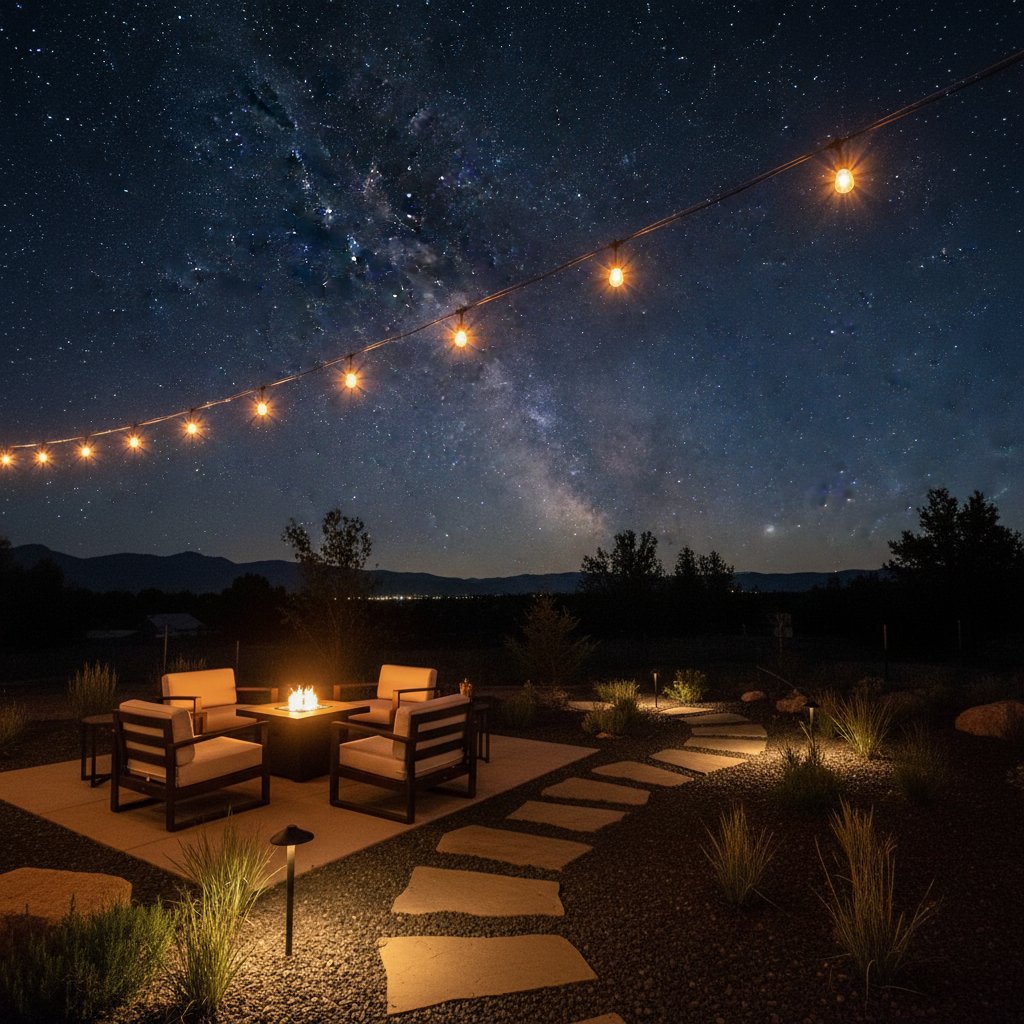
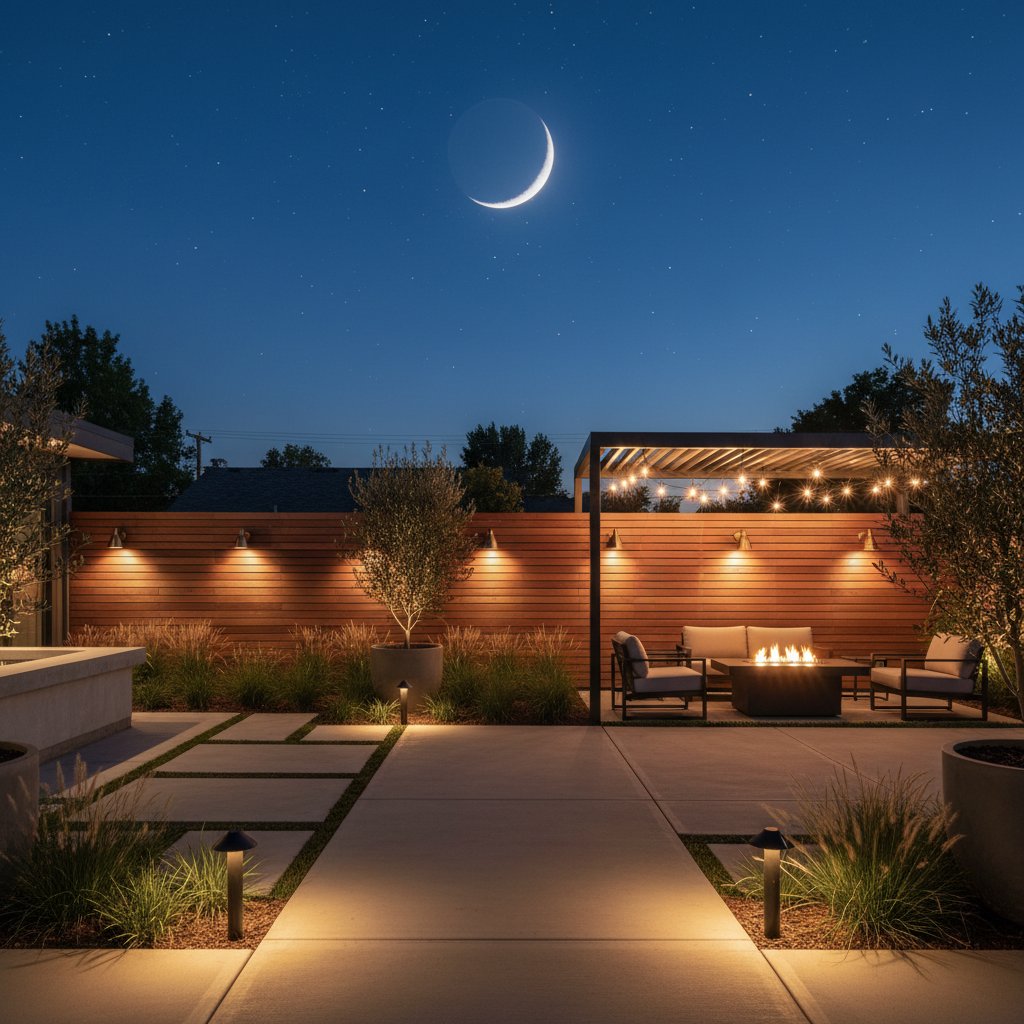
Select fixtures that direct light precisely where required, such as fully shielded models that prevent upward or sideways spill. Opt for pathway lights with opaque tops, bollard-style lamps for borders, or hanging lanterns with diffusers to soften output. Avoid unshielded floodlights, which scatter beams indiscriminately; instead, integrate low-voltage LEDs in ground stakes to outline walkways without overwhelming the surroundings. These choices ensure illumination enhances usability while minimizing sky glow.
Step Three: Select Gentle Bulbs
Prioritize bulbs with a warm color temperature of 2700K to 3000K, which mimics candlelight and reduces the starkness of cooler tones. LED options in 5 to 10 watts often suffice for ambient needs, paired with motion-activated switches for variable intensity. Install dimmable varieties to lower output during casual evenings, conserving energy and allowing stars to remain visible. This approach provides safety without dominating the natural darkness.
Step Four: Use Light with Intention
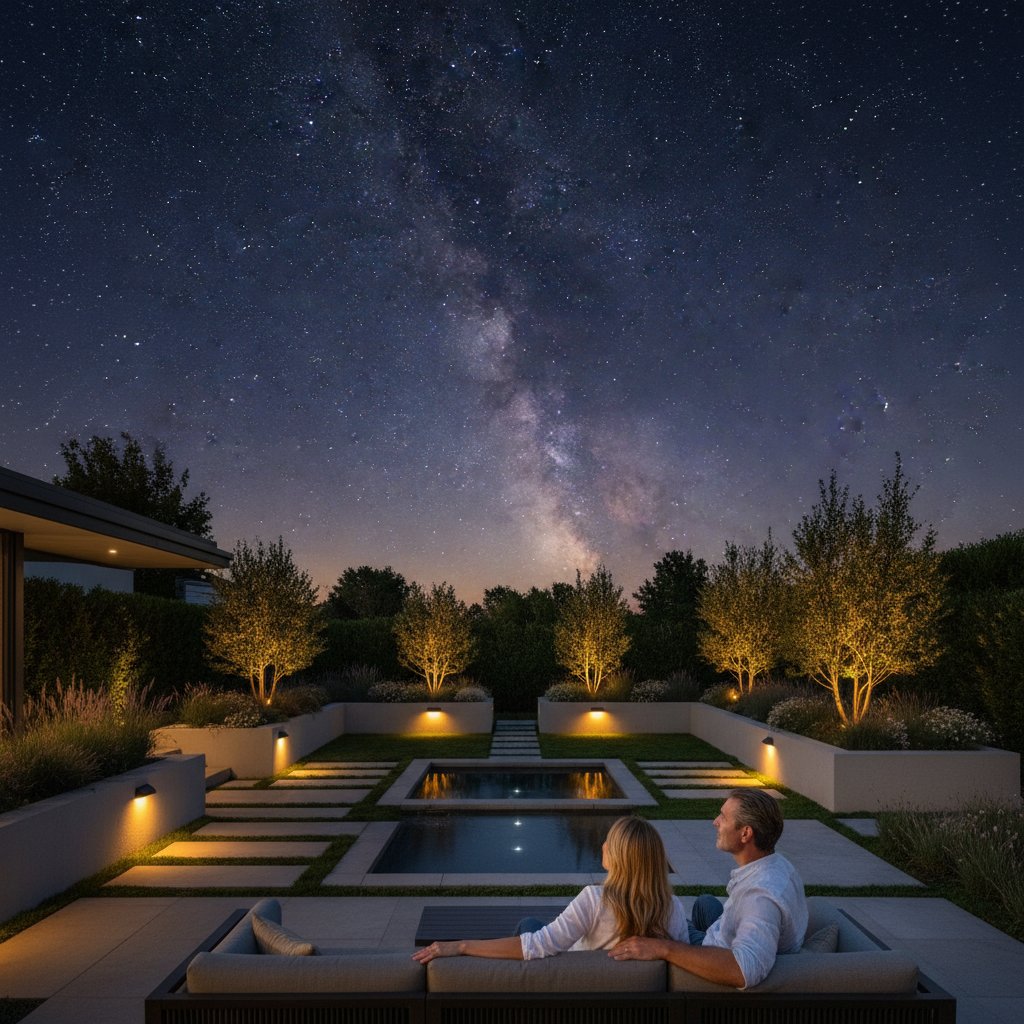
Incorporate lighting as an integral element of landscape design, illuminating only essential features to foster depth and focus. Position uplights at the base of specimen trees to accentuate bark textures, or use linear strips along benches to create inviting nooks. Layer intensities by combining low-level path markers with subtle spotlights on architectural details, avoiding uniform brightness across the yard. Such strategic placement builds visual interest through shadows and highlights, amplifying the garden's nocturnal allure.
Step Five: Add Motion and Timing Controls
Integrate automated systems to activate lights based on activity rather than constant operation. Program timers to align with dusk-to-dawn patterns or specific routines, such as illuminating a patio from 8 PM to 10 PM. Motion detectors trigger brief bursts for security, deactivating after 30 seconds of stillness to prevent prolonged exposure. These features not only curb energy use but also safeguard local ecosystems by limiting disruption to nocturnal species like owls and fireflies.
Step Six: Think Beyond the Bulbs
Consider how surrounding elements influence light behavior, as reflective materials amplify unintended spread. Choose matte finishes for walls and pavers in earth tones to absorb rather than bounce illumination, and plant evergreens like arborvitae to block spillover from neighboring properties. Incorporate water features with subtle underwater LEDs that glow internally without projecting outward. This holistic integration of hardscape, softscape, and lighting yields a cohesive, low-impact ambiance.
Step Seven: Maintain and Evolve Your Design
Regular upkeep ensures sustained performance, starting with annual inspections to clean fixtures and replace faded bulbs. Monitor seasonal changes, such as trimming overgrown branches that alter light paths, and experiment with adjustments like repositioning sensors for optimal coverage. Track wildlife responses, noting increased bird activity or clearer star views, to refine the setup over time. These ongoing efforts keep the space functional and enchanting year-round.
Benefits of a Star-Preserving Garden
A thoughtfully lit outdoor area transforms evening routines, fostering relaxation amid visible constellations and subtle highlights. Wildlife thrives with reduced interference, while energy savings accumulate through efficient choices. Ultimately, this design honors the environment, enhances property value, and invites deeper connection to the natural world beyond artificial glow.