Chaos Gardens: Nature's Low-Maintenance Rewilding Trend
Have you ever looked out at your yard and felt both affection and frustration? Patches of wild grass may appear where neat flower beds once stood. A chaos garden offers a different path. It invites you to work with natural growth instead of against it.
This approach creates a thriving outdoor space that welcomes plants, pollinators, and people. Maintenance decreases while freedom increases. Gardening becomes an act of listening rather than constant control.
Assessing Your Space
Walk slowly around your yard before any planting begins. Identify areas that already support life without help. Wildflowers that return each spring or grasses that thrive without extra water reveal your soil and light conditions.
Ask these questions to guide your observations:
- Where does water collect after rain?
- Which areas receive the most sun or shade?
- What plants return year after year without effort?
A small patch of native wildflowers or an untrimmed corner can serve as the starting point. Observation itself forms part of the process.
Planning the Unplanned
A chaos garden still benefits from thoughtful preparation. Choose one section of the yard for your first experiment. A fence border, neglected side yard, or sunny back patch works well.
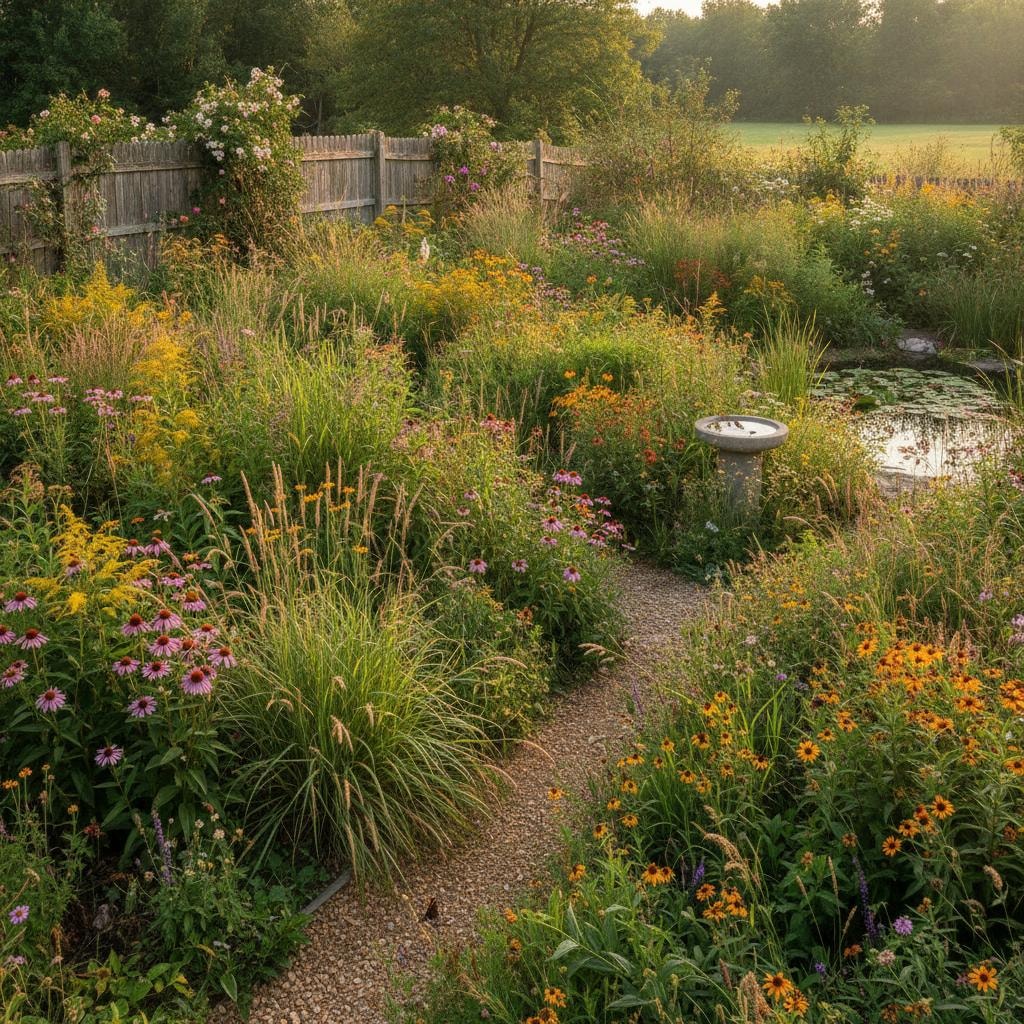
Select a mix of native plants suited to your region. Taller species such as goldenrod or coneflower provide structure. Lower plants like clover or creeping thyme fill gaps. Group similar plants together in loose clusters to create natural rhythm without rigid patterns.
Planting with Freedom
Scatter seeds by hand or mix them with soil for broadcast sowing. Plants find their own best locations this way. Set seedlings in clusters rather than straight rows to mimic wild growth.
Apply light mulch around young plants to retain moisture. Leave some bare soil so new seeds can settle. Over time the garden renews itself through natural seed drop and shifting patterns each season.
Watering and Feeding Naturally
Established native plants require less water than traditional lawns. Water deeply but infrequently to encourage deep roots. Add a thin layer of compost each year to maintain soil health.
Allow fallen leaves to remain in place. They break down and supply nutrients. A rain barrel captures roof runoff for use during dry periods.
Embracing Wildlife Visitors
Layers of growth provide food and shelter for birds, bees, butterflies, and small mammals. Plant milkweed to support monarch butterflies. Native grasses offer nesting material for birds.
Place a shallow water dish nearby. Avoid chemical fertilizers and pesticides. Beneficial insects and birds manage many pests when given the chance.
Letting Go of Perfection
The main change occurs in mindset. Release the expectation of tidy lawns and perfect symmetry. Notice beauty in leaning stems and irregular forms.
When plants appear unruly, observe before trimming. Many areas self-correct as new growth fills gaps. The garden becomes a living process rather than a static display.
Seasonal Adjustments
Light raking in spring clears space for new shoots while preserving organic matter. Thin crowded plants in early summer to improve airflow. Leave seed heads standing through fall and winter to feed wildlife and protect soil.
These minimal actions maintain balance without interrupting natural cycles.
Practical Tips for Managing Growth
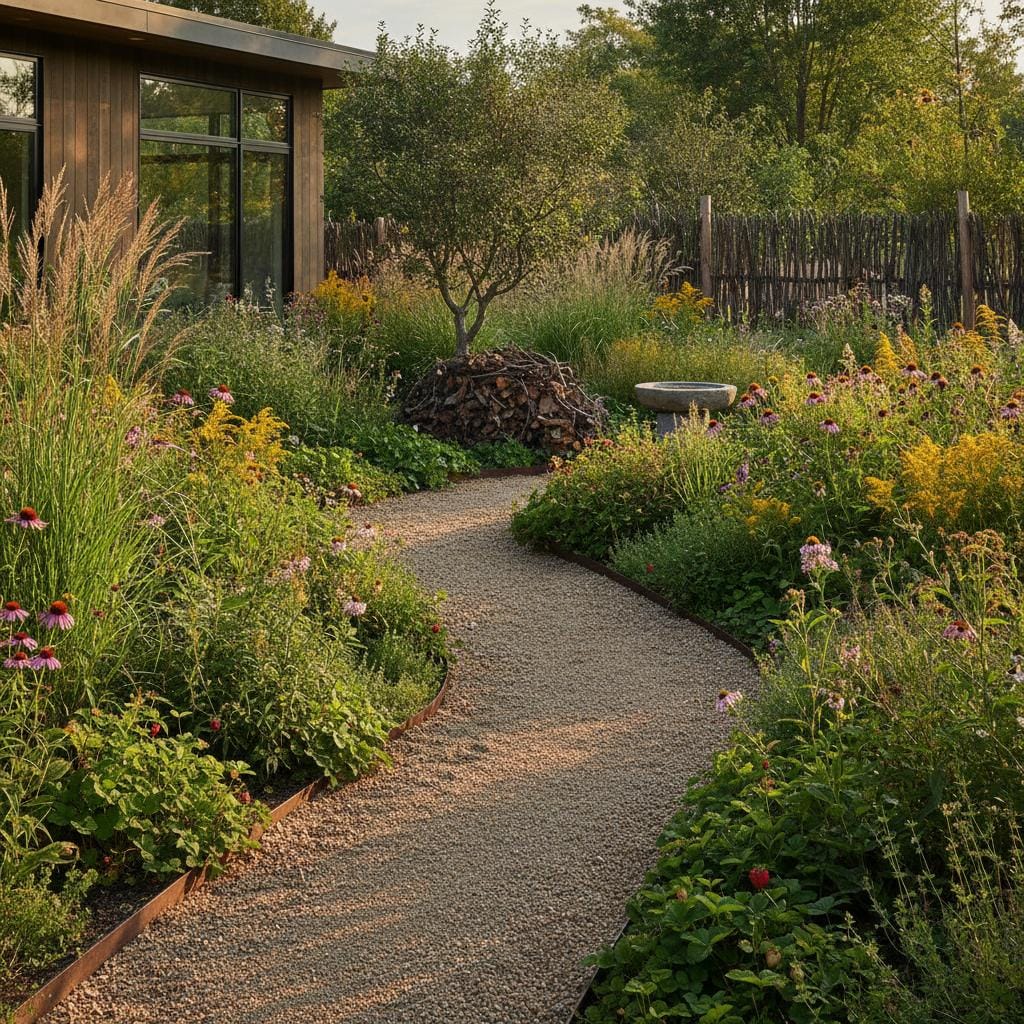
Define garden edges with logs, rocks, or low fencing. This prevents unwanted spread into walkways. Divide or trim overly dominant plants rather than removing them completely.
Add a gravel path or simple bench to introduce contrast. The mix of structured and wild elements keeps the space both intentional and alive.
Observing Your Garden's Evolution
Watch how bloom times and insect activity shift across seasons. Certain flowers appear earlier each year while clover patches draw steady bee traffic. The garden reveals its own patterns through continued observation.
This style of gardening rewards patience. Growth becomes a collaboration that changes with weather, wildlife, and time.