Illuminate Your Outdoors Responsibly
Stepping into a garden illuminated by a subtle glow offers comfort and security after dark. This lighting enhances visibility along pathways and highlights garden features without overwhelming the natural surroundings. However, excessive or misdirected light can obscure the night sky and disrupt local ecosystems. Homeowners must balance illumination for practical needs with preservation of the darkness that supports wildlife and stargazing.
Over years of landscape design experience, the importance of intentional lighting becomes evident. Proper outdoor lighting integrates with the environment, providing safety while minimizing environmental impact. This approach fosters a serene nighttime atmosphere where both human enjoyment and natural processes coexist harmoniously.
Principles of Dark Sky Lighting
Dark sky lighting emphasizes precision in illumination to combat light pollution. This method directs light precisely to intended areas, such as walkways or seating zones, rather than allowing it to scatter upward or sideways. Fully shielded fixtures ensure that the light source remains hidden, reducing glare and sky glow.
Light pollution arises when artificial light escapes into the atmosphere, creating a hazy veil that dims stars and alters nocturnal behaviors. For instance, migratory birds rely on starlight for navigation, while insects are drawn to artificial sources, disrupting food chains. Plants also experience altered growth cycles due to extended light exposure. Adopting dark sky principles allows homeowners to mitigate these effects on a local scale, contributing to broader conservation efforts.
Key elements include using low-wattage bulbs and warm color temperatures around 2700K to 3000K. These choices mimic natural moonlight, creating an inviting ambiance without stark contrasts. International Dark-Sky Association guidelines recommend verifying fixture compliance through cut-off ratings, which classify how effectively light is contained.
Selecting Appropriate Fixtures
Selecting the right fixtures forms the foundation of effective dark sky design. Prioritize models with full shielding, where the light bulb is enclosed to prevent upward or outward leakage. These fixtures focus illumination downward, illuminating surfaces directly below while keeping surrounding areas darker.
Consider the following options for various applications:
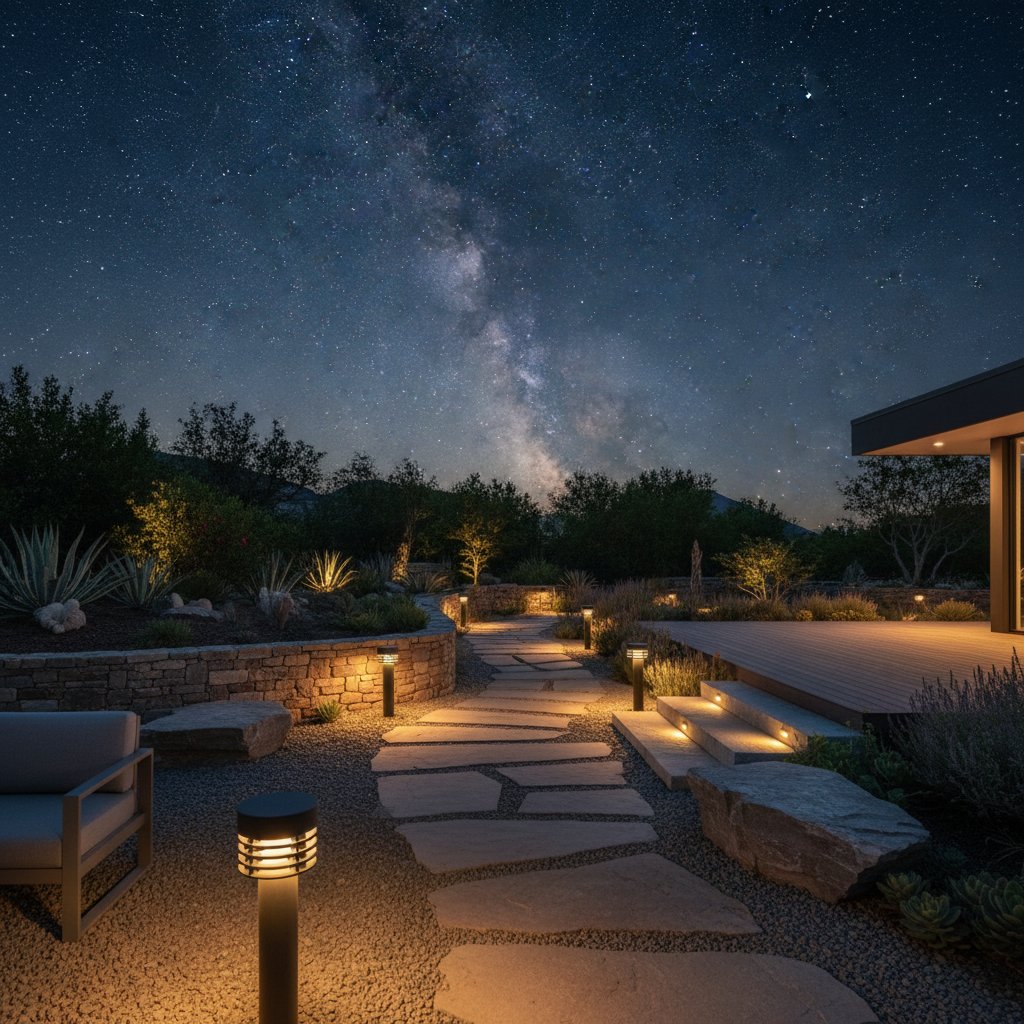
- Pathway bollards: Low-profile units, typically 12 to 18 inches tall, with hooded tops that cast a narrow beam on the ground. Opt for models with adjustable heights to match terrain variations.
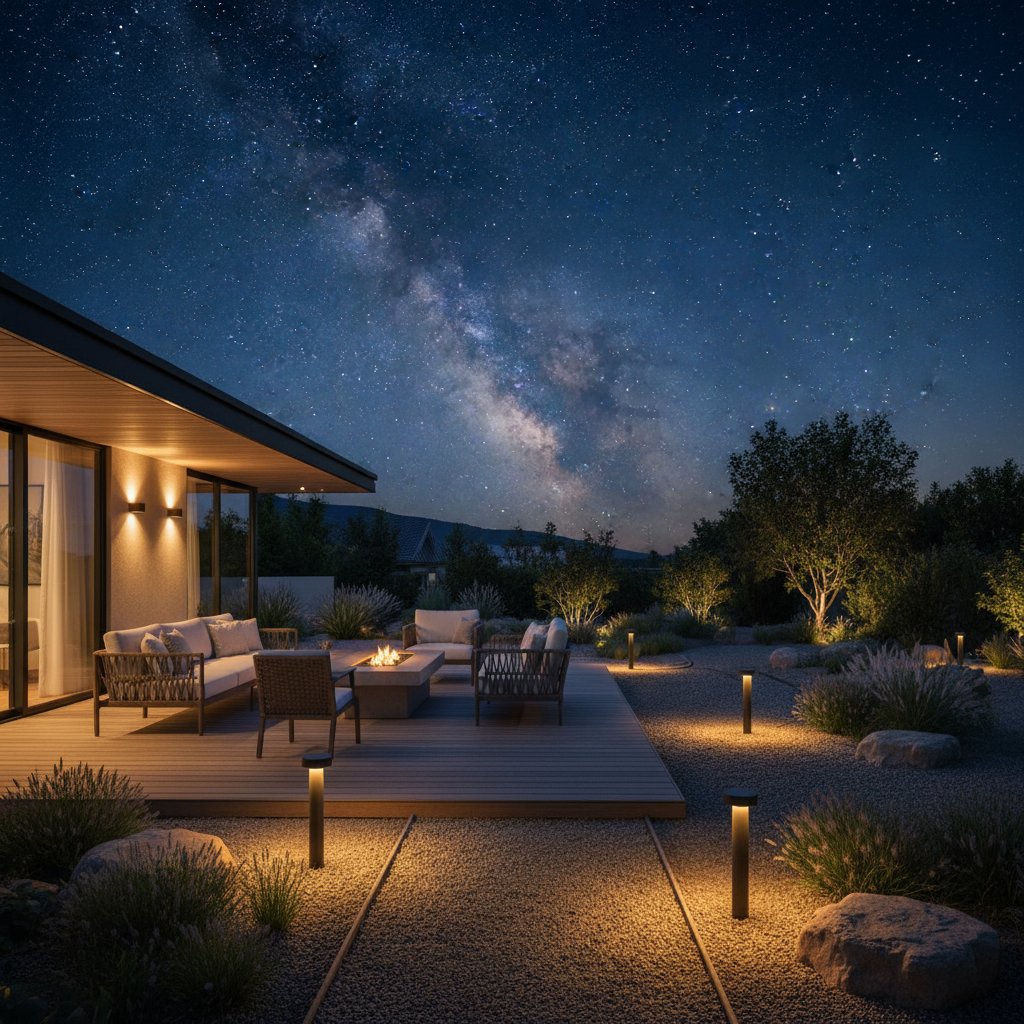
- Wall-mounted lanterns: Downward-angled designs that provide security lighting for entryways. Choose those with frosted glass diffusers to soften output and reduce hot spots.
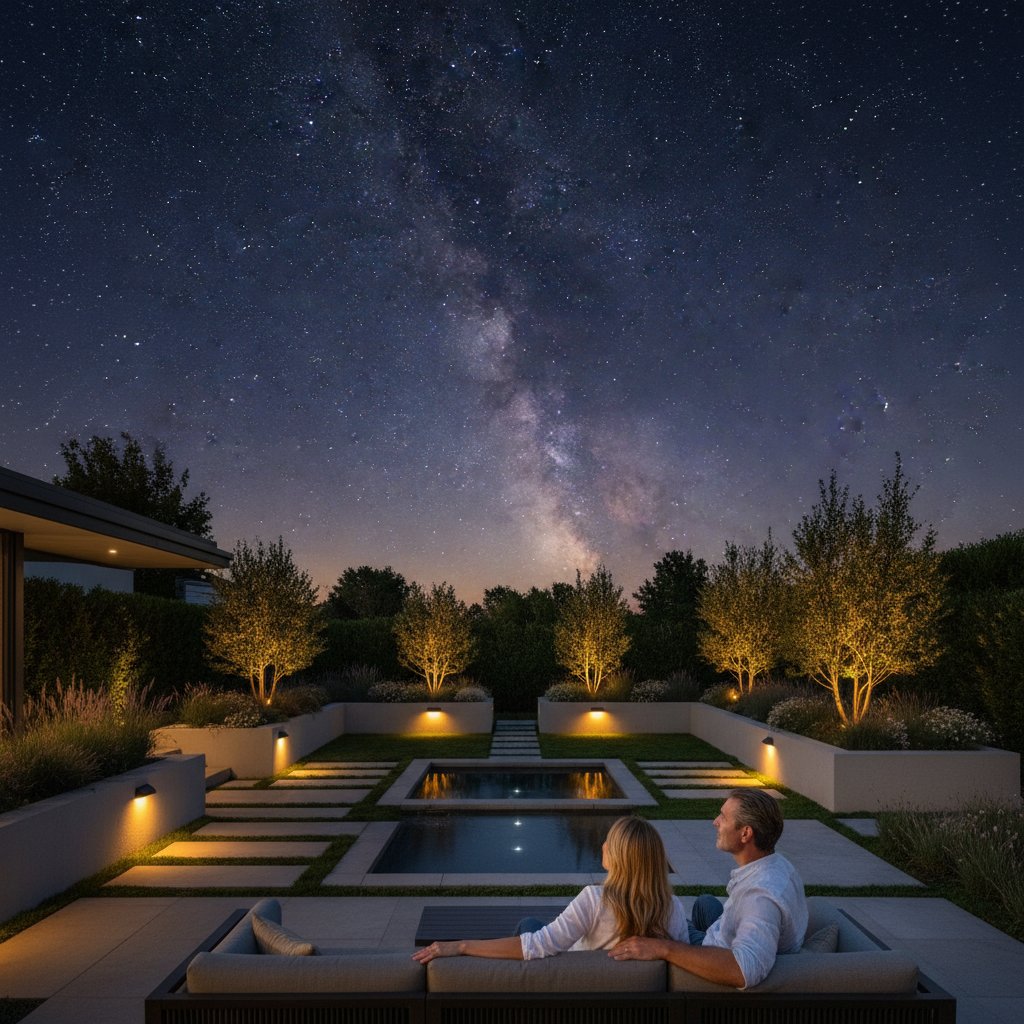
- Accent spotlights: Ground- or tree-mounted units with narrow beam angles of 15 to 30 degrees. Position them to graze foliage or architectural elements, ensuring the beam does not exceed the object's height.
- Post lanterns: Sturdy bases with shielded caps, ideal for driveways. Select energy-efficient LED versions that dim automatically after midnight.
Brightness levels matter significantly. Aim for 50 to 100 lumens per fixture in residential settings to avoid over-illumination. Installing dimmable systems or motion sensors further optimizes usage, activating light only when necessary and conserving energy.
Material durability also influences long-term performance. Bronze or powder-coated aluminum resists weathering, while IP65-rated seals protect against moisture. Before purchase, review manufacturer specifications for dark sky certification to ensure alignment with best practices.
Planning and Implementing Your Design
Effective outdoor lighting requires a strategic plan that considers the site's layout and usage patterns. Begin by mapping high-traffic areas, such as entrances and patios, where safety demands consistent illumination. Allocate 1 to 2 foot-candles of light in these zones, measured at ground level, to achieve adequate visibility without excess.
Incorporate layering for depth: combine ambient path lighting with task-oriented spots for features like water elements. Maintain a 10 to 15-foot spacing between fixtures to prevent overlap and hotspots. For larger properties, divide the space into zones controlled by separate timers or smart systems, allowing customization based on evening activities.
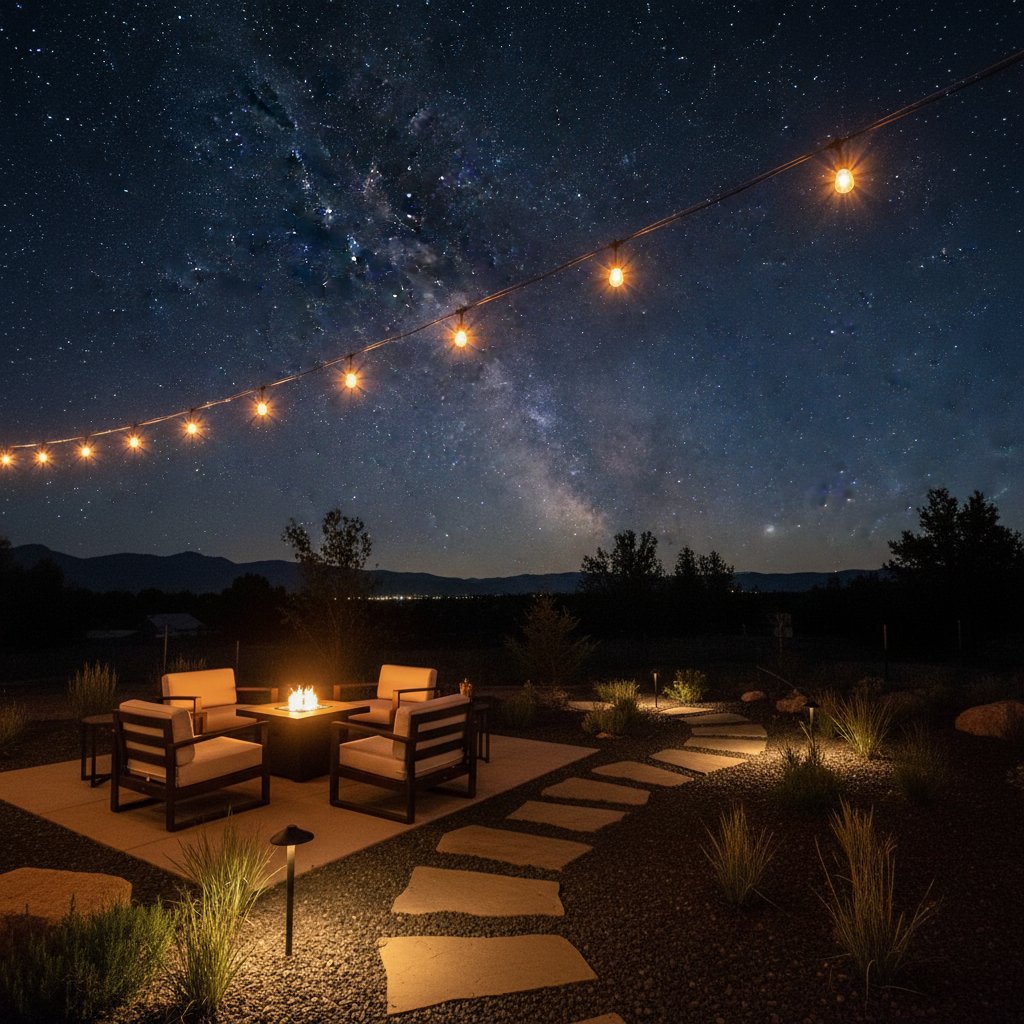
Testing precedes permanent installation. Use portable solar-powered stakes or battery-operated lamps to prototype arrangements. Observe the setup at dusk and midnight, noting shadow patterns and overall mood. Adjust for obstructions like trees that might diffuse or block light unintentionally.
Integration with landscaping enhances aesthetics. Position fixtures amid low-growing plants to camouflage them, or embed them in gravel paths for a seamless look. Seasonal considerations, such as leaf fall or snow cover, may necessitate repositioning to maintain even coverage.
Professional consultation proves valuable for complex installations. Landscape lighting experts can perform photometric analysis to predict light distribution, ensuring compliance with local ordinances on light trespass and energy use.
Benefits and Ongoing Maintenance
Implementing dark sky lighting yields immediate and lasting rewards. Stars emerge more vividly, transforming evenings into opportunities for celestial appreciation. Wildlife populations, including pollinators and birds, benefit from reduced disruption, potentially increasing biodiversity in your yard.
Energy savings accumulate through efficient fixtures and controls, lowering utility bills by up to 50 percent compared to traditional setups. Enhanced property value follows, as thoughtful lighting appeals to environmentally conscious buyers.
Maintenance sustains performance. Clean fixtures quarterly to remove dust that diminishes output, and replace bulbs annually to preserve color consistency. Monitor for light creep from new neighbors or streetlights, adjusting shields as needed.
In essence, dark sky lighting cultivates an outdoor space that honors both utility and nature. This mindful practice not only elevates daily living but also contributes to a darker, healthier night for communities everywhere.