Feeling Overwhelmed by Outdoor Lighting Rules?
Examine your yard at night and consider whether the lights appear too intense, mounted too high, or overly visible from afar. A neighbor might have raised concerns about light pollution, or a local government notice could have highlighted upcoming outdoor lighting regulations. Fines and compliance requirements often create anxiety, particularly after investing effort to secure and enhance your home. Achieving dark sky lighting standards proves feasible and beneficial, fostering serene evenings, improved safety, and enhanced garden aesthetics after dark.
Understanding What Dark Sky Compliance Means
Grasp the essence of dark sky compliance before modifying any lighting. Dark sky practices minimize unnecessary or misdirected outdoor light to maintain the night's natural darkness. The core principle directs light precisely where and when required, without excess.
Compliant fixtures channel light downward, avoiding upward or sideways escape. Such designs eliminate glare, safeguard wildlife reliant on darkness, and enable clearer views of the sky for neighbors and astronomers. Communities nationwide implement these standards to combat light pollution, which impacts ecosystems, human health, and energy efficiency.
Homeowners must evaluate porch lights, pathway fixtures, and landscape accents against local rules, potentially requiring minor tweaks or replacements. The goal involves optimizing light use rather than dimming the yard entirely.
Assessing Your Current Outdoor Lighting
Conduct a nighttime inspection of your property to observe light distribution. Identify instances where illumination enters a neighbor's window, reflects off walls toward the sky, or creates harsh glare that impairs visibility. These observations reveal inefficient light usage.
Document your findings, focusing on:
- Glare: Excessive or unshielded brightness that causes discomfort when viewing the source.
- Light trespass: Spillover onto adjacent properties or roadways.
- Skyglow: Broad sky brightening from upward light projection.
This evaluation pinpoints issues like outdated floodlights, upward-facing decorative lights, or unshielded bulbs.
Planning Your Lighting Adjustments
Following the assessment, develop a strategy for compliant and attractive modifications. Consider outdoor space functions, such as illuminating garden paths, entryways, or driveways. Tailor approaches to each purpose.
Choose the Right Fixtures
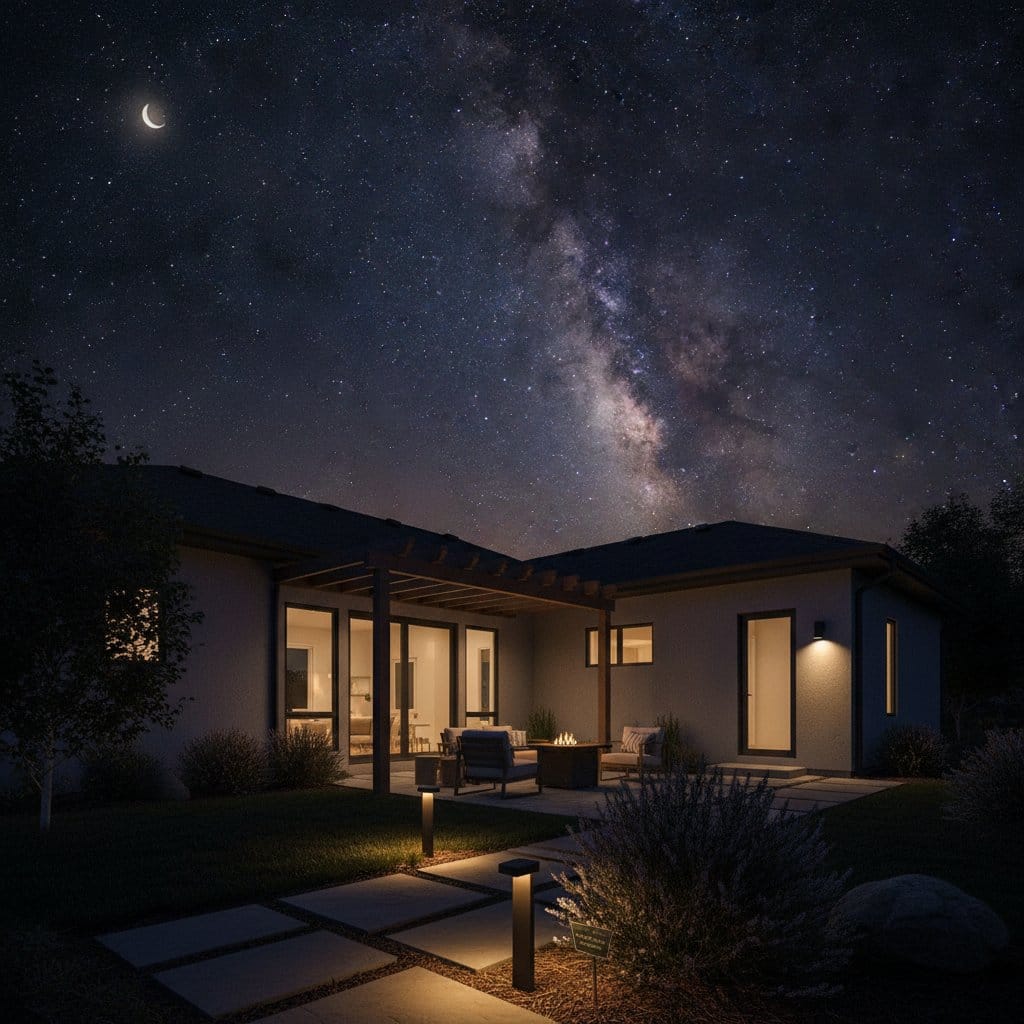
Select fixtures marked as full cutoff or fully shielded, which block light above the horizontal level and direct it downward for utility. Examples include wall sconces with downward orientation, lanterns facing the ground, or post lights featuring solid tops.
Select Warm, Soft Bulbs
Opt for warmer light tones, such as soft white (around 2700K) or amber, which prove gentler on eyes and less intrusive to wildlife. Steer clear of cool white or blue-tinted bulbs (above 4000K), as they scatter more in the atmosphere and exacerbate skyglow.
Install Smart Controls
Incorporate timers, dimmers, and motion sensors to activate light only as needed. Position a motion sensor by the garage to maintain darkness until movement triggers it, and set timers to deactivate porch lights post-bedtime. These features lower energy consumption and prolong bulb longevity.
Keep Height in Mind
Position fixtures at appropriate heights to balance coverage and containment. Excessive height spreads light too widely, while low placement may fail to illuminate adequately. Aim for eye level or slightly higher for walkways and entrances.
Acting on the Plan: Making the Changes
Implement adjustments progressively, prioritizing prominent problems like upward spotlights or street-spilling bulbs. No need for a complete redesign immediately.
Step 1: Replace or Retrofit Fixtures
Swap fixtures permitting upward light for full cutoff models, or add shield attachments. Hardware and garden stores offer compatible shields for standard fixtures, significantly curbing light waste.
Step 2: Adjust Angles and Bulbs
Reposition fixtures downward or install lower-wattage bulbs providing sufficient visibility. Proper direction often requires minimal brightness, revealing how efficiently targeted light performs.
Step 3: Test and Observe
Post-changes, reassess the yard at night. Verify light illuminates paths and plants without encroaching on dark zones. The absence of glare typically yields a more tranquil atmosphere.
Step 4: Check Local Requirements
Review community-specific ordinances, which may dictate maximum lumens, approved fixture styles, or operational hours. Consult garden centers or authorities for summarized guidelines to prevent fines and confirm adherence.
Why It Matters Beyond Avoiding Fines
Compliance extends past regulatory adherence to fostering environmental harmony. Outdoor lights influence nocturnal animal navigation, plant cycles, and neighborly night experiences.
Overlighting disorients migrating birds and hinders pollinators dependent on darkness. It also disrupts human sleep patterns. Dark sky practices restore equilibrium.
Restrained lighting unveils natural beauty, with leaf textures and stone surfaces appearing more authentic under diffused glow. Stars reemerge, connecting your yard to the broader cosmos.
Designing for Beauty and Compliance Together
Compliant lighting elevates aesthetics through subtlety. Strategic placement accentuates forms and routes elegantly.
Use Light as an Accent, Not a Flood
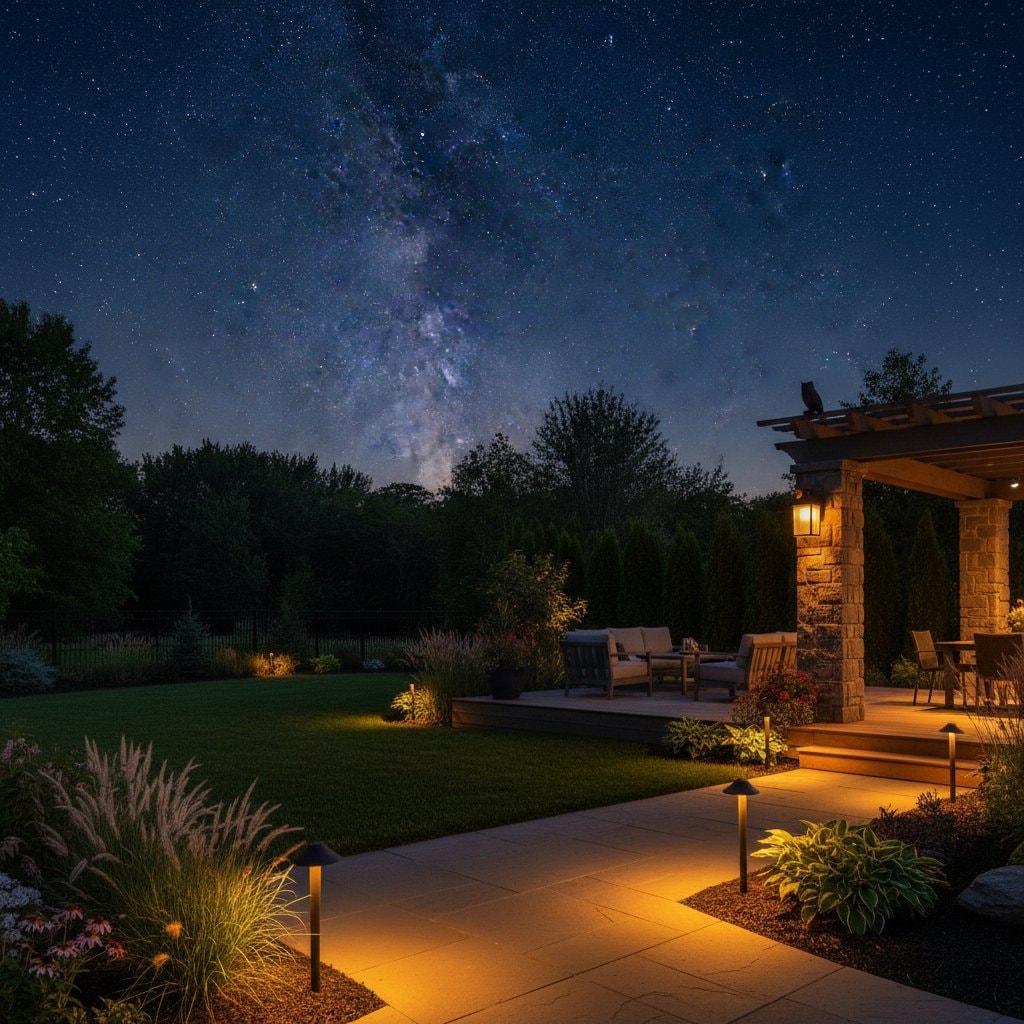
Apply light sparingly, like targeted highlights. A downlight above a bench fosters coziness, while spaced low path lights direct without dominating.
Layer Lighting Thoughtfully
Employ multiple low-level sources over a single intense one to minimize glare and enhance control. Illuminate entries, stairs, and seats independently, customizing each.
Blend with the Landscape
Match fixtures to home architecture and vegetation. Bronze or matte finishes integrate seamlessly, allowing light to take precedence over the hardware.
Keeping Your Lighting Compliant Over Time
Sustain compliance through ongoing upkeep, as elements like dust, webs, or overgrown plants alter light patterns. A once-effective shield may fail if vegetation shifts or fixtures loosen.
Regular Checks
Inspect the property quarterly after dusk for alterations. Swap burnt bulbs with suitable replacements and verify sensor and timer operations.
Seasonal Adjustments
Adapt to changing daylight. Extend sensor ranges in winter's long nights, or shorten lighting durations in summer's extended evenings.
Community Awareness
Promote dark sky adoption among neighbors for collective impact. Uniform practices across a neighborhood amplify restfulness, star visibility, and communal stewardship.
Enjoying Your Restored Night Sky
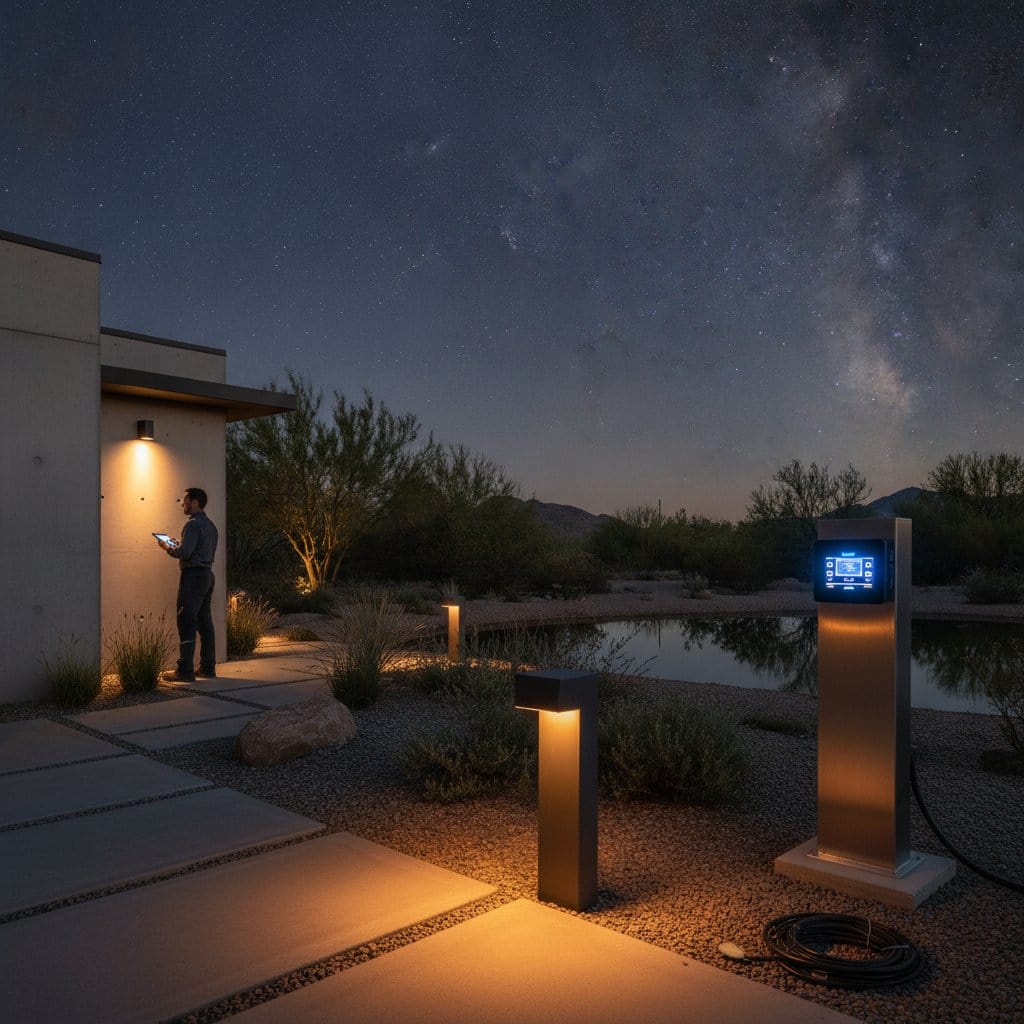
On a clear evening, venture outside to appreciate the serene air and softened landscape. Purposeful glows now enhance without overpowering, outlining trees, ponds, or paths amid returning stars.
Dark sky lighting emphasizes purposeful illumination, energy savings, and preservation of outdoor allure. Beyond fine avoidance, it nurtures a healthier ecosystem and tranquil residence.
Watching Your Garden Thrive Under a Softer Glow
Ongoing garden care amplifies these benefits. Each adjustment, from fixture tweaks to bulb selections, builds enduring improvements. Clearer skies, balanced ecosystems, and heightened serenity follow.