Transform Your Yard into a Stargazing Paradise
Stepping into your yard after dark often brings a sense of peace overshadowed by artificial glow. Porch lights and neighboring illuminations can obscure the stars, leaving the sky hazy. Homeowners frequently seek ways to recapture that pristine view of the cosmos. Thoughtful modifications to your outdoor lighting enable a serene space dedicated to stargazing and nocturnal appreciation.
Understanding Light's Dual Role
Outdoor lighting provides essential security yet contributes to light pollution when it scatters upward. This phenomenon occurs as excess illumination reflects off surfaces and permeates the atmosphere, dimming celestial displays. Even prominent constellations become faint under such conditions.
Designing for stargazing requires balancing illumination with darkness. Direct light toward functional zones like walkways and gathering spots. This approach preserves safety without compromising the sky's clarity.
Step One: Evaluate Existing Lighting
Conduct a nighttime inspection of your yard to identify problematic sources. Observe fixtures that cast beams into the sky or create glare on walls and fences. Determine if certain lights remain active unnecessarily throughout the night.
Document the intensity, direction, and hue of each light. For instance, note high-wattage floodlights that illuminate broad areas inefficiently. Simple adjustments, such as repositioning a lantern or installing a timer, often yield immediate improvements in sky visibility.
Step Two: Select Dark-Sky-Compliant Fixtures
Opt for full-cutoff or fully shielded luminaires that prevent upward light spill. These designs concentrate illumination downward onto paths, steps, or planting beds, maintaining ambient glow without sky interference. Examples include recessed porch lights and low-profile bollards for pathways.
Choose bulbs with warm color temperatures, ideally 2700K or below, to emit a soft amber light. Such selections minimize blue light wavelengths that exacerbate pollution and eye strain. Transitioning from cool 5000K bulbs to these warmer alternatives enhances the yard's inviting quality for evening use.
Step Three: Enhance Comfort and Accessibility
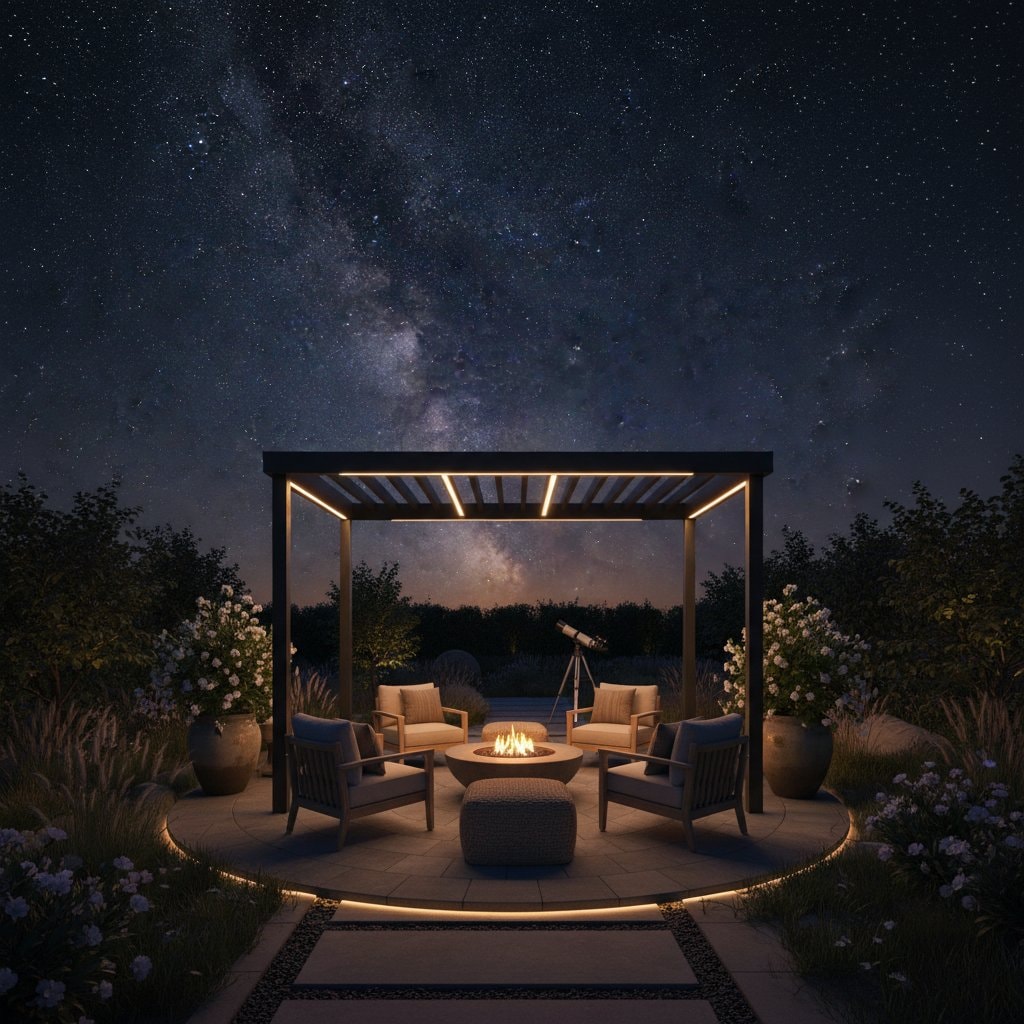
With lighting optimized, focus on elements that encourage prolonged sky observation. Designate spots for reclining or seating to facilitate comfortable viewing. A durable Adirondack chair or weather-resistant chaise lounge positioned away from light sources proves ideal.
Incorporate stable surfaces like flagstone patios or mulched areas for placing blankets or portable telescopes. Add a contained fire feature, such as a propane pit under 36 inches in diameter, for subtle warmth. Surround the space with evergreen hedges or bamboo screens to shield against external light intrusion.
Step Four: Integrate Sky-Inspired Features
Elevate the area with accents that evoke celestial themes. Arrange river rocks in spiral patterns mimicking galaxies, or install a solar-powered fountain resembling a comet's path. These subtle installations draw the gaze upward naturally.
For avid observers, establish a dedicated viewing station with a sturdy tripod for binoculars or a beginner-friendly refractor telescope. Stock the vicinity with essentials like a padded mat and insulated mugs for beverages. Introduce night-blooming flora, including moonflowers, nicotiana, or four o'clocks, whose blossoms unfurl at dusk and lure nocturnal visitors such as bats and moths.
Step Five: Sustain and Refine the Design
Seasonal shifts demand ongoing maintenance to preserve optimal conditions. Prune overhanging branches that might diffuse light unexpectedly, and inspect fixtures for dust accumulation that reduces efficiency. Experiment with dimmable options or motion sensors to activate illumination only when required.
Monitor the setup over multiple evenings to fine-tune brightness levels. Lower wattage from 60 to 40 in peripheral areas if glare persists. This iterative process ensures the yard evolves into a harmonious blend of usability and natural darkness.
Foster a Thriving Nocturnal Ecosystem
Adopting stargazing principles extends benefits beyond personal enjoyment. Reduced lighting supports local wildlife, allowing nocturnal species to navigate without disorientation. Pollinators and amphibians thrive in these dimmer environments, enriching your garden's biodiversity.
Picture a crisp evening where the yard envelops you in gentle quietude. As lights dim, stars emerge in sharp relief against the velvet sky. Through deliberate design and attentive care, your outdoor space becomes a gateway to the universe's enduring allure.