Effortless Mediterranean Gravel Gardens on a Budget
A Mediterranean gravel garden infuses warmth, simplicity, and persistent visual interest into any landscape. This style integrates drought-tolerant plants, natural stone elements, and subtle textures to create an inviting space that demands minimal ongoing attention. Homeowners often admire this aesthetic yet believe it necessitates substantial investment; however, thoughtful planning and utilization of local resources enable the creation of an attractive Mediterranean-inspired gravel garden at a modest cost.
Understanding the Mediterranean Aesthetic
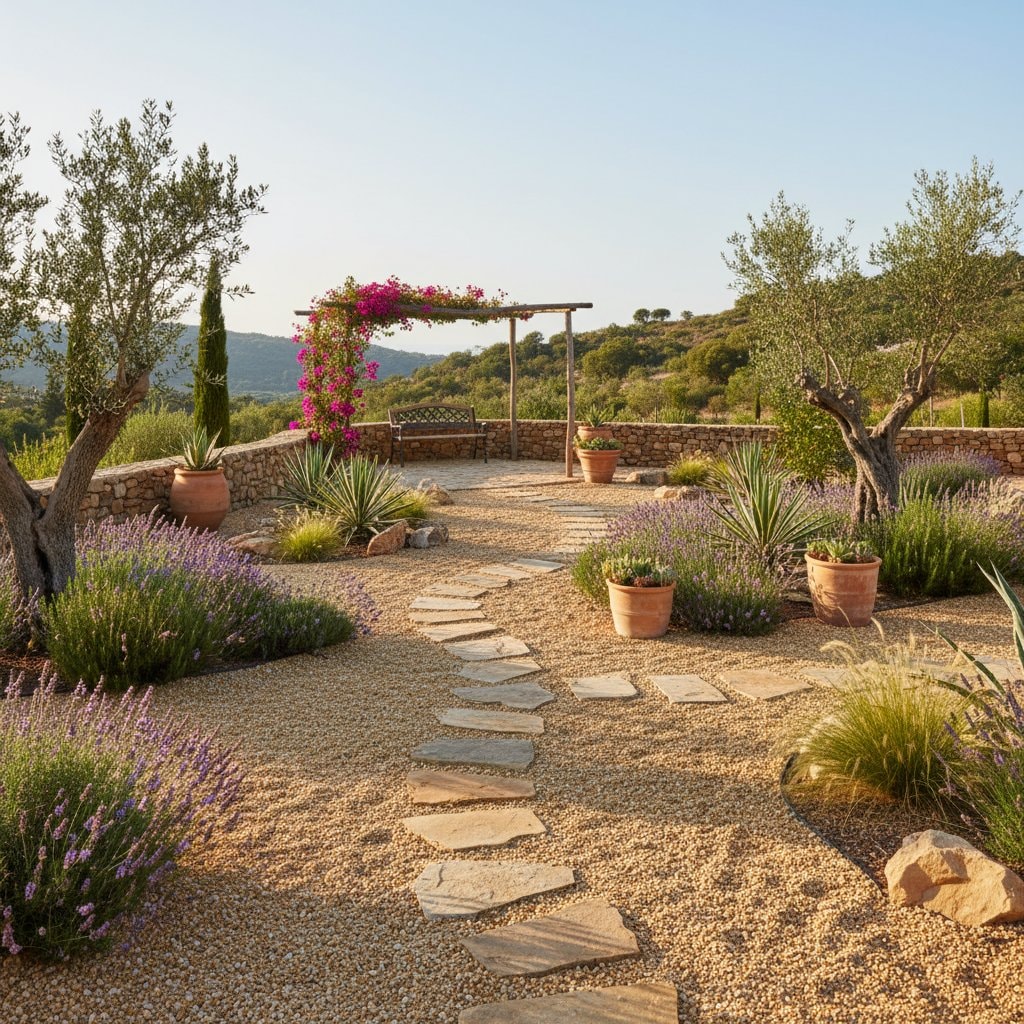
The Mediterranean garden draws inspiration from the arid coastal areas surrounding the Mediterranean Sea. It emphasizes vegetation that flourishes in full sunlight and nutrient-poor soil, paired with gravel or stone surfaces that conserve moisture and suppress weed growth. The outcome delivers a serene, sunlit ambiance that complements contemporary, rustic, or classic architectural styles.
Essential components encompass:
- Gravel as primary ground cover in place of turf
- Terracotta pots or earthen containers
- Aromatic herbs alongside drought-resistant flora
- Stone borders or modest retaining walls
- Subdued, earthy tones that harmonize with the environment
This garden philosophy prioritizes straightforward maintenance over meticulous formality. It proves particularly suitable for regions with water scarcity or challenging conditions for traditional lawns.
Selecting Appropriate Gravel
Gravel forms the core of this garden design, establishing the surface texture, facilitating drainage, and defining the overall character. Opt for varieties that appear organic and provide comfortable footing. Suitable selections include pea gravel, crushed limestone, and decomposed granite.
- Pea gravel features rounded, smooth pebbles in warm tan or golden hues, typically priced at one to three dollars per square foot.
- Crushed limestone imparts a light, weathered appearance and packs densely, ideal for pathways; it ranges from two to four dollars per square foot.
- Decomposed granite yields a fine, sand-like finish with superior drainage, costing approximately one to five dollars per square foot.
To control expenses, consult nearby quarries or landscaping providers for bulk purchase options. Acquiring gravel by the cubic yard frequently lowers the per-unit price relative to pre-packaged amounts.
Planning the Layout
For a natural Mediterranean gravel garden, incorporate flowing curves and asymmetrical forms. Rigid straight lines or balanced planting beds may introduce undue stiffness to this casual motif. Draft a preliminary sketch incorporating these principles:
- Pathways and seating zones: Design broader gravel expanses adjacent to patios or seating arrangements. Employ slimmer trails to link planting pockets.
- Plant clusters: Position vegetation in irregular groups of three, five, or seven specimens to foster an untamed, authentic vibe.
- Central features: Incorporate a basic urn, large rock, or compact olive tree to serve as a visual anchor.
Cover the majority of the area with gravel, reserving isolated soil patches for plantings. This approach minimizes upkeep while permitting foliage to soften the stony expanse.
Choosing Resilient Plants
Mediterranean gardens depend on robust species capable of enduring intense heat, breezes, and sparse watering. Select varieties adapted to your local conditions, emphasizing those requiring infrequent irrigation after rooting.
Recommended choices include:
- Lavender: Delivers scent and violet blooms, thriving in bright light and arid conditions.
- Rosemary: Functions as a border shrub or trailing cover, offering practical kitchen applications.
- Sage: Provides silvery-green leaves with velvety appeal.
- Thyme: Creeps readily amid pavers or stones.
- Agave and yucca: Contribute bold form and dramatic silhouette.
- Rockrose and santolina: Form tidy bushes with grayish foliage.
Combine specimens varying in stature and foliage type for dynamic interest. Ensure adequate spacing to promote expansion and circulation, preventing disease.
Site Preparation Essentials
Thorough groundwork ensures durability and a refined finish. Begin by eradicating existing weeds and sod, then grade the terrain evenly. Lay landscape fabric to curb weed intrusion and enhance water flow; fasten it with stakes prior to gravel application.
Apply two to three inches of gravel depth for optimal coverage. Distribute evenly with a rake, followed by a gentle watering to promote settling. For high-traffic zones, consider a deeper layer or stabilized sub-base for firmness.
Strategies for Cost Management
Constructing a Mediterranean gravel garden often proves more economical than installing sod or hardscaping. Implement these economical practices:
- Repurpose existing items: Integrate salvaged bricks, rocks, or fragmented pottery for borders or accents.
- Purchase juvenile plants: Smaller sizes cost less and mature gradually to fill spaces.
- Minimize watering needs: Established Mediterranean flora seldom requires supplemental moisture.
- Handle installation personally: Professional labor can inflate expenses significantly; self-directed efforts yield substantial savings.
Anticipate expenditures of five to twelve dollars per square foot for a self-managed project. Engaging specialists might elevate costs to fifteen to twenty dollars per square foot.
Ongoing Maintenance Practices
The appeal of a gravel garden resides in its reduced demands. Initial setup requires the most labor; subsequent care remains straightforward:
- Remove emerging weeds promptly to prevent establishment.
- Replenish gravel periodically if displacement occurs.
- Trim herbs and perennials judiciously for tidiness.
- Rake or brush pathways to maintain even surfaces.
Enhancing and Enjoying Your Garden
As your Mediterranean gravel garden matures, its features evolve positively. Roots deepen for stability, hues mellow with exposure, and stones acquire a patina from the elements.
Incorporate functional touches like a seating bench, solar lanterns, or a shallow basin for subtle animation. Gradually extend plantings or refine routes with minimal disruption.
This thoughtfully designed space delivers aesthetic pleasure, utility, and tranquility. It conserves resources, lightens workload, and establishes an enduring haven suited to all seasons, all within financial reach.