Design Yards That Combat Light Pollution with Elegance
Many homeowners step outside at night and observe that stars appear dimmer than in past years. Harsh or inefficient yard lighting often contributes to this issue, yet individuals seek inviting outdoor spaces that safeguard the natural night sky. Designing a landscape that provides soft illumination without exacerbating light pollution requires both artistic vision and environmental responsibility.
A dark-sky-friendly yard does not eliminate light entirely. Instead, it directs illumination purposefully to create secure pathways and intimate garden areas while preserving celestial views overhead.
Assess Your Existing Lighting Setup
Examine your yard after dark with objective perspective. Observe how light interacts with surfaces and creates shadows. Position yourself at various locations, gazing upward and outward, beyond mere ground-level views. Identify glare that impedes eye adjustment or areas where brightness contrasts sharply with unlit zones.
Compile a straightforward inventory:
- Locations requiring illumination: entrances, staircases, pathways, and primary social areas.
- Sites of light waste: expansive lawns, upward-directed fixtures, and illuminations projecting skyward.
- Instances of light spillover: into neighboring properties, windows, or roadways.
This nighttime evaluation reveals overlooked patterns visible only in darkness. It fosters understanding of lighting's broader impacts beyond your boundaries. With these insights, proceed to targeted planning.
Select Appropriate Lighting Fixtures
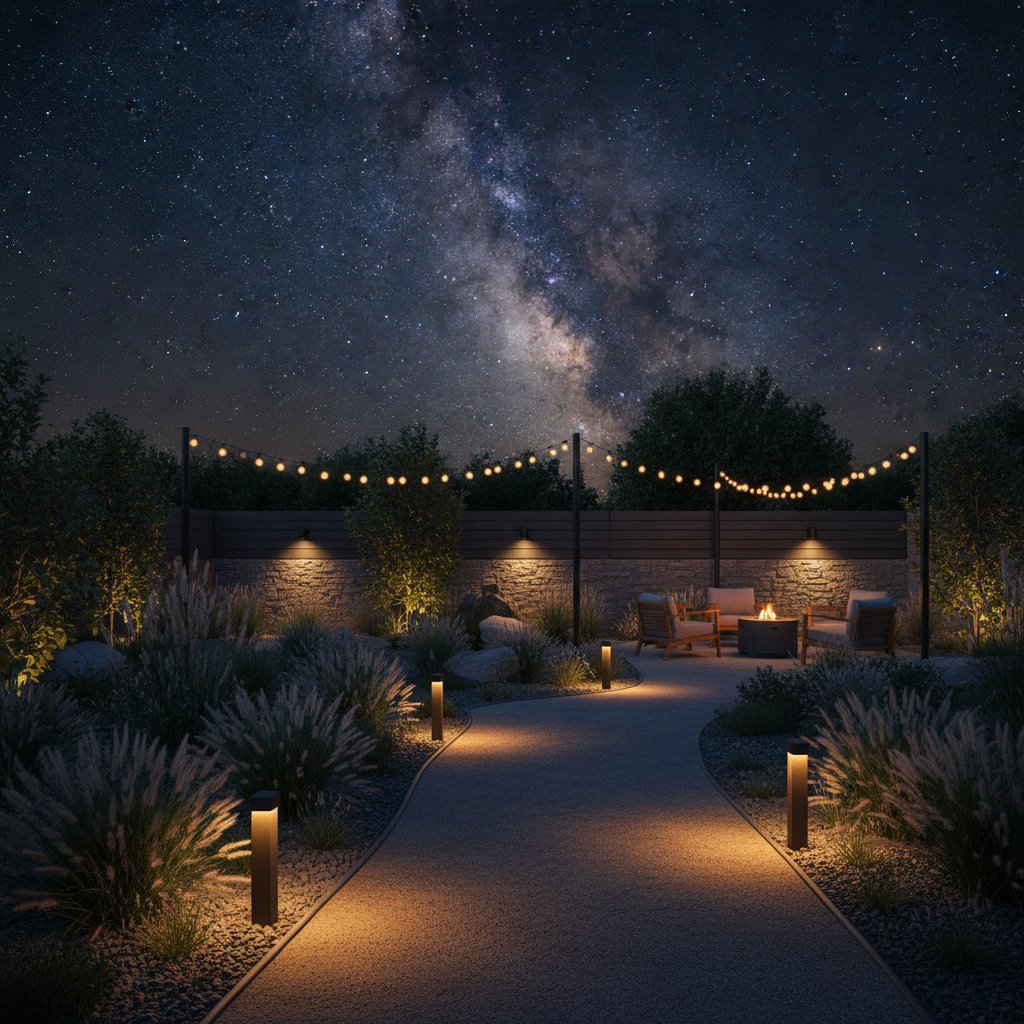
Seek fixtures designated as dark-sky compliant or full-cutoff types, which fully enclose the light source from above. Such designs direct beams downward, minimizing skyward escape. Options range from traditional lanterns to contemporary path markers, ensuring aesthetic appeal alongside functionality.
Essential features include:
- Fully shielded light sources: No visibility of the bulb from elevated or lateral angles.
- Warm color temperatures: Opt for 2700K to 3000K bulbs emitting amber hues rather than stark white or blue light, which eases visual strain and supports wildlife.
- Energy-efficient options: LED technology consumes minimal power and endures extended use, promoting sustainability and savings.
- Automated features: Integrate timers or motion detectors to activate illumination solely during necessary periods.
Thoughtful fixture selection yields a yard that radiates subtle sophistication free from overwhelming brilliance.
Safeguard Wildlife and Vegetation
Beyond human enjoyment, artificial lighting disrupts avian, insect, and mammalian species dependent on natural darkness for navigation and sustenance. Excessive light also disrupts vegetation by interfering with essential diurnal rhythms.
To foster a wildlife-supportive environment:
- Deploy warm, subdued lighting adjacent to habitats like shrubbery or water features.
- Direct beams away from arboreal or aquatic zones serving as nocturnal refuges.
- Deactivate ornamental illuminations post-midnight to reinstate ambient darkness.
This equilibrium honors aesthetic desires and ecological integrity. Diminished intensity and curtailed excess lighting encourage nocturnal biodiversity, potentially revealing increased firefly activity, moth presence, or subtle animal movements.
Implement Effective Light Reduction Strategies
With a blueprint established, initiate incremental modifications for enduring impact:
- Upgrade outdated fixtures: Substitute exposed bulbs or unshielded units with ground-oriented alternatives.
- Lower output levels: Select bulbs with reduced lumens sufficient for tasks without producing dazzle.
- Incorporate motion detection: These systems engage upon sensing activity, conserving resources and curbing persistent radiance.
- Apply scheduling devices: Program automatic shutoff for landscape or accent lights after designated intervals.
- Employ baffles or diffusers: These elements temper intense rays, yielding diffused, comfortable luminescence.
Cumulative adjustments darken the overhead vista and enhance yard tranquility. Integrated minor alterations often yield noticeable improvements.
Harmonize Security with Tranquility
Concerns arise that reduced lighting compromises safety. In reality, focused illumination enhances security by eliminating glare that conceals motion. Overly intense lights directed at observers obscure details more than they reveal.
Achieve superior sightlines through modest, uniform placement. Highlight critical zones like stairs and doorways while sparing broad expanses. Position motion-responsive units at access points to signal presence without continuous operation. This method secures the property while promoting restorative evenings.
Restore Visibility of the Celestial Canvas
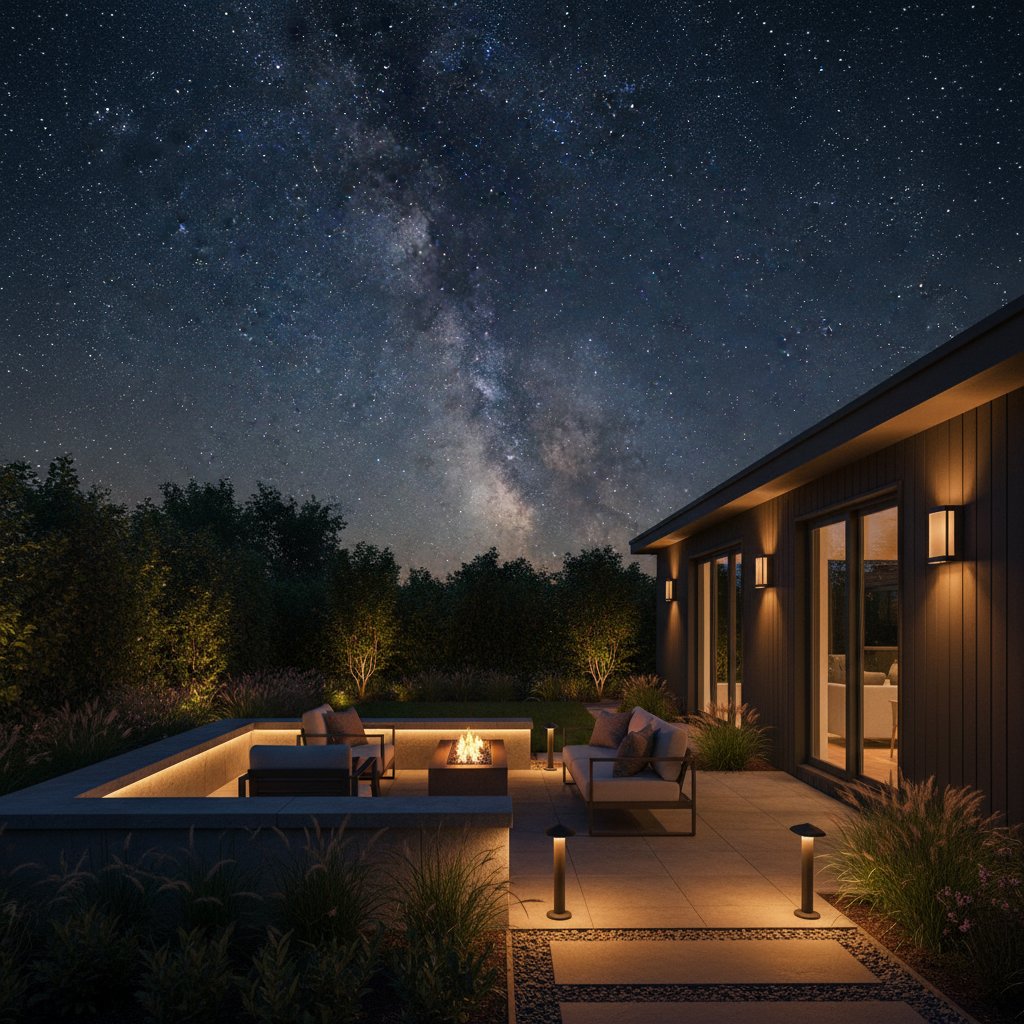
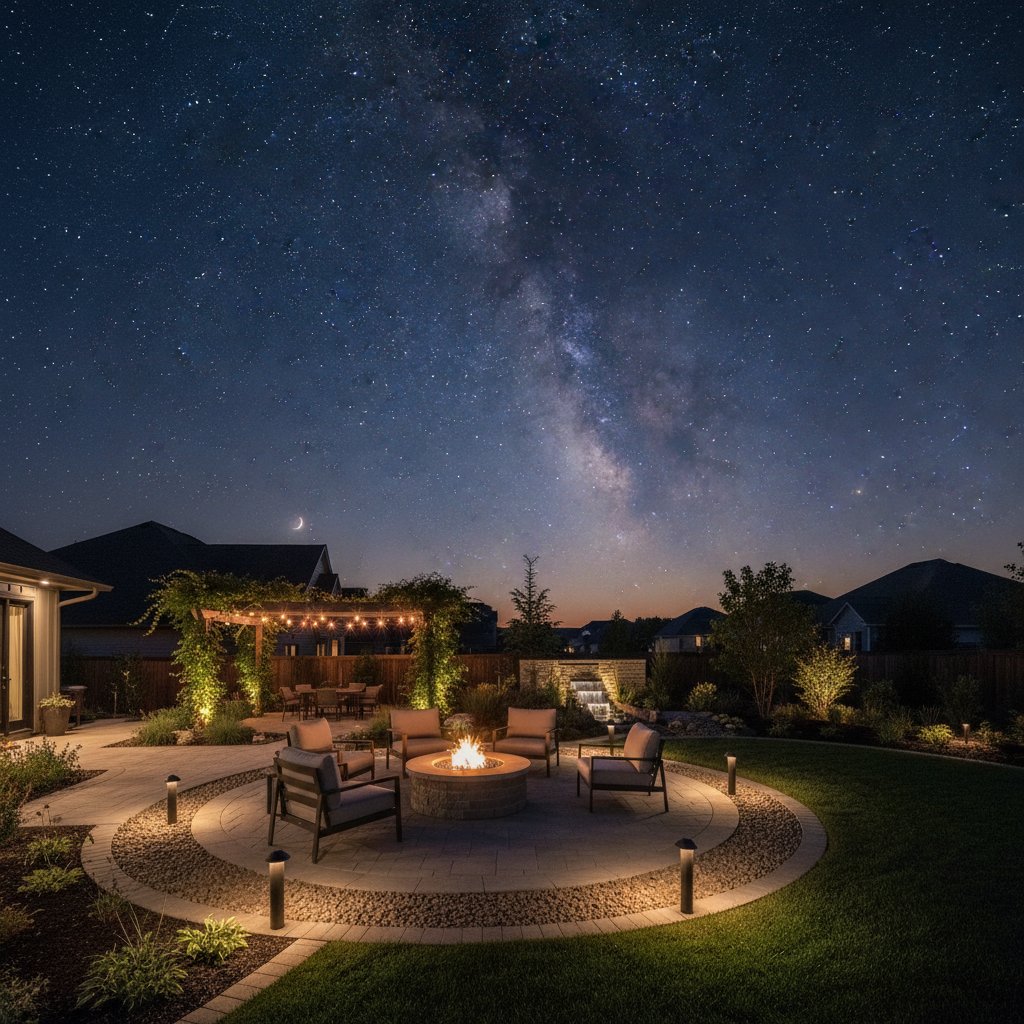
A primary benefit of deliberate lighting emerges in reclaiming stellar observations. As glare diminishes and shields take effect, long-forgotten constellations reappear. The night sky integrates seamlessly into your outdoor setting.
Encourage loved ones to venture out and appreciate the serene twinkling. Such moments underscore the significance of personal decisions. Properly oriented bulbs and calibrated timers incrementally revive inherent marvels.
Engage with local dark-sky programs or regulatory guidelines if available. Community involvement amplifies the collective brilliance of unpolluted heavens.
Observe Your Landscape's Evolution
Refined lighting influences garden vitality positively. Undisturbed nocturnal periods support robust plant development. Avian and invertebrate populations rebound, restoring ecological harmony.
Monitor seasonal variations in yard ambiance. Reposition elements as required, maintain lens clarity to avoid dimming, and sustain uniform warm tones in replacements. View the lighting scheme as an dynamic garden component that adapts over time.
Cultivating this interplay of illumination and shadow forges more than an attractive space. It establishes a sanctuary attuned to personal well-being and surrounding natural cadences.
Advance Your Lighting Strategy Deliberately
Sustain progress by periodically reviewing fixture performance and environmental effects. Experiment with adjustable mounts for optimal beam control. Consult resources from landscaping professionals to refine selections further.
These ongoing refinements ensure your yard remains a model of balanced, star-preserving design.