Decomposed Granite Patios: Luxury on a Budget for 2026
Homeowners often envision patios with polished stone, precise pavers, or ornate concrete finishes. However, decomposed granite emerges as a practical alternative that achieves a sophisticated, natural appearance at a fraction of the expense. For those seeking an upscale outdoor area without exceeding financial limits, this material merits careful consideration.
Understanding Decomposed Granite and Its Patio Applications
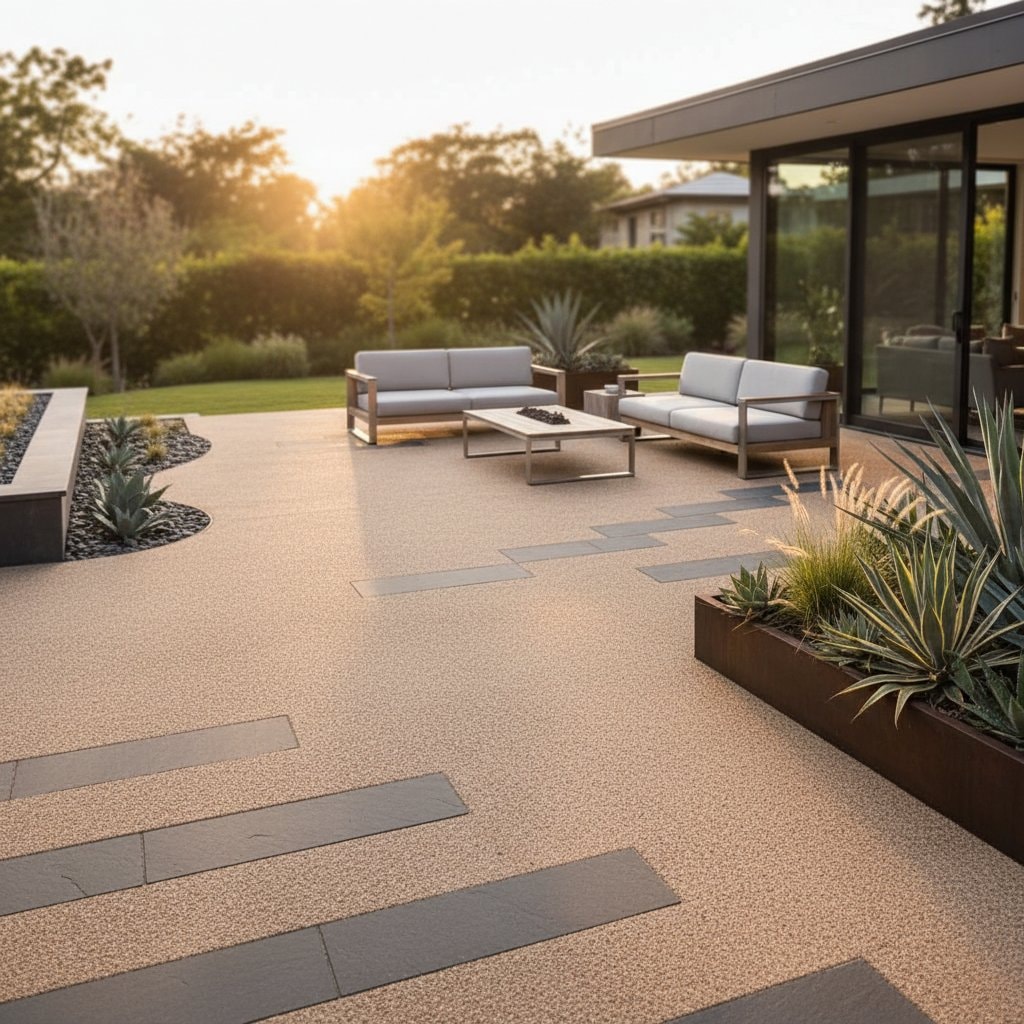
Decomposed granite, commonly abbreviated as DG, derives from granite rock that has undergone natural weathering into fine particles. Although it resembles gravel, its texture allows compaction into a firm, walkable surface. The palette of colors, including gold, tan, gray, and reddish-brown, facilitates seamless integration with surrounding landscapes and architectural elements.
This material excels in forming a stable patio base that maintains a gentle, organic texture underfoot. It harmonizes effortlessly with vegetation, stone accents, and timber features. In contrast to rigid options like concrete or pavers, decomposed granite imparts a serene, earthy vibe suitable for contemporary or traditional settings.
Comparing Costs and Long-Term Value
Budget-conscious individuals appreciate decomposed granite for its superior balance of expense and performance in hardscaping projects. Materials typically range from one to three dollars per square foot. Professional installation adds to this, resulting in totals of five to ten dollars per square foot, influenced by regional factors and project scope.
Pavers, by comparison, demand twelve to twenty dollars per square foot when installed, while concrete patios begin at ten dollars per square foot and escalate with custom treatments. Decomposed granite delivers comparable stability and adaptability for considerably less investment, enhancing overall value.
Step-by-Step Installation Guide
The installation of decomposed granite proves accessible, yet thorough groundwork ensures optimal results. Follow these structured steps for success:
-
Prepare the site: Remove existing plants, clear away rubble, and grade the ground evenly. Lay a base layer of crushed stone, compact it thoroughly to promote stability and water flow.
-
Install edging: Secure borders using metal strips, natural stone, or durable plastic to contain the material and outline the patio boundaries.
-
Apply the granite: Distribute decomposed granite in incremental layers of two to three inches. Compact each layer using a manual tamper or mechanical plate compactor for density.
-
Incorporate a binder: Opt for a stabilizing agent or resin to bind particles, minimizing dust generation and material displacement over time.
-
Complete the finish: Moisten the surface lightly and perform a final compaction to achieve a smooth, uniform texture.
Most patios reach completion within several days, contingent on dimensions and conditions. Individuals proficient with landscaping equipment may handle the task independently, though professionals guarantee superior compaction and drainage performance.
Enhancing Designs with Versatile Aesthetics
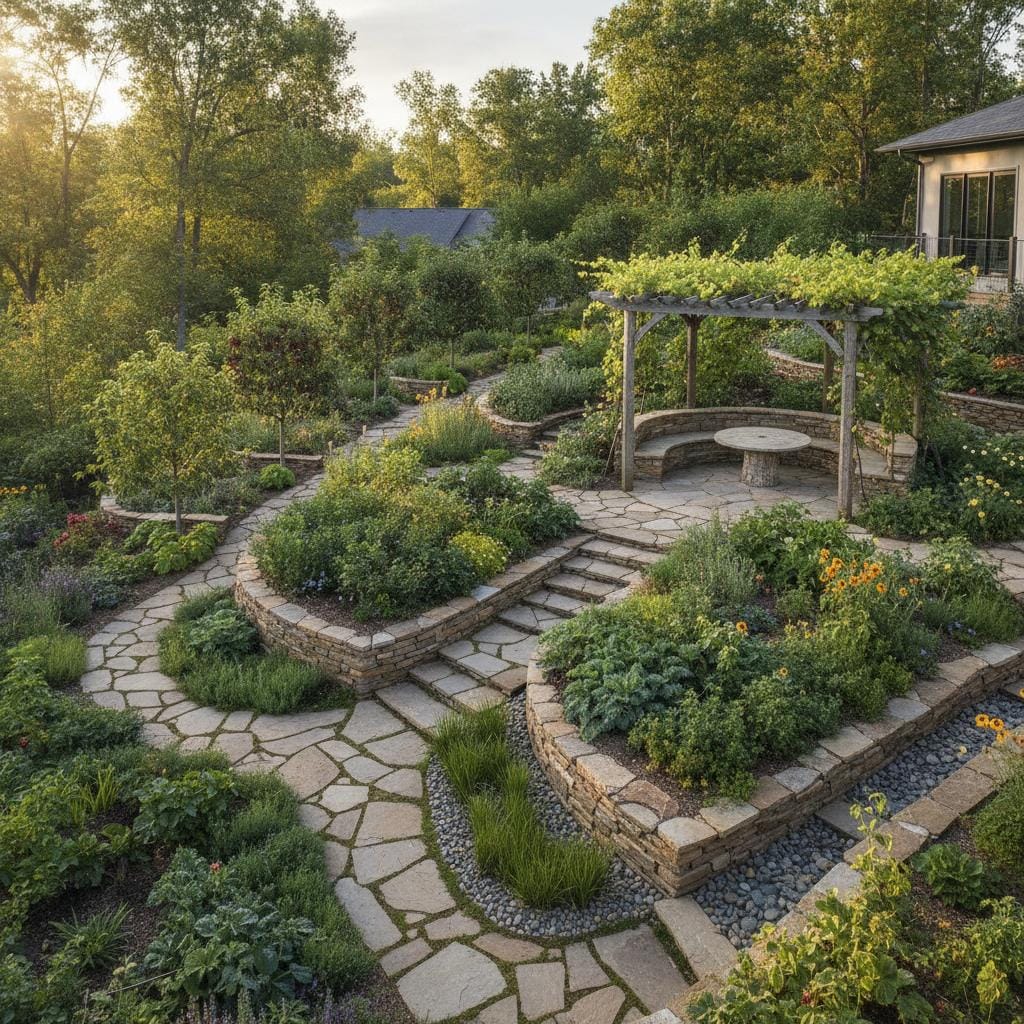
Decomposed granite shines through its adaptability in outdoor layouts. It suits relaxed lounging zones, pathways linking garden elements, or expansive areas accommodating fire features and seating. The material molds readily around contours, foliage, or planting zones, offering creative latitude unavailable with inflexible alternatives.
Pair it strategically with complementary elements such as flagstone accents, timber platforms, or modest retaining walls to introduce varied textures. Employ it to infill spaces between pavers for unified visuals. Color selections enable alignment with exterior walls, accents, or planted areas, elevating the overall harmony.
Ensuring Durability Through Maintenance
Decomposed granite demands moderate upkeep compared to turf or organic mulches, though it requires more attention than sealed concrete or pavers. Surface irregularities or depressions may arise periodically. Address these by replenishing material and recompacting the affected zones.
Select stabilized variants to reduce ongoing efforts further. The binding components fortify resistance against precipitation and pedestrian wear. Position the patio away from intense water flows to prevent particle loss; integrate French drains or swales if necessary to manage runoff effectively.
A properly executed decomposed granite patio endures for numerous years. As it matures, the surface integrates more deeply with the environment, fostering a enduring, grounded presence that balances resilience with tranquility.
Evaluating Key Advantages and Limitations
Prospective users should assess these primary benefits and challenges:
Advantages
- Reduced expenses relative to concrete or pavers
- Authentic, grounded visual appeal
- Superior permeability for water management
- Straightforward repairs and renewals
- Sustainable, low-impact choice
Limitations
- Potential shifting without robust containment
- Minor dust in arid environments
- Requirement for occasional adjustments
- Unsuitability for substantial loads or frequent vehicular use
These considerations remain straightforward for typical residential applications, particularly when prioritizing cost-effective, landscape-enhancing patios.
Planning Your Decomposed Granite Patio Project
Selecting decomposed granite enables efficient allocation of resources for refined outdoor enhancements. Begin by defining the intended function: a serene retreat for reflection, a venue for meals, or a hub for social interactions. This clarity guides decisions on depth, borders, and surface treatments.
Obtain samples of various hues to evaluate their integration in your specific setting. Observe variations under daylight and shadow conditions. Consult experienced local landscapers familiar with decomposed granite to preempt concerns related to hydrology or firmness.
Following installation, permit the surface to cure fully. Routine raking and selective hydration sustain its pristine condition, ensuring lasting enjoyment.