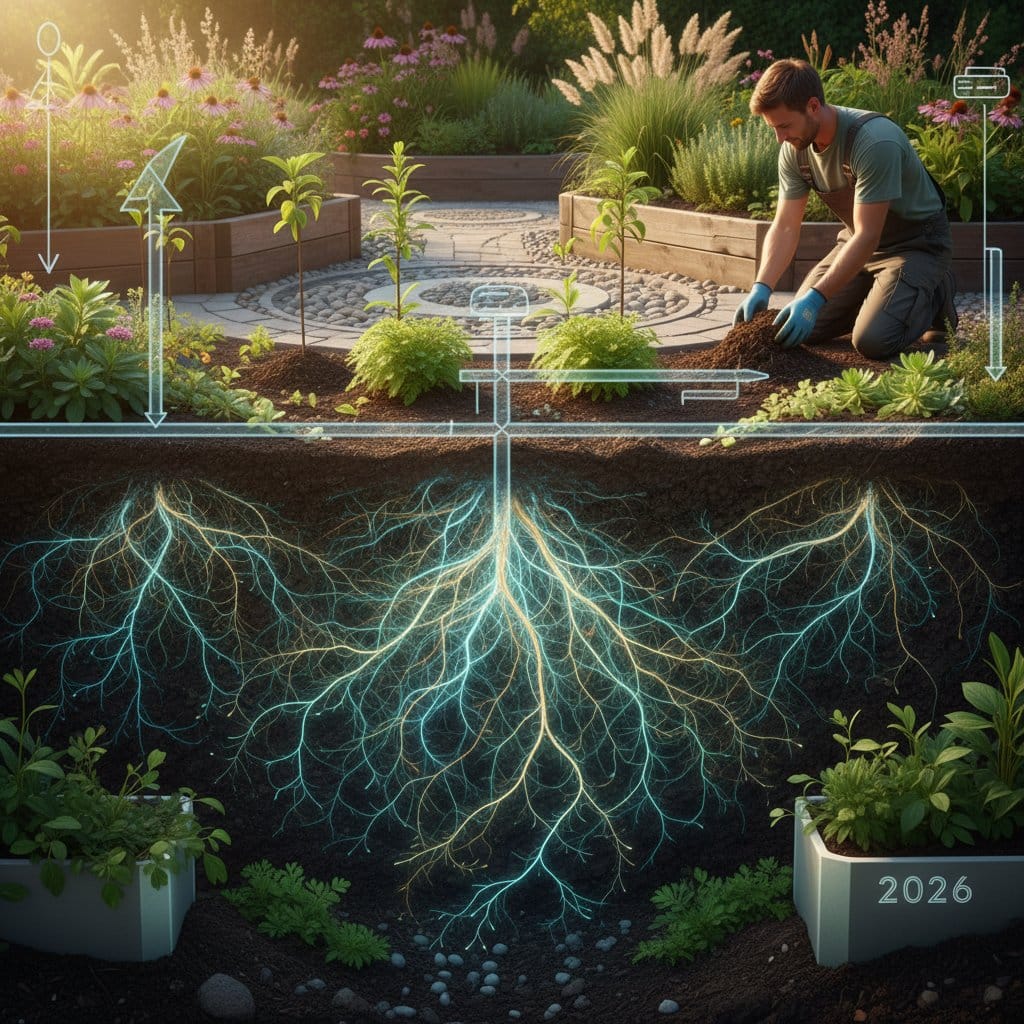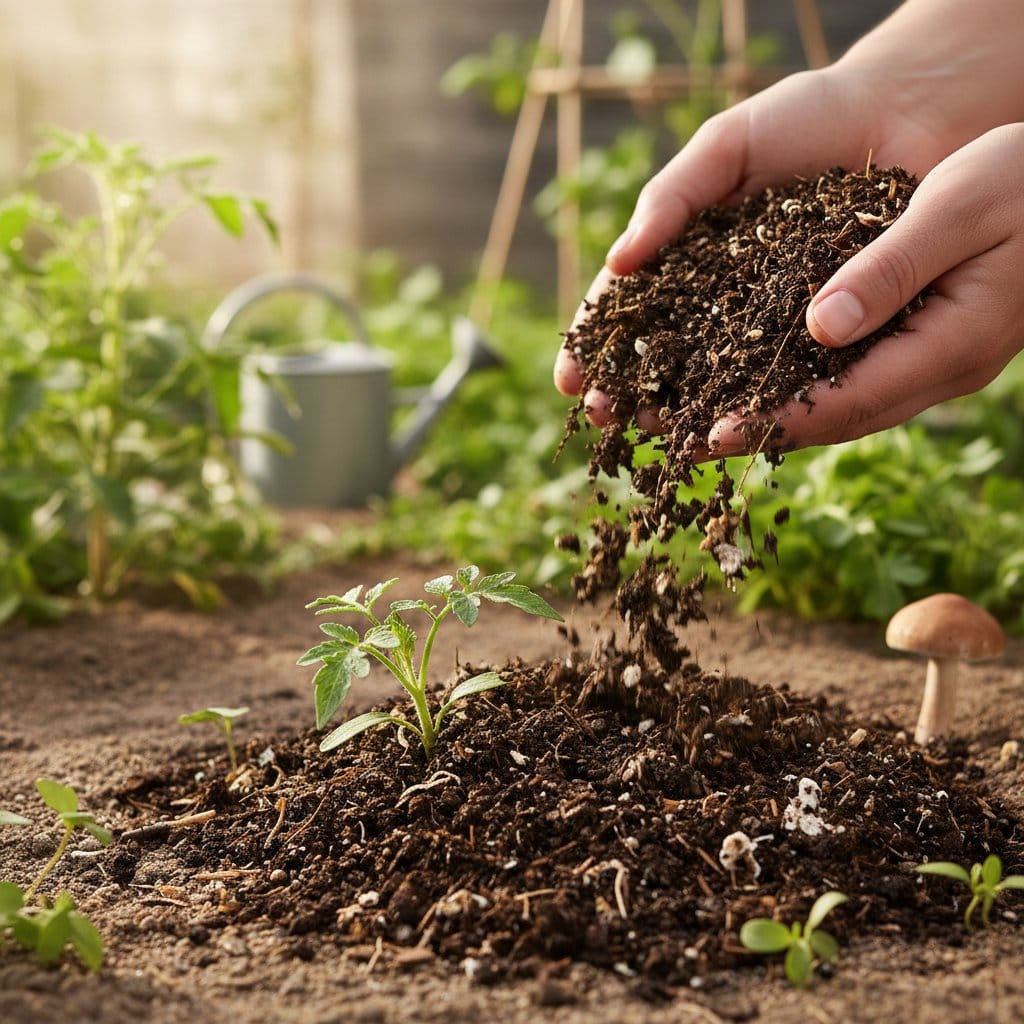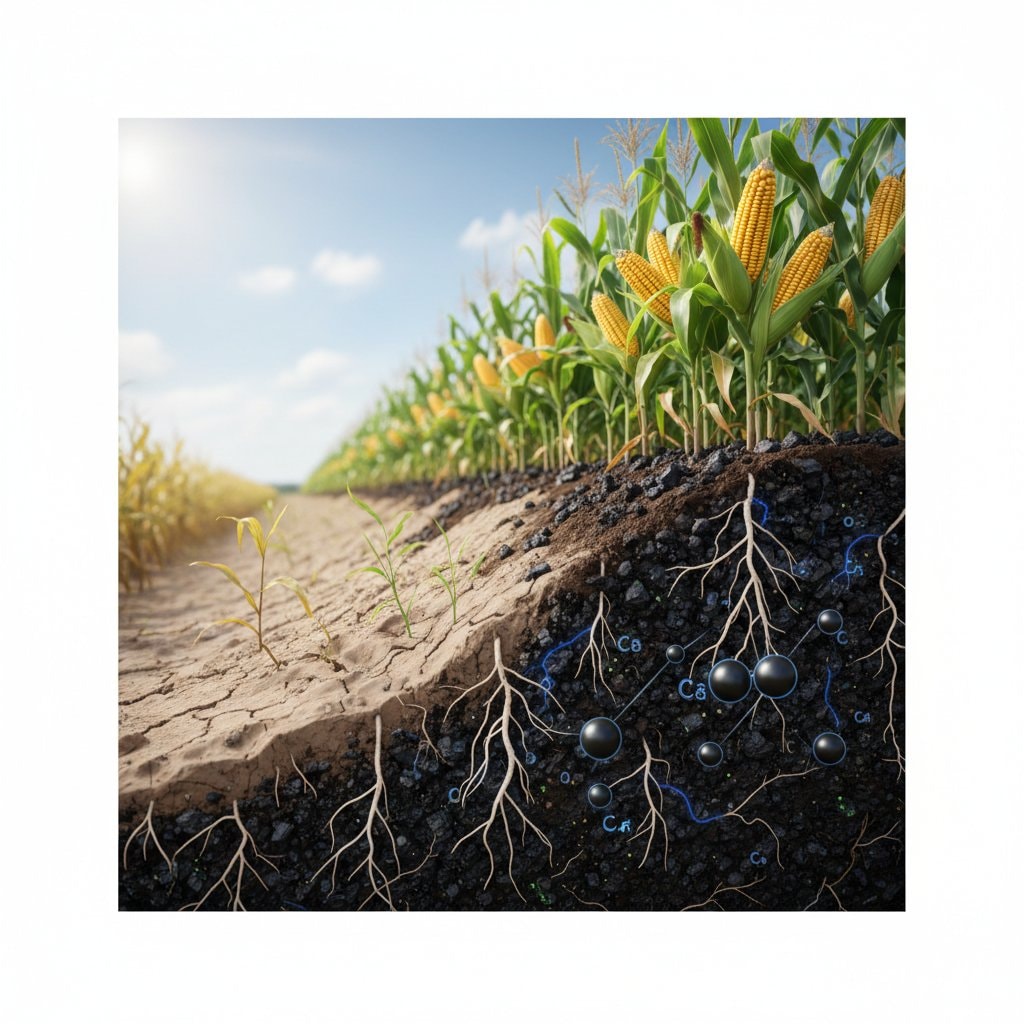
** Combine biochar with well-decomposed compost and allow the mixture to rest for four to six weeks. Microbes colonize the porous surfaces, while nutrients bind to the carbon framework.
2. Soak in nutrient solution: Mix biochar with a liquid fertilizer, worm castings tea, or compost extract at a ratio of 1:5. Stir the blend daily for one week to promote uniform absorption and microbial inoculation.
3. Blend with aged manure: Integrate biochar into maturing manure piles at 5-10% by volume. The pile's heat and biological activity accelerate charging, while also mitigating ammonia odors during decomposition.
After charging, incorporate the biochar into the top 6-12 inches of soil during planting or till it into raised beds and garden rows. Rates vary by soil type, but a general guideline suggests 5-20% by volume for initial applications. As biochar integrates, it gradually enhances soil quality over multiple seasons.
Tailoring Biochar to Your Soil Type
Soil texture influences biochar's effectiveness, so test your soil to identify its composition. Clay, sand, and loam each benefit uniquely from this amendment. Select application strategies accordingly to achieve balanced aeration, hydration, and nutrition.
- Clay soils: Biochar alleviates compaction by creating air channels that facilitate root expansion and water percolation. Apply at higher rates, around 15-20% by volume, to counteract heavy texture.
- Sandy soils: Biochar boosts water retention and nutrient adsorption, reducing leaching during irrigation or rainfall. Use 10-15% incorporation to build a more cohesive matrix.
- Loamy soils: Biochar sustains existing balance through enduring stability and microbial habitats. A modest 5-10% addition preserves long-term fertility without overwhelming the natural structure.
In all scenarios, biochar fosters harmony among air, water, and nutrients. Regular soil tests after one season guide future adjustments for precise optimization.
Environmental Advantages and Carbon Sequestration
Biochar excels in environmental stewardship, particularly through carbon sequestration. Traditional decomposition or open burning releases organic carbon as atmospheric CO2. Pyrolysis converts this carbon into a recalcitrant form that persists in soil for hundreds of years.
This sequestration reduces greenhouse gas emissions while enriching soil. Farmers and gardeners thus support climate mitigation alongside agricultural productivity. One ton of biochar can sequester up to 2.5 tons of CO2 equivalent, depending on feedstock and production methods.
Beyond carbon storage, biochar minimizes fertilizer runoff and enhances biodiversity. Microbes thrive in its refuge, cycling nutrients efficiently and suppressing pathogens. These effects compound over time, yielding resilient ecosystems with lower input demands.
Implementing Biochar on a Small Scale
Initiate biochar use modestly to evaluate results without risk. Select a single raised bed, lawn patch, or vegetable row for experimentation. Monitor soil moisture post-watering, plant establishment rates, and drainage patterns during dry spells.
Many users observe improved seed germination and root penetration within the first growing season. Fuller benefits, such as sustained fertility, emerge in subsequent years. Integrate biochar within a comprehensive regimen that includes organic mulches, consistent irrigation, and reduced tillage.
Patience proves essential, as biochar activates progressively. Track changes with simple metrics, like soil probe tests or plant height measurements, to quantify improvements.
Sustaining Vital Soil Ecosystems
Biochar-enriched soil develops resilience against environmental stresses. Workability increases, drought tolerance strengthens, and recovery from pests or weather extremes accelerates. Fertilizer efficiency rises, often extending application intervals by 20-50%.
The soil ecosystem gains autonomy, requiring less intervention to maintain productivity. Biochar's enduring presence eliminates frequent reapplication, distinguishing it from transient amendments.
Practical Steps for Biochar Integration
Incorporate biochar into your soil strategy for enduring health and yields. Source quality material from sustainable producers, charge it using the methods described, and apply at tested rates. Begin trials in limited areas while recording observations on hydration, growth, and texture.
This approach yields soil that pulses with vitality, sustaining vigorous plants with reduced resources. Biochar bridges ancient practices with contemporary needs, fostering gardens that thrive indefinitely.