Stunning Outdoor Lighting Without Light Pollution
Stepping into a garden illuminated softly after dark offers profound tranquility. The subtle glow along a pathway, the gentle shimmer on a stone wall, or the soft outline of a tree can turn an ordinary space into an enchanting one. However, excessive or poorly directed lighting often overwhelms the night sky and scatters light unnecessarily. Strategic design enables homeowners to craft a secure, inviting yard that maintains visibility of the stars overhead.
Understanding Light Pollution
Light pollution occurs when artificial illumination directs upward or outward, rather than focusing on intended surfaces. This phenomenon brightens the sky, hides stars, and disrupts local wildlife patterns. Homeowners frequently overlook the impact of their own unshielded fixtures, which can project light across neighboring properties and generate glare that hinders rather than aids visibility.
Dark-sky-compliant lighting directs illumination precisely where required and minimizes excess. The approach emphasizes purposeful use of light, not complete darkness. Experiencing a thoughtfully lit nightscape reveals its serene, organic quality, making traditional floodlighting seem outdated and intrusive.
The Principles of Dark-Sky Lighting
Effective outdoor lighting adheres to core principles that yield significant improvements. Consider these guidelines before selecting new fixtures:
- Direct light downward. Opt for fixtures that concentrate beams on pathways, plants, or structures, preventing upward spill into the sky.
- Apply only necessary brightness. Assess the space to determine minimal light levels; for instance, 5-10 lumens per square foot often suffices for pathways, fostering a welcoming ambiance.
- Manage activation times. Install timers or motion sensors to activate lights only during use, preserving darkness and reducing energy consumption by up to 50 percent.
- Choose warm color temperatures. Select bulbs at 2700K to 3000K for a soft, amber glow that harmonizes with natural surroundings and eases eye strain.
Viewing the garden within the broader nocturnal ecosystem simplifies adherence to these principles. Lighting decisions influence the communal night sky, benefiting all who share it.
Choosing the Right Fixtures
Navigating lighting options in stores or catalogs can prove daunting amid numerous choices. Prioritize fully shielded fixtures, where the light source remains below the horizontal plane to contain illumination. Examples include downlights for patios, bollards for borders, and recessed lights for steps, all promoting dark-sky compliance.
Specific fixture types align with distinct functions:
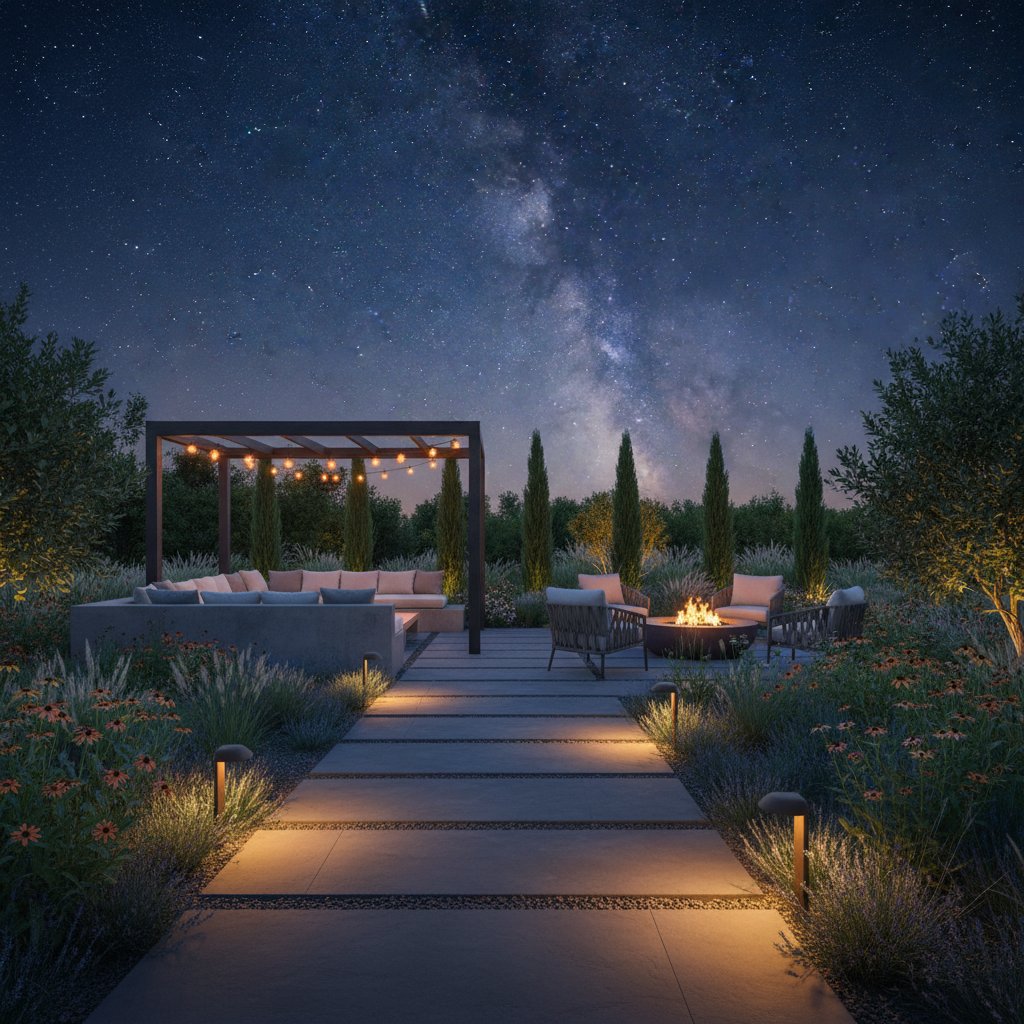
- Path lights ensure safe navigation along walkways. Select low-profile, shielded models, such as 12-inch bollards with frosted lenses, that emit light solely downward.
- Wall sconces highlight entryways or seating areas. Favor designs with solid tops and sides, like black metal housings with 3000K LEDs, to eliminate upward glare.
- Tree or accent lights spotlight focal points judiciously. Position uplights at a 45-degree angle toward trunks or sculptures, using narrow-beam LEDs to avoid sky washout.
- Under-cap lights illuminate retaining walls subtly. Integrate slim LED strips beneath caps for a diffused glow that enhances texture without excess brightness.
Steer clear of exposed bulbs or omnidirectional fixtures, which produce harsh spots and inefficiency. Superior lighting integrates seamlessly, accentuating landscape elements while remaining unobtrusive.
Creating Atmosphere with Restraint
Homeowners often equate additional lights with superior outcomes. In reality, moderation infuses outdoor spaces with elegance. Darkness contributes to the overall aesthetic, where select illuminations craft depth and guide the gaze more effectively than uniform brightness.
Evaluate your yard at night prior to installation. Identify natural guidance needs, such as along steps or through dense plantings, and note moonlight-highlighted features like flowering shrubs or arbors. Develop a layout that emphasizes these elements, establishing a balanced interplay of light and shadow for intuitive movement.
Warm lighting at candle-like temperatures amplifies serenity. Cooler tones, above 4000K, appear clinical against organic materials such as timber or rock, diminishing visual richness. Excessive intensity or chill flattens details, stripping away the layered appeal of the environment.
Working with Nature
Intentional lighting honors wildlife cycles. Birds, insects, and mammals depend on darkness for foraging and migration. Simple adjustments, like scheduling decorative lights to deactivate by midnight, mitigate interference while ensuring human safety.
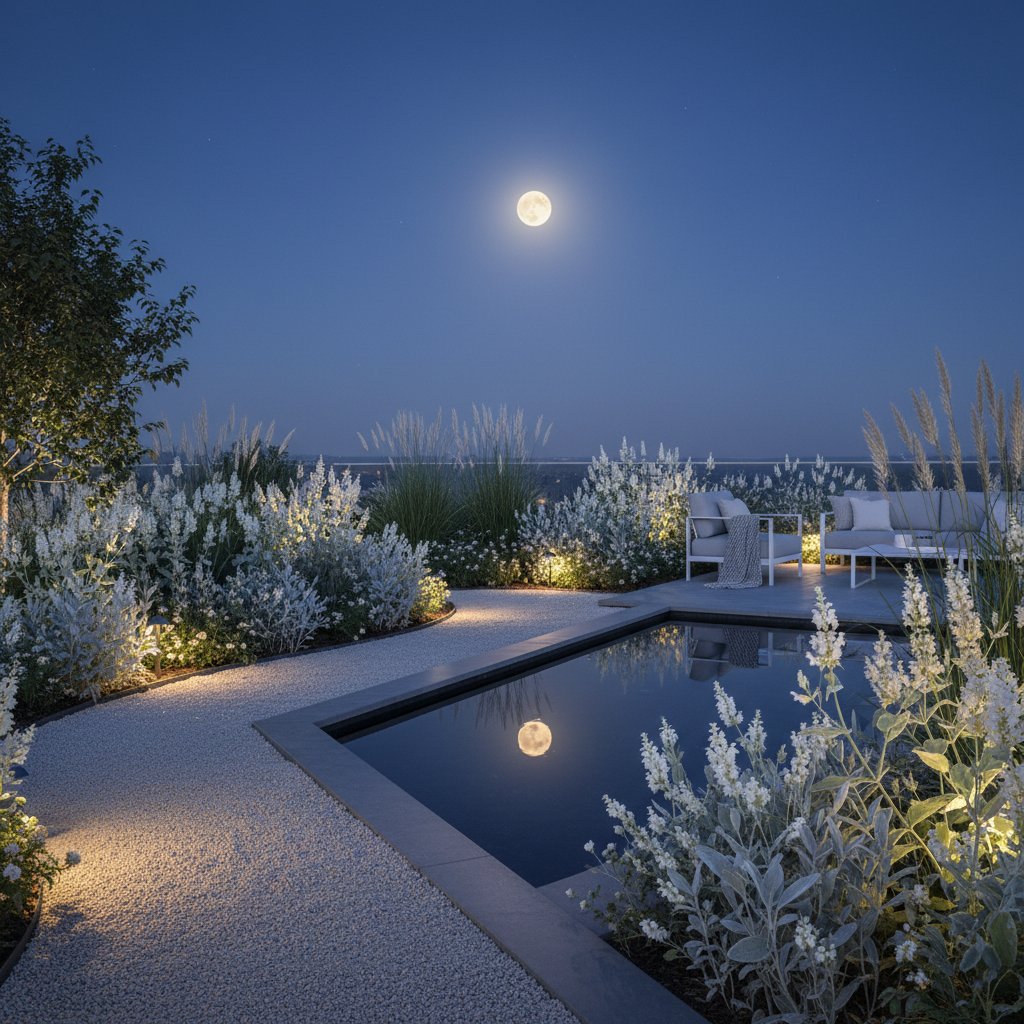
For water features such as ponds, refrain from direct surface illumination, which disorients aquatic life and amplifies glare. Employ perimeter downlights or glow from adjacent foliage instead, using 5-watt LEDs for a tranquil effect. This method sustains ecological harmony without sacrificing visual appeal.
Incorporate vegetation to blend lighting naturally. Plant low-growing perennials around path fixtures to diffuse edges, and position evergreens to conceal light sources, yielding an organic luminescence.
Living with Your Design
After installation, observe the lighting across multiple evenings. Approach from various vantage points, noting sensations during home entry or garden traversal. Tweak angles or intensities to eliminate hotspots, as minor calibrations yield substantial enhancements.
Recognize that landscapes evolve. Growth, seasonal shifts, and changing preferences necessitate periodic reviews. A once-ideal setup may benefit from subtle updates to sustain its effectiveness.
Implementing Your Dark-Sky Design
Achieving a captivating yard free from light pollution demands mindful planning over costly purchases. Treat lighting as an integral landscape component to ensure deliberate selections. Begin by retrofitting essential zones with compliant fixtures.
These incremental steps culminate in a yard that radiates gently, fostering social gatherings, wildlife preservation, and the enduring wonder of a starlit canopy.