Why Rewilding Transforms Yards Effortlessly
Every gardener reaches a moment when tending the yard feels more like a battle than a pleasure. The grass requires weekly mowing, flower beds wilt without constant attention, and each season starts with an extensive list of chores rather than moments of quiet enjoyment. At this point, many people begin to consider what it might feel like to allow the land to follow its natural rhythms. This consideration marks the starting point of rewilding.
Rewilding involves more than permitting the property to become overgrown. It means restoring a natural balance that aligns with the land's inherent tendencies rather than imposing an idealized version of perfection seen in magazines. Homeowners often find that relaxing control leads to greater resilience and visual appeal in their yards. The process feels effortless because it supports what the environment already seeks to achieve.
The Effortless Appeal
One of the primary attractions of rewilding lies in the reduced effort it requires. Traditional landscaping demands ongoing interventions, such as mowing grass, applying fertilizers, and providing irrigation. Shrubs need regular pruning, and flower beds require constant weeding and edging. Shifting away from this approach significantly decreases the overall workload.
Rewilding promotes observation prior to action. Homeowners learn to identify where rainwater pools, which plants emerge without assistance, and how sunlight patterns change across seasons. Understanding these dynamics allows maintenance to focus on minor adjustments rather than major overhauls. For instance, rather than battling weeds, individuals plant species that naturally dominate the space. Instead of fertilizing the lawn, they permit clover and native grasses to enrich the soil organically.
This shift does not eliminate all effort. A rewilded yard demands initial attention as plants establish themselves, particularly during the first few months. However, the nature of the work evolves into something gentler and more aligned with seasonal cycles, emphasizing partnership over dominance. Gradually, the yard achieves self-sufficiency.
Ecological Benefits Close to Home
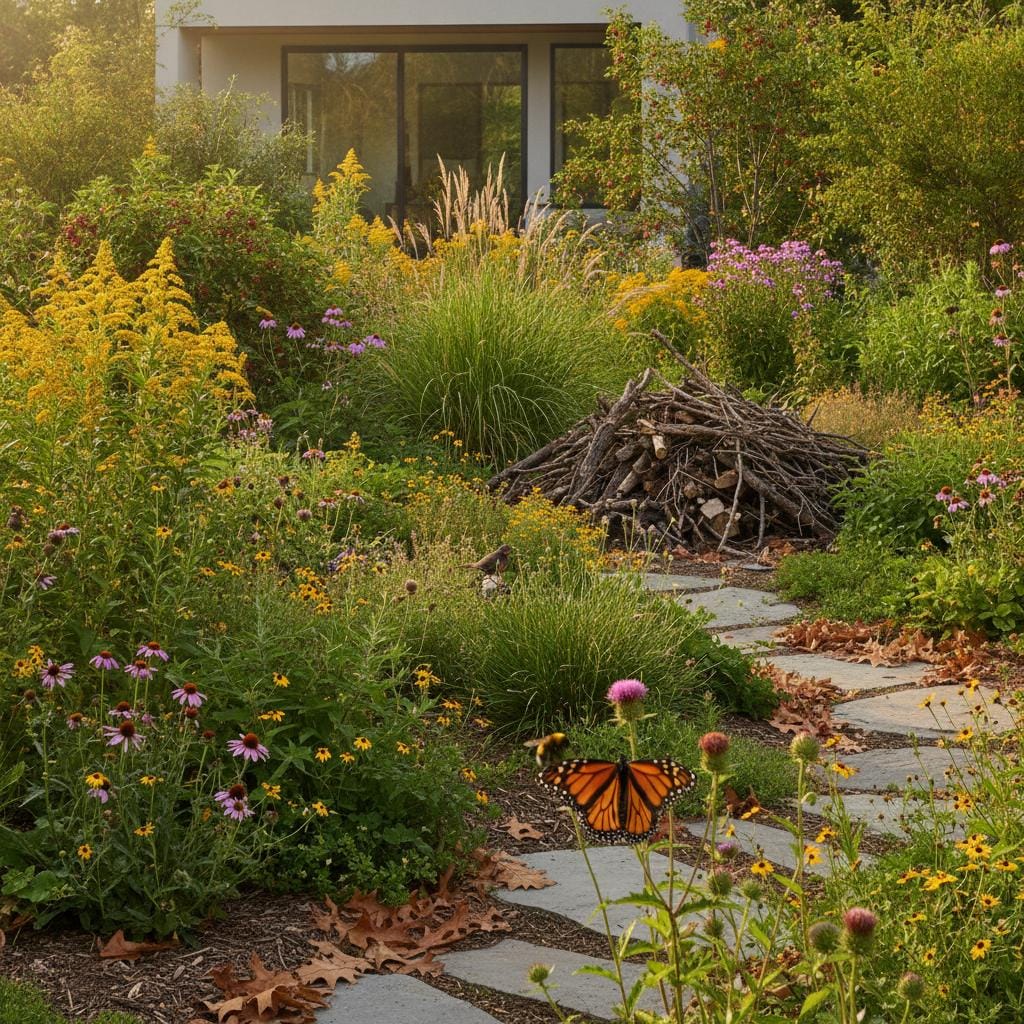
Rewilding delivers profound ecological advantages that extend beyond mere appearance. Native plants provide essential support for pollinators that have evolved alongside them, including butterflies, bees, and birds that rely on these species for nectar, seeds, and shelter. Where uniform turf once dominated, diverse habitats now emerge. Soil quality enhances as deep roots prevent compaction and accumulate organic matter over time. Increased infiltration of rainwater reduces surface runoff and minimizes erosion risks.
Even modest areas contribute meaningfully. A single yard incorporating native species can link with adjacent green spaces, creating wildlife corridors that enable safe movement through urban or suburban neighborhoods. As these small habitats interconnect, they form a broader network that bolsters regional ecological resilience.
The environment transforms in noticeable ways: air quality improves, soil texture softens underfoot, and the yard pulses with vitality. Homeowners frequently report rediscovering long-absent sounds, such as the steady buzz of bees, the songs of wrens, or the gentle sway of grasses in the breeze. These elements serve as tangible evidence that the yard now integrates into a larger natural system.
Common Myths About Rewilding
Myth 1: A Rewilded Yard Looks Messy
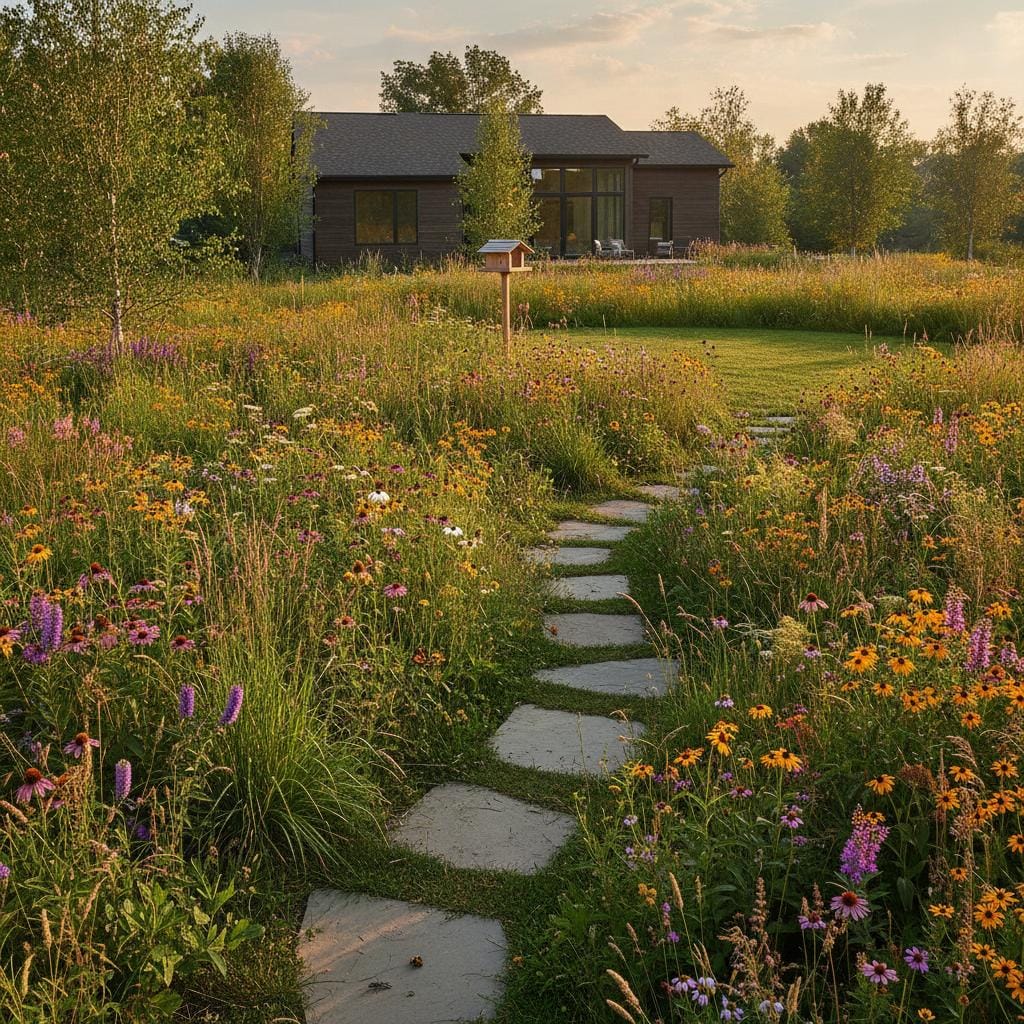
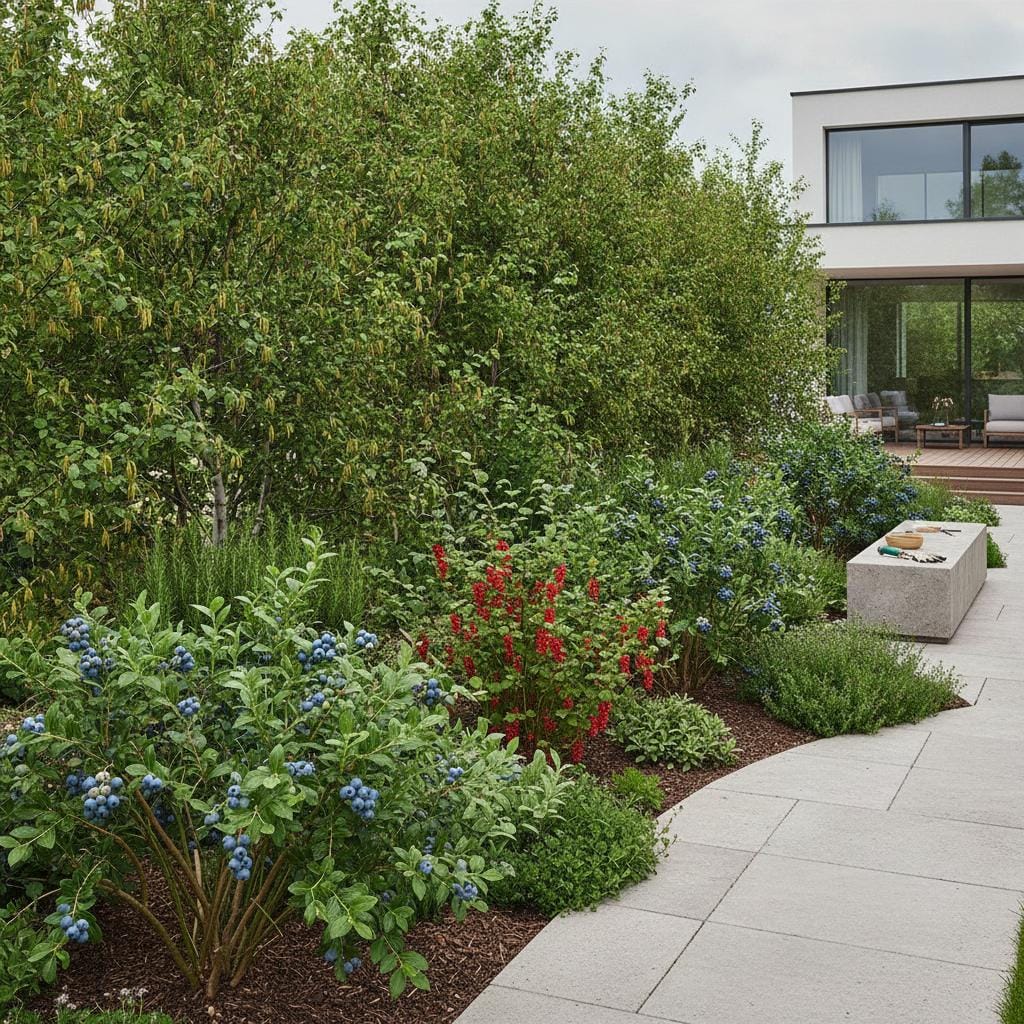
A carefully planned rewilded space appears lush and structured rather than unkempt. The solution involves establishing clear boundaries, such as a neatly mown path through taller plants, a low stone edging along borders, or a compact patio area that frames the wilder sections. These features create visual order while allowing natural growth to flourish.
Myth 2: Rewilding Invites Pests
Balanced ecosystems incorporate inherent mechanisms to manage pests. Predatory birds, amphibians like frogs, and beneficial insects such as ladybugs naturally regulate populations of unwanted species. Promoting plant diversity fosters this stability far more effectively than relying on chemical treatments.
Myth 3: It Lowers Property Value
Contemporary buyers increasingly value landscapes that demonstrate environmental stewardship and reduced maintenance needs. A thoughtfully executed rewilded yard enhances appeal by delivering evolving seasonal beauty and lower ongoing costs, potentially increasing market value.
Myth 4: It Takes Decades to See Results
When sited appropriately, native plants root and spread rapidly. Visible changes often appear within one to two growing seasons, with full maturity achieved in three to five years depending on climate and soil conditions.
The Low-Maintenance Advantage
Rewilding simplifies yard care in ways that save time and resources. Conventional lawns demand substantial water and synthetic fertilizers, along with frequent mowing that enforces rigid schedules. Native grasses and meadow perennials, by contrast, thrive on ambient rainfall and require trimming only once or twice annually once established.
Weeding diminishes as dense plantings crowd out competitors, leaving minimal opportunities for weeds to take hold. Mulching needs decrease because decomposing leaves and stems fulfill this role naturally. Irrigation can often be scaled back or eliminated entirely, as deep-rooted species draw from groundwater reserves.
The outcome is a yard that brims with abundance while offering tranquility. Success shifts from uniform grass height to the vibrancy and diversity of life within the space.
Designing for Harmony
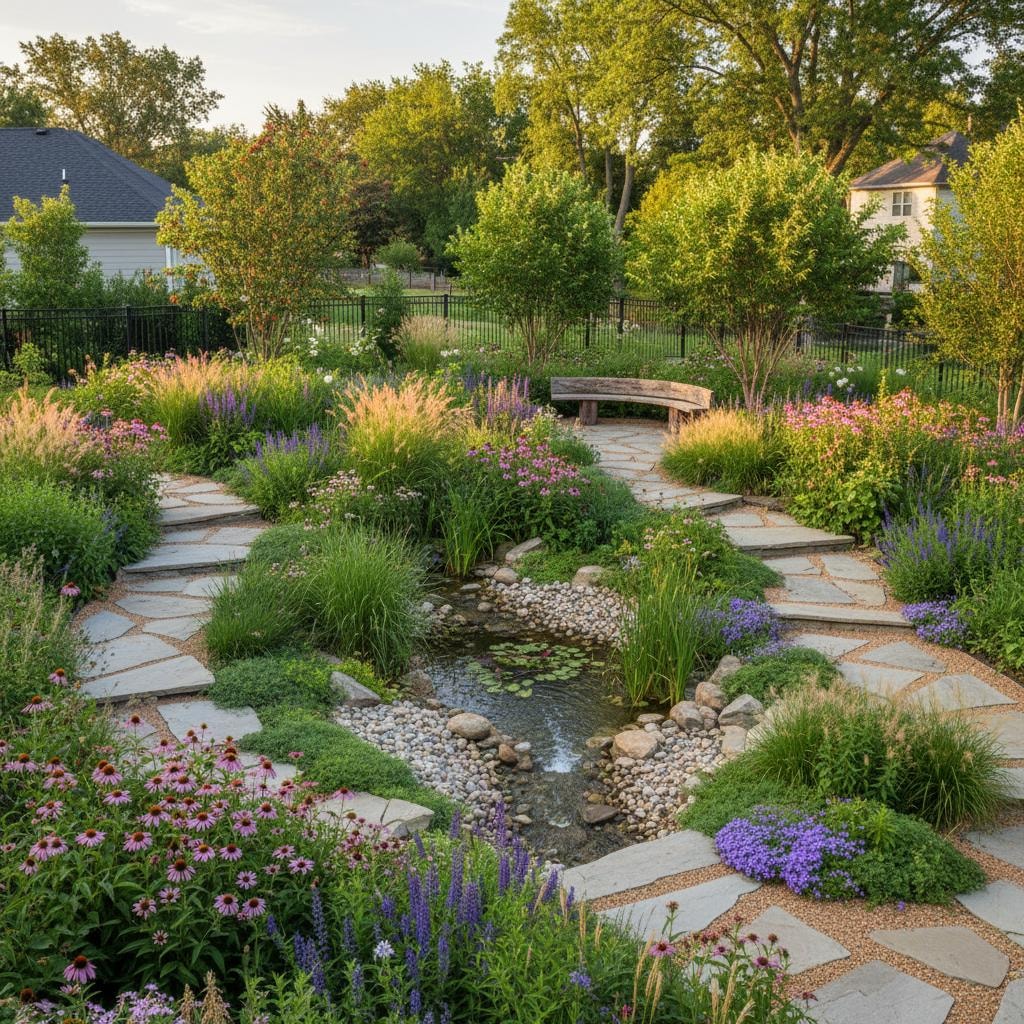
Rewilding preserves opportunities for creative expression, employing nature-inspired principles. Repeating elements like color palettes, foliage textures, or plant forms ensures unity without rigid symmetry. For example, grouping sweeps of blue fescue grass or clusters of purple coneflowers unifies the design across varying heights and blooms.
Account for the yard's inherent flow when planning. Position tall ornamental grasses at the rear to screen fences or structures softly. Place lower-growing perennials around seating zones to maintain clear views. Incorporate winding paths made of gravel or wood chips to direct foot traffic and highlight contrasts with surrounding vegetation.
Subtle choices amplify appeal year-round. Allowing seed heads to persist through winter adds architectural interest and sustains bird populations with nourishment. Such practices underscore that a garden's allure endures beyond peak bloom periods.
Living with Your Design
As a rewilded yard matures, interactions with it deepen and evolve. Time once spent on laborious tasks gives way to mindful observation. Daily discoveries, like an unexpected milkweed sprout or the arrival of a new butterfly variety, sustain interest and connection.
Releasing the pursuit of flawlessness brings notable relief. Equipment like lawn mowers sees infrequent use, and supplies such as fertilizers remain unused. This realization highlights the energy previously wasted in resisting inevitable natural processes.
Many homeowners experience broader shifts in perspective. They attune to annual cycles, embrace gradual changes, and value understated elements. The yard functions as a subtle instructor, illustrating that true growth unfolds organically rather than in predictable patterns.
Starting Your Rewilding Project
To embark on rewilding without overwhelm, initiate with a targeted trial. Select a 10-by-10-foot lawn area and convert it using a mix of local natives, such as black-eyed Susans, little bluestem grass, and bee balm. Monitor its progress across seasons, noting responses to local weather without supplemental watering or feeding.
Source plants from regional nurseries to ensure compatibility with your soil and climate. Prepare the site by removing turf with a sod cutter or sheet mulching method, then plant in fall or spring for optimal rooting. Track changes in a simple journal to refine future expansions, building confidence through observable successes.