Why Gravel Transforms Budget Yards into Mediterranean Oases
Consider how a single material can alter the essence of an outdoor space. While some gardens emphasize lush lawns or vibrant flower beds, others derive their appeal from texture and restraint. Gravel embodies this approach with its understated elegance. Applied with purpose, it converts a basic yard into a sun-drenched Mediterranean courtyard, often without demanding a substantial investment, but rather requiring careful planning and knowledge of its landscape dynamics.
The Character of a Mediterranean Garden
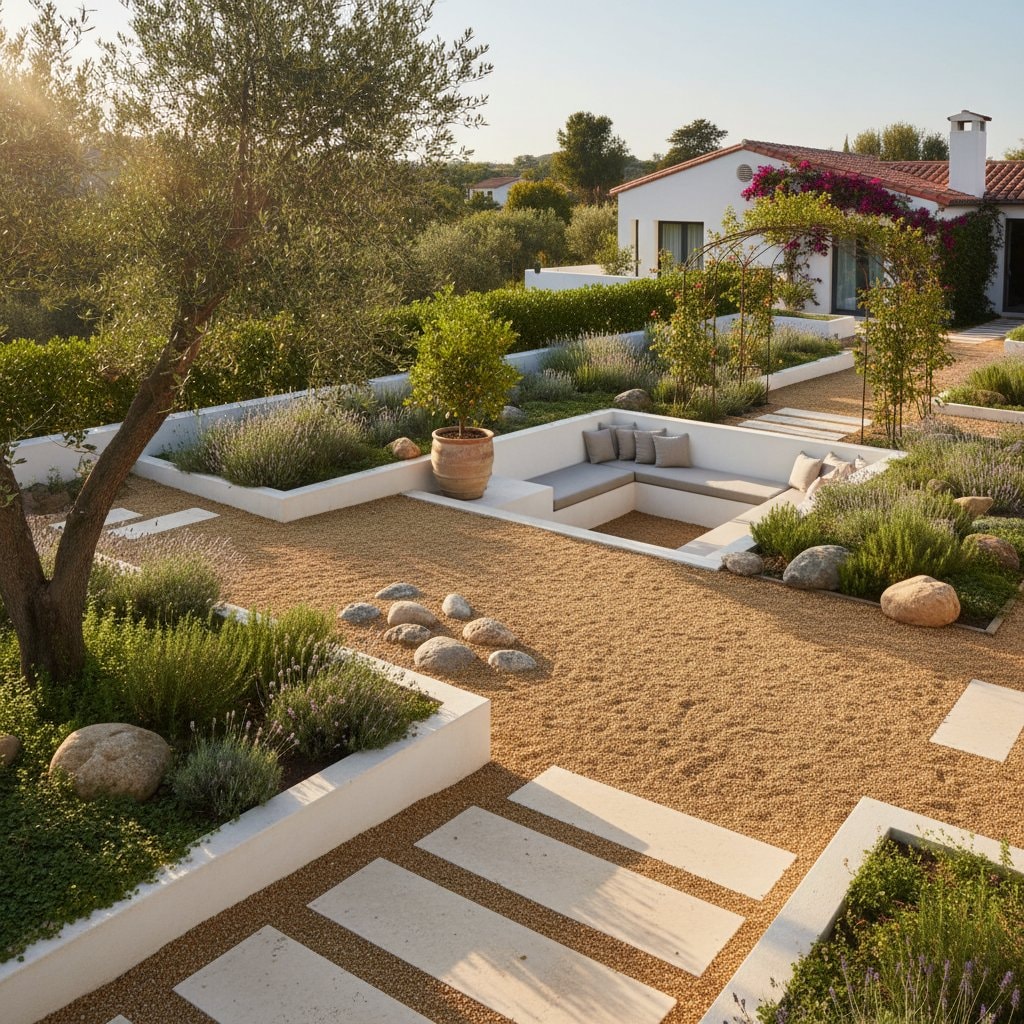
Mediterranean landscapes captivate gardeners through their blend of simplicity and depth. They appear both casual and sophisticated. Elements such as stone, gravel, terracotta, herbs, and foliage with silvery tones share a luminous color scheme. The aesthetic prioritizes harmony over excess, with each component selected for its aging process, light interaction, and grounding connection to the soil.
This style's appeal stems from its functionality. Originating in arid regions where water conservation is essential, these designs incorporate drought-resistant vegetation, permeable surfaces, and deliberate arrangements. Gravel integrates seamlessly, maintaining soil temperature, mitigating erosion, and providing a consistent hue that enhances overall cohesion.
Why Gravel Suits Modest Budgets
Homeowners often select gravel for its initial low cost, yet retain it for its adaptability. In contrast to options like poured concrete, flagstone, or brick, gravel installation proves far more economical. Moreover, it facilitates modifications; reshaping a path or enlarging a seating zone involves mere raking and repositioning, avoiding the disruption of rigid structures.
Several factors make it ideal for constrained finances paired with design aspirations:
- Minimal installation expenses: Gravel demands little excavation and no costly adhesives; a stable sub-base and edging typically suffice.
- Flexible layout options: Begin with a modest area and scale up gradually, free from seams or clashing surfaces.
- Effective water management: Permeability allows infiltration rather than accumulation, eliminating the necessity for elaborate drainage setups.
- Reduced upkeep demands: Periodic raking ensures a level surface, while weed control occurs via landscape fabric or targeted applications.
Gravel promotes innovation within financial limits, fostering ingenuity over limitation.
Selecting Gravel for Texture and Tone
Initiate a gravel-focused Mediterranean design by selecting appropriate color and particle size. Opt for pale limestone or buff pea gravel to evoke sunny expanses; choose darker river gravel for a subdued, contemporary vibe. The selection hinges on the desired atmosphere: lighter shades recall sunlit coastal hamlets, whereas richer tones intensify nearby foliage.
Particle texture influences application. Employ fine, compacted gravel for stable pathways and patios. Reserve larger, rounded pebbles for ornamental zones or simulated streambeds. Combine varying sizes and hues sparingly to introduce nuance, yet maintain consistency. Exemplary Mediterranean-inspired designs emphasize uniformity through repeated gravel application, cultivating tranquility and integration.
To choose effectively, assess your yard's sunlight exposure and soil type. For instance, in full sun, select heat-reflective light gravel to temper ground warmth. Source materials from local suppliers to match regional stone varieties, ensuring authenticity and cost savings.
Integrating Gravel with Plants and Features
Gravel serves as a foundation rather than a standalone feature. It enhances plant vitality by preserving root dryness and directing warmth upward, replicating native habitats. Suitable companions include lavender, rosemary, sage, and thyme, whose aromatic foliage and silvery sheen flourish in such conditions. Introduce vertical interest with dwarf olive trees, agave, or feathery ornamental grasses.
Counteract uniformity by incorporating robust structural components. Practical suggestions include:
- Stone borders or low walls to delineate areas and contain gravel spread.
- Terracotta containers planted with herbs or succulents to interrupt expansive gravel fields.
- Earth-toned furnishings in wood or wrought iron to preserve a natural, anchored aesthetic.
- Modest water elements such as basin fountains to introduce auditory and visual dynamism with minimal effort.
Position these additions to simulate organic evolution, as gravel naturally conforms to its environment over time.
For plant integration, prepare beds by layering gravel over fabric to suppress weeds, then position drought-tolerant species in clusters. Space lavender plants 18 to 24 inches apart for air circulation, and mulch with gravel to retain moisture during establishment.
Maintaining Cohesion in the Design
A frequent error in gravel applications involves over-diversifying materials or shades. Mediterranean aesthetics flourish through moderation. Establish a primary gravel color to link pathways, patios, and beds. Apply similar restraint to vegetation, featuring recurrent lavender or sage rather than disparate varieties. This recurrence generates visual cadence, guiding the gaze fluidly across the landscape.
Illuminate strategically to accentuate qualities. Position subtle path lights to cast soft shadows that emphasize gravel's grain. During evenings, the material emits a faint luminescence, reminiscent of illuminated stone enclosures. Basic solar fixtures, when placed with care, replicate this ambiance effectively.
To ensure longevity, refresh gravel annually by removing debris and topping off thin spots. This practice preserves the unified appearance while adapting to seasonal shifts.
Evolving with Your Gravel Landscape
As gravel settles, the yard's personality emerges gradually. Usage patterns compact high-traffic zones, vegetation expands to encroach on edges, and exposure patinas the stones. These developments impart genuineness. Mediterranean gardens resist rigidity; they adapt through interaction and mature with poise.
Commence modestly, such as with a gravel walkway flanked by herb borders, then incrementally incorporate elements. Each extension should mirror established colors and forms to sustain equilibrium. Gradually, gravel's unpretentious nature may enhance appreciation for the outdoors, promoting relaxation, socialization, and observation of diurnal light variations.
Steps to Install Your Mediterranean Gravel Garden
Begin by outlining your layout with string or hose to visualize paths and beds. Excavate 4 to 6 inches for the base, compact soil, and add a 2-inch layer of crushed stone for stability. Install edging, such as metal or plastic strips, to secure boundaries.
Lay landscape fabric over the base to deter weeds, then spread 2 to 3 inches of gravel evenly. Use a rake to level and a plate compactor for high-use areas. Plant immediately in designated spots, watering deeply to establish roots. Monitor for the first season, adjusting as plants settle into the gravel matrix.
This methodical approach yields a durable, evocative space that aligns with Mediterranean principles of enduring simplicity.