Harvest Herbs from Pavers: Edible Hardscaping Magic
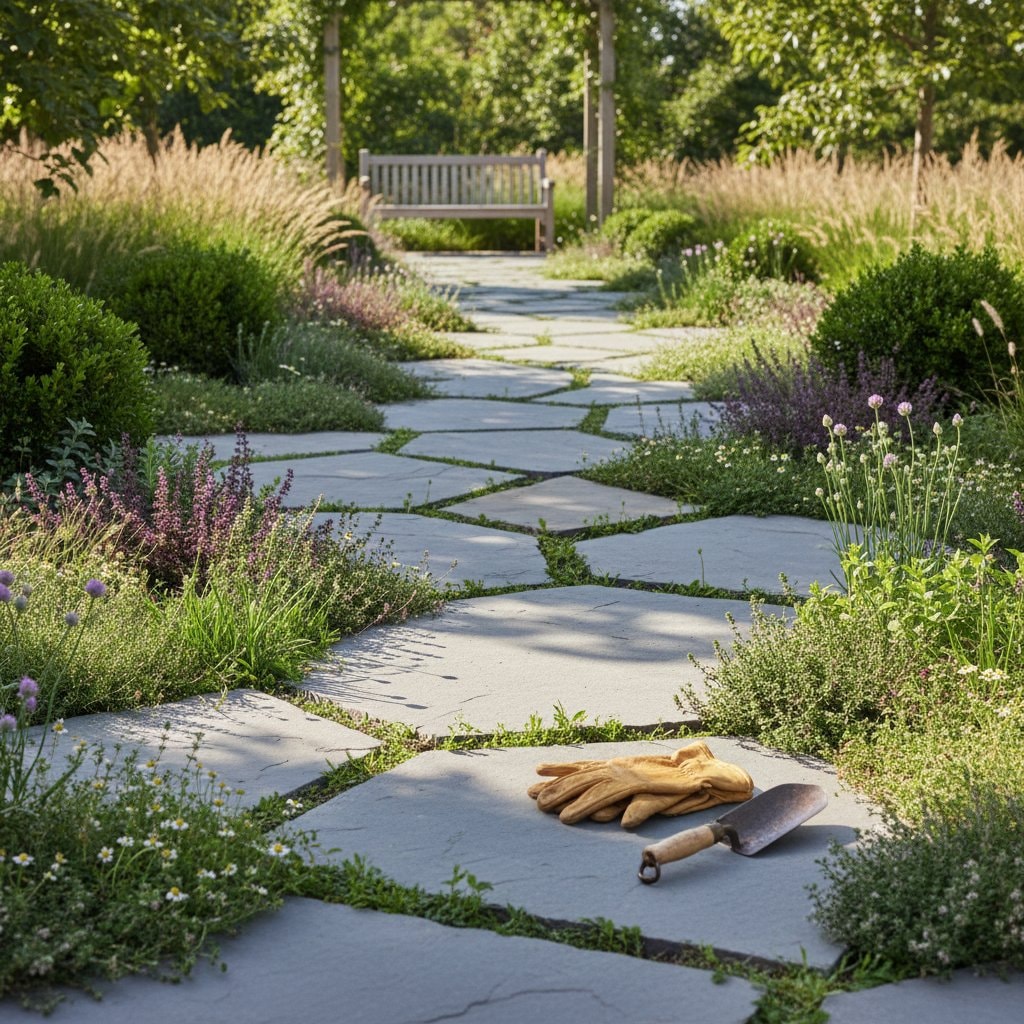
Gardens convey narratives through their elements. Flowers and stone create subtle patterns, while herbs release scents underfoot. The gaps between pavers, often overlooked and filled with gravel or moss, hold potential for vitality. Planting herbs in these spaces converts walkways, patios, or courtyards into sensory and culinary destinations. This method integrates hardscaping's utility with kitchen garden appeal, yielding spaces that evoke timeless charm and personal touch.
Paths gain depth when they offer reciprocity. Thyme's aroma from a step or mint's brush against skin infuses presence into landscapes that stone alone lacks. Edible hardscaping with herbs unites aesthetics and utility, allowing even modest areas to deliver flavor and fragrance.
The Concept of Edible Hardscaping
Hardscaping forms a landscape's framework, with pavers, walls, and steps imposing structure and directing flow. Edible hardscaping incorporates food-producing plants into these features. Rather than isolating decorative from productive elements, it harmonizes them.
Herbs excel here due to their adaptation to confined areas, tolerance for arid soils, and dual ornamental-culinary roles. Positioned between pavers, they temper stone's rigidity, introduce varied textures, and supply intermittent color and aroma. The outcome resembles a deliberate yet relaxed living surface.
Selecting Herbs for Paver Gaps
Herbs for paver interstices must accommodate narrow, parched settings. Prioritize low-profile, drought-resistant varieties that withstand occasional trampling. Select species akin to those in rocky or Mediterranean terrains, which favor challenging environments.
Recommended options include:
- Creeping thyme: Develops a thick mat, emits scent when compressed, and endures light foot traffic.
- Corsican mint: Features minute foliage and potent fragrance; it adapts to modest moisture with attention.
- Roman chamomile: Provides feathery texture and mild aroma; opt for this perennial over annual forms for coverage.
- Oregano: Propagates readily, yields robust scent, and manages dryness; select compact cultivars.
- Winter savory: Remains tidy and contained, ideal for path borders.
- Marjoram: Resembles oregano in growth but offers milder taste; it flourishes in sunny, drained sites.
Combine varieties for diverse textures and aromas. Initiate with one or two species, observing their seasonal performance before broadening selections.
Site Preparation
Design considerations precede planting. Joint widths between pavers should permit soil retention while preserving stability, typically one to two inches. Broader gaps support greater soil volume and roots but risk shifting without a solid foundation.
Compact gravel under pavers promotes drainage, as herbs abhor water retention. Introduce a sandy mix enriched with compost into joints for aeration and fertility. Steer clear of clay-heavy mediums that retain excess water.
For established surfaces, raise select pavers, insert soil into gaps, and reposition them with slight separation. This process demands care, yet it produces pathways blending intention and organic feel.
Planting and Root Establishment
Insert herbs into paver gaps with precision, given the limited area. Employ starter plugs or cuttings over full-sized specimens. Position so the root crown aligns flush with the paver level, then irrigate gradually to settle the medium around roots.
Maintain light moisture for initial weeks to foster rooting. As growth expands, taper watering to stimulate profound root systems. Established plants require minimal intervention, suiting time-constrained cultivators.
Apply a thin layer of fine gravel as mulch to curb weeds, conserve hydration, and uphold neatness. Gradually, herbs interlace, forming a supple, durable cover.
Sensory Elements: Texture, Color, and Aroma
Herbs in pavers distinguish themselves through multisensory contributions. Stone's coarseness juxtaposed with verdant growth captivates visually, amplified by tactile and olfactory nuances.
Creeping thyme contributes diminutive foliage and blooms for softness and hue. Mint imparts coolness, oregano and marjoram warmth. Blending types yields evolving impressions per stride.
Aromas transcend mere enhancement; they underscore the area's dynamism. While stone appears static, herbs affirm growth and vitality in structured settings.
Key Practical Factors
Charm demands foresight. Foot traffic poses the primary challenge; heavy use erodes resilient herbs. For high-traffic routes to entrances, minimize central joint spacing and reserve planting for peripheral zones with reduced pressure.
Sun exposure matters greatly. These herbs favor full light; shaded spots better accommodate mint or chamomile, though brighter locations generally yield stronger vitality.
Shallow soils deplete nutrients swiftly. Supplement with compost tea or diluted organic feed one to two times yearly to sustain vigor without promoting overgrowth.
Integrating Aesthetics and Utility
Edible hardscaping transcends function to infuse personality. Thyme-bordered trails evoke rusticity, while oregano in aligned pavers suggests modernity. Stone selection shapes ambiance: warm flagstone suits Mediterranean herbs, cool grays pair with mint and chamomile.
View it as interplay between form and vitality. Stone enforces discipline, plants introduce fluidity. This synergy thrives in compact gardens, maximizing multifunctional elements.
Seasonal Dynamics and Upkeep
Paver herbs evolve seasonally. Summer prompts rapid filling with color and scent; cooler periods slow expansion, with some thinning or dormancy. Accept this cycle as inherent.
Prune post-bloom to refresh and neaten. Excise spent flowers to avert unwanted seeding. Replant sporadically every few years where soil compacts or roots falter; upkeep remains light relative to rewards.
Early weeds emerge readily; extract manually, avoiding synthetics. Dense herb mats eventually outcompete most intruders.
Designing for Engagement
Garden traversal should stimulate beyond sight. Thyme's crunch or mint's graze elevates walks to rituals. Such integration proves utility and allure coexist seamlessly in confined spaces.
For households, these plantings spark exploration; youth discern herbs via senses. Visitors register the nuances, rendering spaces enduringly vivid.
Extending the Approach
Success with paver herbs inspires application elsewhere, such as between stepping stones to produce beds or along seating perimeters. Incorporate diminutive bloomers like alyssum for accent, though solo herbs often unify best.
Formal designs benefit from singular herb types for serenity; informal ones from varied patches for spontaneity. Employ repetition of select species to cohere the composition and avoid disorder.
Embracing the Evolving Path
Settled herbs animate spaces dynamically. Aromas vary with climate, colors intensify with maturity. Monthly transformations enhance allure.
This feature fosters attentiveness to light patterns or post-rain scents. Minor flaws, like sparse thyme, narrate adaptation.
Beyond ornament, it weaves into routines: snip sprigs en route to cooking or savor leaves toward the shed, forging subtle bonds.
Steps to Implementation
Initiate herb pavers modestly, targeting a walkway segment or patio edge. Match herbs to local conditions, allowing establishment before scaling. Emphasize equilibrium over density; strategic placements amplify impact.