Principles of Dark Sky Lighting for Gardens
A well-designed garden invites relaxation beneath a canopy of stars, free from intrusive artificial glow. Dark sky lighting achieves this balance by directing illumination precisely, preserving the natural darkness essential for celestial observation. This approach requires intentional selection of fixtures and placement to maintain both aesthetics and functionality in your outdoor environment.
Implementing these strategies not only enhances your stargazing experience but also contributes to broader environmental benefits, such as reduced energy consumption and support for local ecosystems. Gardeners who adopt dark sky practices often report a deeper connection to the night sky, transforming routine evenings into memorable escapes.
Core Elements of Dark Sky Compliant Lighting
Dark sky lighting prioritizes controlled illumination to counteract light pollution, which obscures stars and disrupts wildlife rhythms. Fixtures must shield light from escaping upward, ensuring it remains focused on paths, plants, and seating areas. This method aligns with guidelines from astronomical and environmental organizations, promoting sustainable outdoor design.
Key criteria define effective dark sky fixtures. First, shielding prevents any light from crossing the horizontal plane, directing rays solely downward. Second, color temperatures should stay below 3000 Kelvin to minimize blue light wavelengths that scatter in the atmosphere and wash out the sky. Third, output levels must remain modest, typically under 200 lumens per fixture, to illuminate without overwhelming the ambient darkness.
These elements collectively enhance star visibility by up to 50 percent in suburban settings, according to observational studies. They also reduce glare, improving safety for nighttime navigation while cutting electricity use by limiting unnecessary brightness.
Selecting Appropriate Outdoor Fixtures
Choose fixtures that integrate seamlessly into garden landscapes while adhering to dark sky standards. Fully shielded path lights, featuring hooded tops or recessed housings, guide footsteps along walkways without spilling light skyward. Wall-mounted sconces with downward-facing shades suit entryways and patios, providing ambient glow for gatherings.
Solar options prove particularly effective for edging borders or highlighting plant beds. These units charge during daylight and emit a gentle, tapering light through the night, mimicking natural lunar cycles. For added security, incorporate motion-activated sensors on bollards or stakes; they activate briefly upon detection, then revert to darkness, conserving both energy and the pristine night view.
Steer clear of unshielded floodlights or high-wattage spotlights, which exacerbate pollution. When security demands broader coverage, opt for adjustable models aimed at ground level with diffusers to soften output. Timers or smart controls allow scheduling, ensuring lights deactivate after midnight or during peak stargazing hours, further optimizing the setup.
Designing a Dedicated Stargazing Area
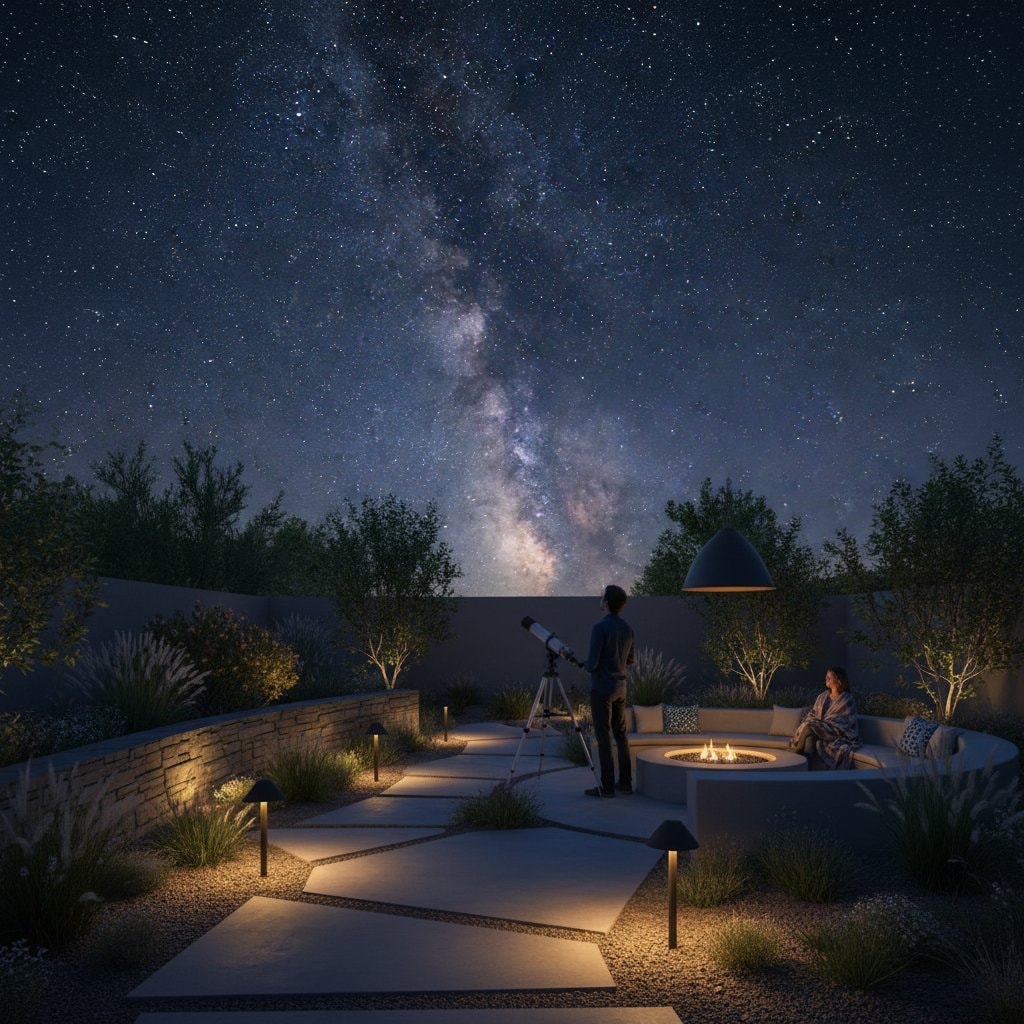
Select a yard location optimized for unobstructed sky views to maximize your garden's stargazing potential. Position the zone away from overhead branches, tall fences, or artificial light sources like porch lamps. Southern exposures often yield the clearest vistas in the Northern Hemisphere, ideal for tracing constellations.
Incorporate a stable viewing platform, such as a level gravel pad or composite decking surfaced with permeable pavers. Surround it with low-profile flora, including ground covers like creeping thyme or dwarf shrubs that frame rather than obscure the horizon. Natural aggregates, such as river rock or decomposed granite, provide footing that absorbs light and complements the earthy tones of night.
Enhance the space with subtle accents, like a central fire feature using LED flameless units or a reflective pond that captures starlight without generating additional illumination. Select seating in neutral fabrics—think deep grays or blacks—that minimize reflective surfaces, allowing eyes to adapt quickly to low light conditions.
Strategies to Mitigate Light Pollution
Assess your entire property to identify and rectify sources of stray light that compromise dark sky integrity. Inspect existing installations, such as garage doors or shed windows, and retrofit with baffles or opaque covers to contain output. Redirect any upward-angled fixtures by tilting them toward the ground or replacing bulbs with lower-lumen alternatives.
Leverage landscaping as a barrier against external intrusions. Plant dense evergreens or install lattice panels clad in climbing vines to screen neighboring floodlights or street glow. Ensure these elements rise no higher than eye level to avoid silhouetting against the sky, preserving upward sightlines.
Address indoor contributions by installing blackout liners on windows facing the garden and switching to warm, low-wattage bulbs in adjacent rooms. These cumulative tweaks can darken your ambiance significantly, fostering an immersive stargazing environment that feels worlds away from urban haze.
Ensuring Safety Within Dimly Lit Spaces
Safety remains paramount in a dark sky garden, where minimalism guides lighting choices. Illuminate critical pathways with evenly spaced markers—position bollards or stake lights every six to eight feet to outline routes without creating hot spots. Target 100 to 150 lumens per unit for sufficient contrast against surrounding foliage.
For transitional areas like stairs or retaining walls, embed low-profile LEDs flush with surfaces or use phosphorescent stones that charge in daylight and glow subtly after dusk. These solutions highlight hazards discreetly, reducing trip risks while maintaining the ethereal quality of the night.
Test the layout during twilight hours to verify visibility; adjust heights or angles as needed for uniform coverage. This targeted approach safeguards movement, allowing confident exploration of your garden even as stars emerge overhead.
Maximizing Stargazing Experiences
With your dark sky infrastructure established, venture out on cloudless evenings to witness the transformation. Allow 20 to 30 minutes for scotopic vision to fully engage, revealing fainter stars and the Milky Way's subtle band. Begin with familiar patterns, such as Orion's belt, to orient yourself amid the expanding canopy.
Augment observation with practical tools: a portable star chart laminated for durability or a beginner-friendly binoculars set for lunar craters and planetary details. Share the space with companions for guided sessions, discussing seasonal sky events like Perseid meteors in August.
Document your sightings in a garden journal to track progress over time, noting how design refinements correlate with clearer views. This ritual deepens appreciation, turning your garden into a personal observatory.
Benefits of a Dark Sky Garden Ecosystem
Beyond celestial wonders, a dark sky garden nurtures biodiversity by preserving habitats for night-active species like owls, bats, and fireflies. Reduced light intrusion supports their foraging and migration patterns, fostering a thriving nocturnal community.
Energy savings accrue from efficient fixtures, potentially lowering bills by 30 percent compared to traditional setups. The serene atmosphere promotes relaxation, aiding sleep cycles disrupted by blue light exposure.
Ultimately, this design philosophy harmonizes human enjoyment with natural preservation, yielding a garden that illuminates thoughtfully and invites wonder year-round.